Prototypes and development parts
Tell us what the prototype must establish: form, assembly fit, a bench test or a manufacturing trial. Any departure from the intended production material or finish should be agreed before the part is made.
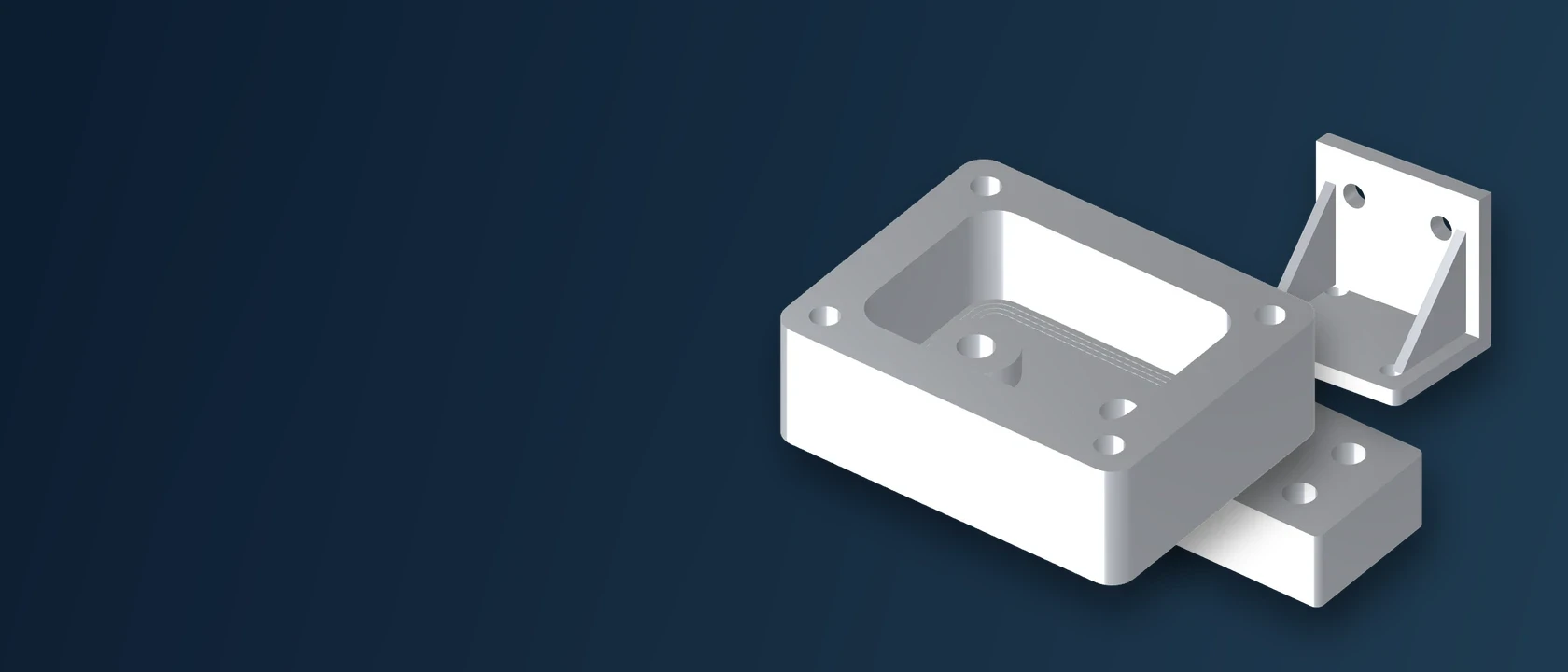
Tell us what the prototype must establish: form, assembly fit, a bench test or a manufacturing trial. Any departure from the intended production material or finish should be agreed before the part is made.
Start with the fixture drawing and its working interfaces. Include locating features, repeat-use needs and any inspection or test procedure associated with the equipment.
Identify the end use, required supplier approvals and purchase-order quality clauses. Acceptance depends on a documented capability and approval review; a machining quote is not an authorization to install a part.
Review enclosure pockets, cover interfaces and connector openings together. Identify the faces that locate the assembly and any surfaces that must remain free of coating.
Define the relationship between mounting faces and hole patterns. Discuss ribs, corner radii and accessible inspection features without changing the released design.
Provide the reference axis, fits and thread callouts for turned components. Include any cross-holes, slots or flats that need a second operation.
Review wall support, tool access and the sequence of machining across different faces. Keep datum relationships and the final inspection condition explicit.
Describe what the fixture locates, clamps or measures. The working contact surfaces, replaceable details and interface to the test or assembly setup belong in the review.
Specify intersecting passages, plugs, sealing features and cleaning requirements. Any pressure or leak test needs its own agreed method and acceptance criteria.
These are geometry examples for a manufacturing discussion, not stock products, completed aerospace orders or flight-qualified parts. Your drawing and approved requirements define the actual component.
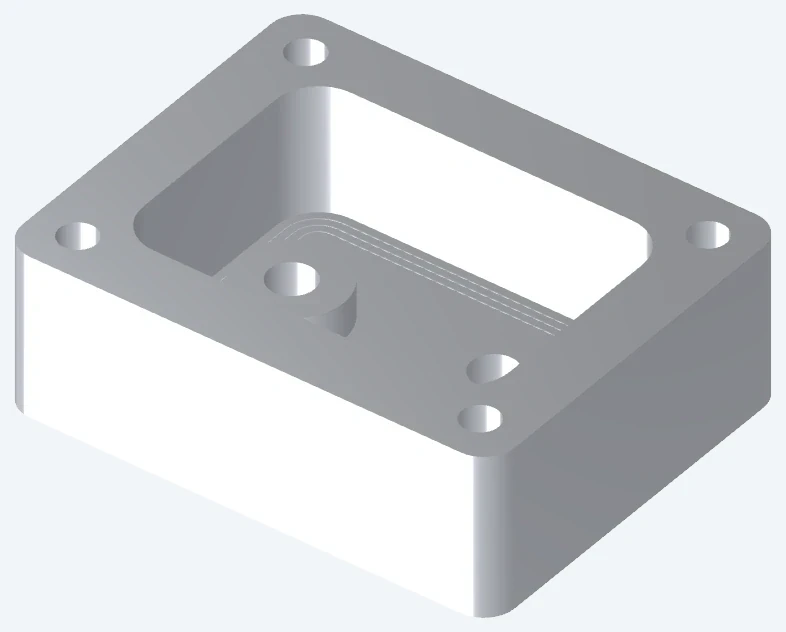
Send the drawing revision with the CAD model. Identify the primary locating surfaces, hole-pattern relationships and geometric requirements. Clarify which document governs when the drawing and model disagree.
Review wall support, pocket depth, corner access and fixturing space. A suggested design change is a question for your engineering team—not permission to alter the part.
Include the complete thread specification, engagement requirements and mating-part information where available. Mark any sealing, bonding or electrical-contact surface that needs separate treatment.
Mark the dimensions that control fit and function, including how they are verified. Rather than applying one headline precision claim to every part, discuss the actual feature, material, setup and measurement method.
State whether acceptance applies before or after heat treatment, coating, insert installation or other specified operations. The quotation should identify which operations and checks are included.
Resolve missing requirements, unclear notes and proposed alternatives in writing. Keep the accepted interpretation with the drawing revision so it is not lost between the prototype and the repeat order.
Discuss pockets, mounting pads, ribs and hole patterns on prismatic components. The planning review considers tool access, support and how features on different faces will be related.
CNC milling services →Discuss shafts, sleeves and other rotational geometries together with their threads, grooves and reference axes. Cross-features may require additional operations.
CNC turning services →Review multi-face access and contoured surfaces. Indexed 3+2 machining and simultaneous movement are different routes; neither should be assumed necessary or sufficient without reviewing the geometry.
5-axis machining services →Drawing examples: 6061, 7075 or 2024 in the specified temper.
Include the governing material specification, product form and required condition. A similar alloy name is not approval to substitute a different material, temper or stock source.
Aluminum CNC machining →Drawing example: Ti-6Al-4V with the required specification and condition.
Keep the grade, product form and material documentation together. Any requirement for a particular melt practice, source or additional testing needs to be included in the inquiry.
Titanium CNC machining →Examples to review: 17-4 PH, 316, Inconel 625 or 718.
Name the alloy and required heat-treatment or delivery condition. Discuss the final dimensional state and the records needed for any operation performed outside the machining site.
Compare machining metals →Examples to review: PEEK, POM or nylon in a named grade.
Specify the actual resin or stock grade and any reinforcement. Material certificates, temperature limits or application-specific approval must relate to that grade—not to the generic polymer family.
Plastic CNC machining →| Record | What the review covers | What to specify |
|---|---|---|
| Material identity | Grade, specification, condition and the link between the stock lot and the part. | Identify the material certificate and any heat / lot traceability requirement. |
| Dimensional results | The characteristics, measuring methods and required final condition. | List the reports, sampling or individual-part records the order requires. |
| First article inspection | The applicable customer requirement, standard revision and submission scope. | Specify whether a first article inspection report is required and who accepts it. |
| Special-process records | The process specification, required source approvals and treatment scope. | Identify the processor, records and any customer-specific approval conditions. |
| Release and delivery | Part identity, revision, quantity and the required acceptance documents. | Agree the certificate of conformity and delivery-record content before shipment. |
For anodizing, passivation, plating, heat treatment or other operations, include the process specification and customer instructions. Required approvals belong to the actual processor and scope; they cannot be inferred from a general machining page.
Show the surfaces that locate, seal, bond or make electrical contact. State coating coverage, masked areas and any thickness or surface requirements so they can be reviewed with the final dimensions.
Identify the checks needed after finishing or assembly. Do not leave the team to infer whether a dimension is a pre-treatment value or the finished-part requirement. Any deviation needs an agreed disposition.
Agree the drawing, CAD data, specification revisions and order requirements.
Define material identity, manufacturing location and any approved outside operations.
Agree the verification plan, required evidence and acceptance responsibilities.
Keep the required part, revision and lot information with the shipment records.
A revised drawing, material source, manufacturing route or outside process can change what needs to be checked. Share the updated requirements and agree any additional validation, inspection or first article work before repeating an order.
Specify part marking, packaging, cleanliness and delivery documentation. Discuss how surfaces, bores and threads need protection and how different revisions or lots should remain distinguishable through receipt.
I’m Kevin. My family has worked in machining since my father’s generation, and I have spent ten years in the CNC industry. We have several factories in China, alongside a wider network of manufacturing partners.
For a project with qualification requirements, the first discussion should establish who would make the part and whether that location meets your needs. I would rather clarify a limitation early than leave it hidden behind a quotation.
Kevin · vetcnc
Read our family’s machining story →
Discuss the proposed location, process scope, inspection needs and any supplier approvals before placing the work.
When another capability is needed, we can discuss coordination or a direct introduction. The partner’s suitability and required approvals still need to be checked.
You retain control of the released design and acceptance requirements. An introduction, manufacturing suggestion or quote does not replace your approval process.
Yes. Describe the prototype’s purpose and send the drawing revision, material and required quantity through an agreed transfer method. Make clear whether it is for fit checking, a test fixture or installation-intended use. Feasibility and the proposed scope still need review.
No. This page does not establish AS9100 certification or customer-approved supplier status. The 9100 series concerns aerospace quality-management-system requirements. Request the actual manufacturing site, current certificate and applicable scope where your procurement rules require them; do not infer approval from this website.[3]
Include the applicable standard revision, required forms and customer instructions in your request. The ability to provide the full package must be confirmed before order acceptance. A sample or general dimensional report is not automatically a first article inspection report.
Share the exact alloy or polymer grade, specification, product form and condition on your drawing. The material families above provide starting points for discussion, not a list of approved aerospace substitutions or guaranteed stock.
Send the actual feature requirements, material and finished condition. We review those together with the machining route and measurement method. This page does not publish a blanket tolerance guarantee across different features, sizes and materials.
Identify the required process specification, outside-source approvals and verification records. The proposed supply route and each party’s responsibilities need confirmation; no specific accredited or approved processor is claimed on this page.
Agree confidentiality, recipient authorization and a suitable transfer method before sharing sensitive technical information. Use a non-sensitive description for the first discussion. Do not upload restricted technical data through this form.
Part geometry, material sourcing, quantities, setup and tooling, outside processes, inspection scope and document review all belong in the quote discussion. Provide target dates and approval milestones so any schedule dependencies can be identified rather than assumed.
We can discuss partner coordination or a direct introduction when our own factories are not the right fit. That does not bypass site qualification, source restrictions, confidentiality or customer approval. Agree the actual manufacturer before releasing the order.
This checklist records your request. It does not approve a supplier, manufacturing route, tolerance or installation. Entries stay in this page until you submit them to a configured endpoint.
Standards are referenced to help define a procurement discussion, not to claim certification or compliance for vetcnc. The applicable contract, standard revision and customer instructions must be reviewed separately. Material examples are not design recommendations, and part illustrations do not establish airworthiness.
Reference pages reviewed on 18 September 2026. This preview contains no certificate number, aircraft approval, customer program, tolerance guarantee or delivery commitment.