Diagnostic equipment housings
Enclosure pockets, cover seats and connector openings need to work together. Mark the faces that locate the assembly and the areas where coatings or cosmetic marks are not acceptable.

Enclosure pockets, cover seats and connector openings need to work together. Mark the faces that locate the assembly and the areas where coatings or cosmetic marks are not acceptable.
Specify mounting faces and the position of each hole relative to the assembly datum. Include any adjustment slots, threaded holes and surfaces that will be visible after installation.
Identify the reference axis and each mating fit. Show complete thread callouts, edge breaks and any flats or cross-holes that require a second machining operation.
Use the specified polymer grade, not just a material family name. Describe the mating parts, working conditions and any contact or cleaning exposure that must be evaluated.
Identify the fluid path, intersecting passages and sealing surfaces. Share the required cleaning, inspection and leak-test criteria; none are implied by a drilled passage alone.
Explain what the fixture holds, locates or measures. Identify working contact points, replaceable details and the check used to accept the fixture before it enters your process.
Geometry examples only. These are not stocked products, completed medical-device projects or evidence of approval for clinical use.
Use development parts to discuss fit, access and assembly before releasing a design. State the test purpose and keep non-clinical evaluation parts separate from production-intended stock.
Describe where the part belongs in the finished equipment, whether it can contact the patient or a fluid path, and which supplier controls your purchasing team requires.
Include the locating scheme, clamping interfaces and fixture acceptance check. A fixture can affect product quality even when it is not a component of the finished device.
For biological safety, the FDA considers the finished device, its processing and the nature and duration of contact—not the raw material name alone.[1]
Use these choices to describe your project, not to classify the device or approve a material. Patient-contact and implant-related work needs a separate capability and supplier-qualification review.
Specify the exact grade and supply condition, such as 316L or 17-4 PH when called out by your design. State the required material records, finished surface and any treatment specification. A grade designation does not establish clinical suitability.
Review stainless steel machining →Send the material specification, product form and condition in full. Do not substitute a general titanium designation for a drawing-controlled requirement. Any implant-related inquiry needs a separately reviewed qualification scope.
Review titanium machining →For housings, mounts and development fixtures, specify the alloy, temper and finished dimensions. Identify anodized or coated areas and the assembly surfaces where masking or electrical contact matters.
Review aluminum machining →State the manufacturer and full grade, including fillers, color and any required documentation. Describe exposure to cleaning agents, temperature and repeated processing so the device team can assess the proposed material and process.
Compare engineering plastics →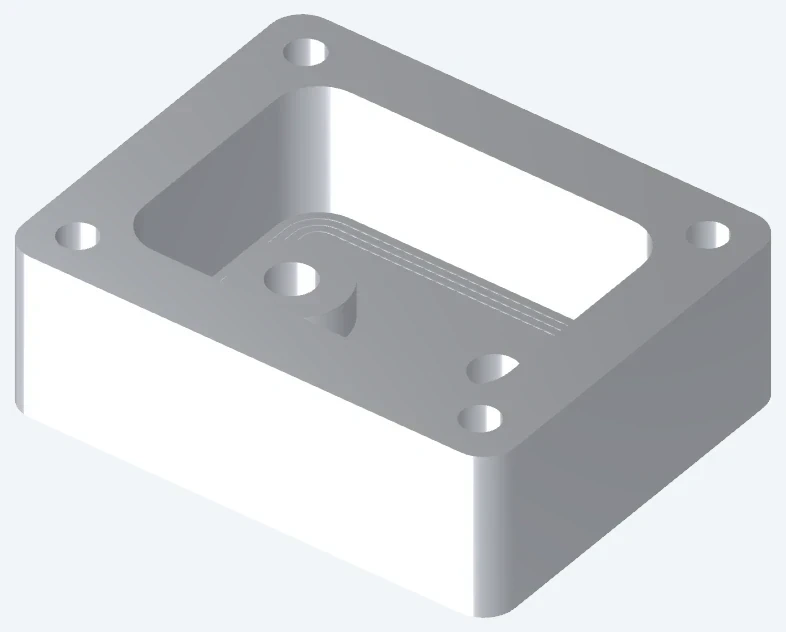
Mark the faces and axes that locate the component. Specify hole positions, mating diameters and geometric requirements on the drawing rather than applying an unsupported precision claim to the whole part.
Define edge-break and burr requirements, especially where passages intersect or parts slide together. Agree how inaccessible features will be checked and which conditions are not acceptable.
Identify patient-contact, fluid-contact and assembly-contact surfaces separately. Include roughness requirements, coating exclusions and the condition in which the dimensions must be measured.
Provide matching CAD and drawing revisions. When a model and a drawing disagree, identify which requirement controls and resolve the discrepancy before machining.
Define visible areas, allowable handling marks and any approved appearance sample. A polished photograph is not an acceptance standard.
List unresolved tolerances, material details and verification methods in the quote review. Do not let an assumption become an undocumented production instruction.
For housings, pockets, plates and brackets, review datum access, workholding and the sequence of machining across multiple faces. Preserve design intent when discussing corner radii or tool access.
View service →For sleeves, shafts and adapters, review the reference axis, mating diameters and thread details. Cross-holes, flats or slots need to be included in the manufacturing and inspection plan.
View service →For angled features or multiple interfaces, compare a suitable indexed or simultaneous approach with simpler setups. The part geometry and required verification—not the axis count alone—should guide the review.
View service →Specify the finish, treatment standard, masking and final inspection state. Discuss passivation, polishing or a coating only where the material, drawing and agreed process allow it; none automatically makes the part sterile.
State the required residues or contamination controls, test methods and handling instructions. A visually clean part and a documented cleaning process are different deliverables. For reusable devices, reprocessing instructions need appropriate validation.[5]
Name the responsible organization for cleaning validation, sterilization, packaging and release. The FDA distinguishes sterilization methods and their validation; this page does not offer a validated sterile-delivery service.[4]
| Record | What to agree before release |
|---|---|
| Material identity | Specified grade, condition, source documents and the link between material lot and delivered parts. |
| Dimensional results | Drawing revision, characteristic identification, inspection method and the agreed sampling or full-inspection scope. |
| Surface and process records | Required finish or treatment certificates, processor identity and checks after the agreed operations. |
| Cleanliness and handling | Agreed cleaning evidence, packaging instructions and any restrictions on handling or storage. |
| Batch release | Part and lot identifiers, quantities, approved deviations and any agreed declaration or conformity record. |
For U.S. device projects, the FDA’s QMSR took effect on 2 February 2026 and incorporates ISO 13485:2016 by reference. Applicability depends on the organization’s role and the product; a component quote is not a regulatory approval.[2]
Identify the approved revision and the purpose of each build.
Keep the material lot and agreed manufacturing operations linked.
Define which results need customer approval before the next stage.
Keep labels, quantities and records matched to the shipment.
A fit adjustment or finish change accepted during development does not silently change the production drawing. Record the decision, update the released files and agree whether samples or inspection need repeating.
Provide the prototype quantity, expected production quantity and order frequency. Ask the quote to separate setup, inspection, special processing and packaging where relevant, rather than assuming sample pricing will apply to every batch.
I’m Kevin. I have spent ten years in CNC manufacturing, following my father’s generation into this business. We have multiple factories in China, and I want online communication to make it easier to understand who will make your parts and how your requirements will be reviewed.
For a medical-device project, confidence in machining is not a substitute for evidence. Share your supplier requirements early. We can review a fit with our factories, discuss a partner arrangement, or introduce a company for you to assess directly. The scope, responsibilities and required approvals must be clear before an order is accepted.
Read the vetcnc story →Housings, mounts, shafts, sleeves, polymer guides and assembly fixtures are useful starting points. Share the drawing, intended use and supplier requirements. The pictured geometries illustrate a discussion; they are not a catalog of approved medical products.
No verified ISO 13485 certificate has been provided for publication on this page, so no such certification is claimed. When it is a purchasing requirement, request current evidence for the proposed site and activities before placing an order.
These requests require a separate capability and qualification review. Send a non-confidential description of the application, contact conditions, material specification and required controls first. Do not treat a quotation or an illustration as acceptance for clinical use.
No. Biological evaluation concerns the finished device and its contact conditions, including relevant processing and residues. A raw material designation alone does not settle that assessment. The responsible device team must determine the evidence required.[1]
Identify the critical features, datums, final material or surface condition and inspection method on the drawing. We can then review feasibility feature by feature. This page does not publish a blanket tolerance guarantee.
Cleaning condition and sterility are separate requirements. Describe the required delivery condition, evidence and packaging explicitly. No sterile supply is included by default, and any validated process must be agreed with a qualified responsible organization.[4]
Provide the intended cleaning or reprocessing method, exposure conditions, repeat cycles and the relevant device-team instructions. These are inputs for review, not a validated cleaning procedure supplied by this website.[5]
Yes, request them in the brief and specify their scope before quotation. Identify the required material documents, lot linkage, inspected characteristics, sampling instructions and report format. Availability and cost are confirmed for the actual order.
No. Confirm the released revision, material, processing and inspection scope for production. Development changes should be documented and approved before the next build, with additional samples or checks where your quality process requires them.
Provide a matching 3D model and dimensioned drawing, the revision, material specification, quantities and key acceptance requirements. Agree confidentiality first. Do not upload patient information or other personal health data; use a secure agreed channel for controlled technical files.
This brief records procurement requirements, not medical advice or a supplier/device approval. Entries remain in this page until submitted to a configured endpoint. Do not enter patient or personal health information.
The sources below explain regulatory and quality concepts mentioned in this procurement guide. They are not evidence that vetcnc holds a certification or that a pictured component is suitable for clinical use. The device manufacturer and relevant qualified teams must determine applicable requirements for the actual project and market.
Reference pages reviewed on 18 September 2026. No certification number, device clearance, biocompatibility result, sterile-supply capability, clinical-use acceptance, fixed tolerance or delivery guarantee is asserted.