POM bushings and sleeves
Specify the bore, outside diameter and mating shaft as a set. Include the housing fit, the installed clearance and whether the bushing runs dry or with a lubricant.
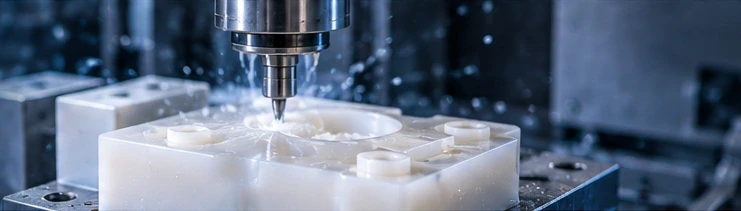
Specify the bore, outside diameter and mating shaft as a set. Include the housing fit, the installed clearance and whether the bushing runs dry or with a lubricant.
Send the tooth form, module or pitch, pressure angle, bore and hub dimensions. The gear-cutting method, required inspection and production responsibility are confirmed before quotation.
Mark the running face, locating holes and direction of movement. Include the counterface material and travel so the review covers both positioning and sliding contact.
Define the faces that carry load and the bore that locates the part. For a roller or wheel variation, add the running diameter, hub arrangement and permitted runout.
Identify wear faces, fastener recesses and any surface that must not touch the mating part. Provide the load, cleaning conditions and a replaceable-part drawing where available.
Show internal passages, port threads, sealing faces and the fluid-contact requirement. Specify any pressure or leak test separately; a material name is not a pressure rating.
A common starting point for general machined acetal parts. POM-C offers low moisture uptake and good machinability; its chemical behavior differs from the homopolymer. [1]
Consider the homopolymer when stiffness, strength and repeated loading matter. Delrin® is a branded acetal homopolymer, not a generic name for every POM material. [1] [2]
Lubricated acetal formulations can change friction and wear behavior. Compare the exact formulation for the load, speed, lubricant and mating surface, not only its color. [4]
A requirement for static dissipation, detection or a particular declaration needs a named grade and an agreed verification method. Select the requirement first; approve the exact material before an order.


POM is also called acetal or polyoxymethylene. A request for generic POM, a request for POM-H and a request for a named Delrin® stock grade are not the same specification. Send the approved designation and state whether alternatives may be proposed. Color alone does not confirm the resin, additives or electrical properties. [1] [2]
Material choices are for review, not a live stock list or a claim that manufacturers’ grades are equivalent. Availability and the approved source are confirmed for each order.
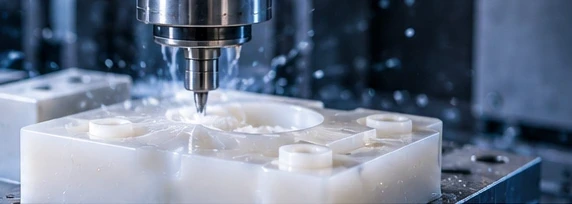
For a machined guide, fixture or valve block, supply a 3D model and the drawing that controls dimensions. Identify the working face and hole relationships. Internal corners, tool access and how the blank is supported are reviewed together.
For sleeves, spacers and roller blanks, show which diameters locate the part and which surfaces run against another component. Include bore finish, shoulder location and whether the fit will be checked loose or installed.
Acetal still needs plastic-specific workholding. Sharp tools, control of machining heat and suitable clamping help protect the surface and final dimensions. Stock form and the amount of material removed belong in the process review. [3]
Select a condition to add it to your POM parts brief.
| Feature | Put on the drawing | Agree for inspection |
|---|---|---|
| Bores and running diameters | Size limits, shaft or bearing arrangement, working clearance and the applicable temperature. | Free-state measurements, installed checks or an agreed assembly trial. |
| Flat faces and guide surfaces | Datum faces, flatness or parallelism, and the permitted support condition. | Measure without pulling a flexible part flat; record the support arrangement. |
| Threads and inserts | Thread designation, depth, mating fastener and any insert or torque requirement. | Agree the thread check and any installation trial separately from hole position. |
| Sliding and sealing faces | Roughness where functional, measurement locations, edge condition and permitted marks. | Distinguish cosmetic inspection from roughness, sealing or running tests. |
There is no universal tolerance for every size, material grade and geometry. Send the drawing with the dimensions that matter most so the manufacturing route and inspection scope can be reviewed together.
Share the mating material, surface finish, load, travel or speed, lubricant and expected life. Where performance is important, agree a sample test rather than treating a material datasheet as a prediction for the assembly.
Mark the surfaces that can be held, and avoid leaving critical dimensions dependent on an unsupported lip. For uneven sections, ask whether rough machining and a stabilization step should precede final machining.
Name the cleaning agents, concentration, temperature and exposure time. POM-C and POM-H do not have identical chemical behavior; the exact grade must suit both the service and cleaning environment. [1]
Show screw engagement, inserts, press fits or the proposed bonding method. Provide assembly loads and any required trial, especially where a connection must be taken apart repeatedly.
For guides, pads and bushings, include the machine interface and the limits that determine replacement. Share a released drawing instead of relying solely on a worn sample.
For moving assemblies, provide load and speed, the mating part and how alignment is checked. Samples can be used to assess fit and motion before a repeat quantity is released.
Show the datum faces, locating pins, fastener points and any surface that must not mark the workpiece. Include the way the fixture is supported in use.
Specify the fluid, temperature, pressure or cleaning condition and any required material documentation. Grade suitability, testing and records are agreed for the actual use; no blanket application approval is implied.
Identify the faces where normal tool marks are acceptable. Keep a cosmetic requirement separate from the roughness of a bore, seal or sliding face.
Specify edge breaks and passages that must be clear. A sharp locating edge or sealing detail should not be rounded without drawing approval.
Give the roughness, location and measurement method when it matters to the design. A polished appearance alone does not confirm friction or sealing performance.
Define any cleaning, marking location and protection for shipment. For special finishes or bonding preparation, agree suitability and an acceptance sample before production.
Agree the resin family, manufacturer or stock supplier, grade, color and lot information required. A proposed substitute is a separate decision and should be approved before material is cut.
Identify the features that need recorded results, the datums and the measurement conditions. Agree sample quantities and the inspection scope before the first delivery, then use the approved revision for repeat orders.
A dimensional report is not a wear-life, pressure, chemical-resistance or electrical test. Define any additional method, sample quantity, acceptance limits and test responsibility in the order.
The stock supplier, grade, color, blank size and available form affect the material portion of the quote. A large bored sleeve may use a different starting form from a solid block.
Deep pockets, narrow slots, multiple orientations and additional gear-cutting operations affect the machining route. A design review can identify changes to discuss without altering a working feature unilaterally.
Recorded dimensions, assembly checks, approved cleaning, individual identification and extra test reports should be included in the same request as machining.
Ask for sample, first-batch and expected repeat quantities together. This helps compare setup, tooling and inspection costs on the same basis. Delivery and pricing remain subject to the final quotation.
Confirm the material designation, critical dimensions and intended use. Raise any proposed design or material changes for approval.
Decide what the sample should demonstrate: dimensions, fit, assembly, appearance or an additional functional test.
Record the drawing revision, material and agreed production route before machining the batch. Agree the inspection scope and delivery arrangement.
Use the approved revision and material source or agreed alternatives. Review changes to the mating assembly, grade or quantity before another order.
Selections are included with your inquiry. Nothing is sent until a live submission endpoint is connected and you submit the inquiry.
I have spent ten years in CNC manufacturing, following my father’s generation into the business. With vetcnc, I want customers to understand the people, the production route and the requirements behind the parts—not depend on distance or missing information.
We have factories in China and a wider network of manufacturing partners. When a job needs a different capability, we can discuss coordination or a direct introduction, with your permission and a clear division of responsibility.
About vetcncBefore sharing sensitive drawings or placing an order, agree the production company, communication route, inspection scope and permitted sharing of your files.
POM is short for polyoxymethylene, commonly called acetal. The two main resin families are homopolymer POM-H and copolymer POM-C. Specify the actual grade and stock source for an order rather than relying on the generic material name. [1]
No. Delrin® is a branded acetal homopolymer. When a drawing requires Delrin®, identify the exact grade and approved stock source. A generic POM-C selection is not treated as an automatic substitute. [2]
Review the load, mating surfaces, fluid exposure, cleaning and any approved-material requirement. Material family is only part of the decision; the chosen stock grade and the application requirements should be checked together. We can review your drawing without silently changing its material.
Yes—send the designation, drawing revision and quantity for review. Availability, stock source and the proposed manufacturing route are confirmed before a quotation is accepted. The page does not claim authorized-distributor status or affiliation with the material brand.
Include the color with the exact material specification in your request. Stock availability is checked for the order. Color alone does not identify whether a material is POM-C, POM-H, conductive or suitable for a controlled application.
Tolerance is reviewed feature by feature against the dimensions, geometry, stock, workholding and inspection condition. Highlight the critical fit and share the mating-part details. We do not publish a blanket accuracy promise for every acetal component.
It helps when the fit is important. Include the shaft, housing, installation method, load and temperature. State whether acceptance is based on the loose part, the installed bore or an assembly test.
A machined sample can help assess fit and function, but it does not automatically validate a molded production process. Agree the purpose of the sample and review the selected resin, stock history, geometry and any process differences before relying on test results.
Send the full geometry and inspection requirements for review. For gears, include tooth-form data and the mating arrangement. For rollers, include running diameter, bore, hub, load and speed. The production method and any partner involvement are agreed before quotation.
List the exact declarations, property limits and test methods you need. These must relate to the proposed grade, color, use conditions and finished part where applicable. A generic POM name is not treated as proof of conformity.
Include sample and production quantities in the inquiry. We can discuss an approval stage, what will be measured or tested, and how the released drawing and material will be kept consistent for repeat orders.
Send a 3D model and matching dimensioned drawing, the exact material or selection requirements, quantity, critical fits, surface finish, inspection scope and requested delivery. Add the mating-part and service details when they affect the design.
Agree confidentiality and the transfer method before sharing sensitive or restricted files.
Manufacturer references support the material background, not vetcnc capacity, stock availability or certification. Order requirements must use the current documentation for the selected grade. Delrin® is a registered trademark of Delrin USA, LLC; naming it here does not imply affiliation or authorization.