Pocketed enclosures
Define the internal clearance, mounting points and the faces that will remain visible after assembly. Mark any connector openings on the drawing.

Define the internal clearance, mounting points and the faces that will remain visible after assembly. Mark any connector openings on the drawing.
Identify the lid relationship, cable opening and locating features. Discuss the body and cover together rather than quoting two disconnected shapes.
Separate cosmetic faces from button, display and connector locations. Use a drawing to control openings; a photograph alone cannot define their positions.
Describe the attached components, fasteners and service loads. Flag thin webs, supported faces and any requirement to fit an existing assembly.
Provide the supported part or its interface drawing. Agree contact areas, access for assembly and the inspection state before making the fixture.
Call out mating diameters, shoulders and the condition in which the fit is measured. ABS is not automatically a substitute for a specified bearing plastic.
Illustrative part shapes, not stocked products, confirmed ABS samples or customer case studies. Each inquiry is reviewed against its drawing.
ABS is a thermoplastic used for impact-resistant housings, covers and prototypes. Machining-grade stock is offered separately from general-purpose grades, so “ABS” alone is not a complete purchasing specification.[1]
Start with the required manufacturer's grade or agreed material specification. Then identify stock form, color and the documents needed with the order. A previously approved molding resin or printed sample is useful context, but it does not confirm that an equivalent sheet or rod is available.
Ask for stock intended for machined components when the drawing calls for close dimensional control. Confirm its grade, material condition and usable size before committing to a build.[3]
Outdoor exposure, electrical behavior, fire performance or regulated contact requirements belong in the specification. A general ABS label is not evidence that a particular requirement is satisfied.
Specify whether a named color, a retained physical sample or a later coating controls the appearance. Require approval before changing the stock grade, color or surface-treatment route.
ABS supply, stock size and machining scope must be confirmed before this capability draft is published. Material and performance options shown here are inquiry requirements, not inventory or certification claims.

A drawing can combine enclosure pockets, flat faces, connector openings and drilled features. Review tool access, support and the locating faces together; one feature may change the setup for the rest of the part.
CNC milling servicesCollars, spacers and stepped diameters need a different review from an open housing. Identify the bore, shoulders and any off-axis feature that needs a second operation.
CNC turning servicesHeat, released stock stresses and excessive clamping force can affect a plastic part's final shape. Chip control, suitable stock and support are part of the machining review, not a substitute for an agreed drawing.[2]
Mark the final wall, pocket depth and any area intended to flex. A narrow wall with a long unsupported span needs a different review from a short rib. Agree permitted support and holding areas, not just the outer dimensions.
Identify the screw, engagement and how often the part will be opened. Discuss inserts or another joining method where required. Do not assume that a hole diameter alone defines the performance of the assembled joint.
Show the mating cover, datum surfaces and allowed corner geometry. A round cutter leaves a radius in a milled internal corner; discuss a relief or an alternative feature only where the design owner permits a change.
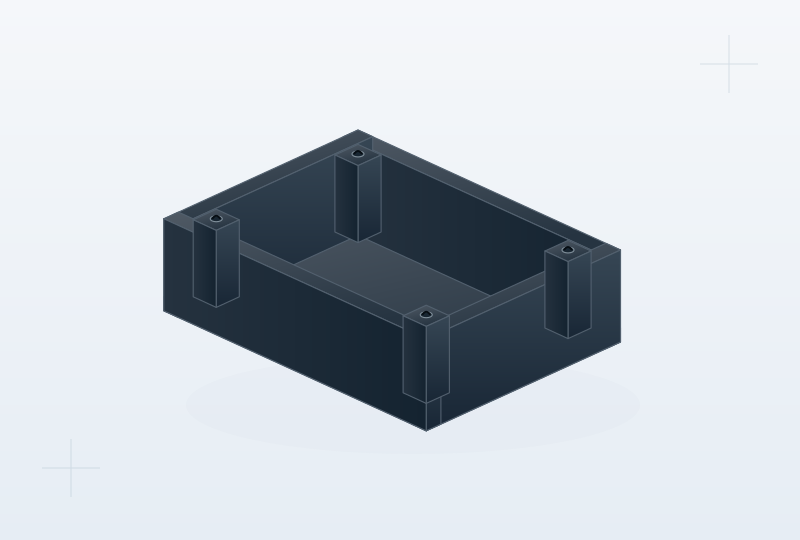
Identify which faces are normally seen and which are hidden after assembly. Agree whether a machined surface, retained stock surface or reference sample controls each face. Color names alone do not define gloss, texture or acceptable marks.
Review the visual sample under the agreed viewing conditions. Keep that sample reference tied to the drawing revision and record which surfaces it covers.
When a coating is requested, specify color, gloss, compatibility evidence and the surfaces to mask. Identify whether the final dimensions are inspected before or after the coating, and who approves the finished sample.
Do not treat paint as an automatic way to meet an outdoor, chemical or fire-performance requirement. The complete material and finish combination needs review.
Provide the assembly drawing, adhesive or joining specification, contact areas and required appearance. Agree the assembly process and the acceptance state separately from machining the individual components.
Any bond, cleaning agent or solvent exposure must be assessed for the chosen ABS grade. Final fit, appearance and joint performance require the appropriate sample checks.
| Feature or requirement | What to put on the drawing | What to settle before inspection |
|---|---|---|
| Holes and locating features | Diameters, positions, datums and mating-part information. | The inspection method, supported condition and sample or lot requirements. |
| Flat covers and flexible walls | Functional surfaces, acceptable form and any intended flex. | Whether the part is free, supported or installed when the requirement is checked. |
| Threads and inserts | Complete thread or insert specification and assembly requirements. | Checks after insert installation or joining, where those operations are part of the order. |
| Finished color and dimensions | Reference sample, specified faces, finish boundaries and dimensions after finishing. | Which records show dimensional acceptance and which show cosmetic sample approval. |
Plastic dimensions can change with temperature. For a sensitive fit, define the measurement and service conditions rather than copying a tolerance from a metal component.[2]
A collar or guide needs more than the correct outside shape. Specify load, motion, lubrication and its mating material before comparing ABS with POM or nylon.
Review POM machiningState whether transparency is a functional requirement, not just a styling choice. Review the window separately from an opaque body, including optical and surface acceptance.
Review acrylic machiningProvide the actual environment and required grade. Changing to another polymer is a design decision that needs approval, not a silent substitution during quoting.
Compare engineering plasticsMatch the model, drawing and revision. Confirm grade availability, quantities and any proposed changes before material is purchased.
Identify the assembly and appearance questions that a sample must answer. A prototype approval only covers the agreed checks and configuration.
Record the approved grade, color, revision and finishing route. Agree how substitutions or process changes would be reviewed.
Specify packing for visible faces and delicate walls, lot identification and the inspection records to send with the order.
Stock availability, material removed, setups, delicate features, appearance work and inspection can all change the quote. Request separate sample and repeat-order quantities; a forecast is not a released order.
Kevin brings ten years in the CNC industry to a family manufacturing business in China. If an inquiry needs a partner rather than one of our factories, the proposed production site and responsibilities should be agreed openly.
About vetcncYes. Suitable ABS stock can be milled, drilled or turned into custom shapes. The specific grade, stock condition and geometry still need review. A resin name or a 3D-printing filament specification does not identify the material available as machinable stock.[1]
Use the purpose of the sample to guide the discussion. A machined stock part and a printed part have different manufacturing histories. Specify whether you need to check an interface, a finished surface or behavior under load; do not assume either route proves the behavior of the final molded product.
No. Even with related material names, the raw-material form and manufacturing route differ. A machined prototype can be useful for reviewing geometry, but molding-related behavior and the final part requirements need their own validation. This page is for machining inquiries, not an injection-molding service commitment.
There is no single wall value that we can approve without the drawing. Unsupported span, pocket depth, corner access, mounting loads and how the part is held all matter. Mark the finished wall and any flexible area so the design and process can be reviewed together.
Tolerances must be confirmed for the actual drawing, material and final condition. Identify the assembly-critical dimensions and how they will be measured. We have not published a blanket ABS tolerance or machine-size promise on this draft page.
Identify whether you need retained sheet texture, a machined finish or a separately applied coating. Cutting a new surface does not reproduce a stock sheet texture. For paint or coating requests, agree compatibility, masking, final dimensions and a visual reference before production.
Do not approve it from the name ABS alone. Standard and specially modified grades differ. Provide sunlight exposure, temperatures, load and cleaning chemicals; suitability must be checked against the exact grade and the application.[1]
State the exact grade and supporting records your project requires. Those requests trigger a sourcing and capability check; selecting a checkbox is not confirmation of a rating, certification or approved end use. Any substitution needs your written approval.
They can be reviewed as part of the drawing. Specify the fastener, engagement, assembly frequency, load and any required insert. Confirm the insertion or assembly method separately, and agree which dimensions apply after that operation.
Send the 3D model and the applicable 2D drawing, revision, required ABS grade and stock color, sample and production quantities, critical dimensions, visible surfaces and any finish. Include inspection records and a delivery destination. Our RFQ guide provides a complete checklist.
Use this optional brief to collect the decisions already made and the questions still open. The information stays in the page until you choose to include it in the quote form.
You can also skip this step and send a drawing inquiry directly. No material, tolerance or finishing choice is approved automatically.
Read the RFQ checklistThe references below support general material and machining statements, not vetcnc stock availability, certifications or production capacity. Project-specific specifications and the supplier's current grade data take precedence.
Draft LP01: confirm the actual ABS supply and manufacturing scope before publishing or adding this page to the live material directory. The review copy is set to noindex.