Flanges and machined rings
Identify the sealing face, bore and bolt circle on the drawing. Include gasket details and the inspection requirements for any pressure-retaining design.

Identify the sealing face, bore and bolt circle on the drawing. Include gasket details and the inspection requirements for any pressure-retaining design.
Specify the mating diameters, shoulders, thread form and reference axis. Mark where runout, surface finish or thread inspection affects the assembly.
Show wall thickness, bore depth and the final fit. Tell us whether dimensions apply before or after any heat treatment, coating or finish machining.
Send the model with pocket depths, port locations and datum relationships. Identify intersecting passages, trapped burrs and features that need inspection access.
UNS N06625
A nickel-chromium alloy strengthened mainly by molybdenum and niobium in solid solution. It is used where strength and corrosion resistance matter together. [1]
UNS N07718
An age-hardenable nickel alloy. The specified heat treatment is part of the requirement, not an optional finishing detail. [2]
UNS N06600
A nickel-chromium-iron alloy used for heat and corrosion resistance. It is not precipitation-hardened in the same way as alloy 718. [3]
For a drawing that specifies 625: carry the grade, product form and condition through the quote. Its corrosion-related uses do not make it a universal replacement for other alloys. [1]
For a drawing that specifies 718: clarify whether stock is supplied solution-treated or already aged, and which final properties must be documented. [2]
Grade information is a starting point for an engineering discussion, not a stock list or a material recommendation. Other Inconel grades can be reviewed against your specification.
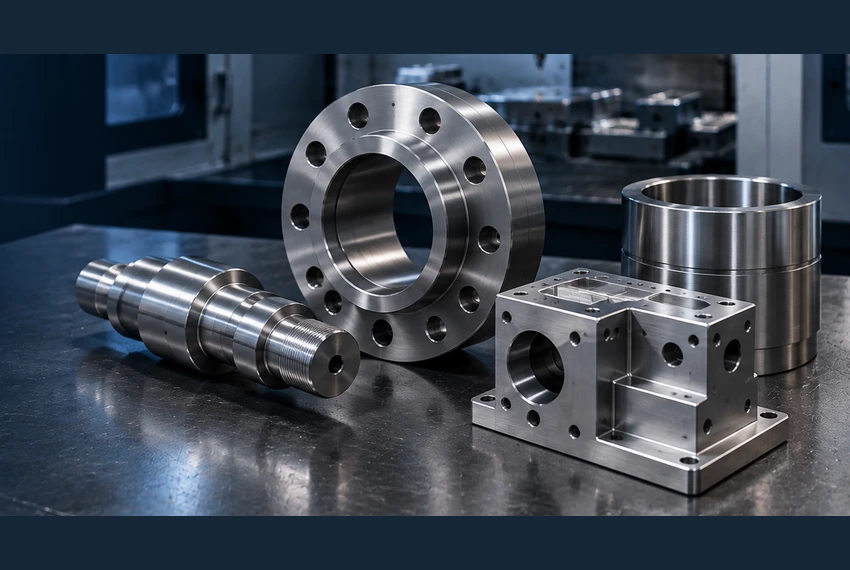
A quote should distinguish the material being purchased from the part you expect to receive. Include the stock form, product standard and edition, heat-treatment condition, and any required mechanical-property or hardness records.
For age-hardenable alloy 718, the selected treatment affects the material properties. Agree which operations occur before treatment, which dimensions are finished afterward, and when final inspection takes place. [2]
A 718 aging schedule is not a general treatment for every Inconel grade. Use the treatment specified for the actual alloy and application, with any proposed change approved before production. [1][3]
No delivery condition selected.

Rotational features need a defined datum axis and an agreed order of operations. Describe the critical fits, surface-finish callouts and any restrictions on workholding marks. Include the drawing even when a 3D model is available.
Tool reach, clamping and access to the final inspection points should be reviewed together. Multi-axis machining may help with angled features; the part geometry determines the route, rather than a blanket promise to machine everything in one setup.
Show drilled depth separately from usable thread depth. For crossing holes and internal ports, identify where burrs must be removed and whether borescope, leak or other application-specific checks are required.
Nickel-based superalloys can concentrate heat at the cutting edge and work-harden during machining. Tool selection, engagement, coolant delivery and the material condition therefore need to be considered together—not copied from an aluminum program. [4][5]
| Feature | What to put on the drawing | What to agree before production |
|---|---|---|
| Diameters and fits | Identify the mating feature, fit requirement and datum axis. | Agreed measurements or gauges, after the specified final operations. |
| Position and runout | Call out the datum system and which hole pattern or rotating feature it controls. | A measurement method that can reference those datums and report the required features. |
| Sealing and contact faces | Specify flatness, surface texture, measurement units and any prohibited marks. | Surface and dimensional checks matched to the drawing; visual appearance alone is not acceptance. |
| Threads and internal passages | Include thread form, pitch, class, effective depth and burr-removal requirements. | Appropriate thread checks and an agreed method for inaccessible or intersecting features. |
| Post-treatment dimensions | Identify the delivery condition and which dimensions apply after treatment or coating. | Final inspection in the required condition, plus separate process records where requested. |
There is no single tolerance that applies to every Inconel part. Size, geometry, condition, access and the inspection method are reviewed before a tolerance is accepted.
Internal corners, angled bores and deep pockets should be reviewed for both cutting and measurement. Mark any geometry that cannot change, so possible design adjustments stay separate from mandatory features.
Identify thin sections, slender stems and large pockets early. Ask how the component can be held without interfering with finished faces, and whether a trial sample is needed before releasing the full quantity.
“Deburr all edges” may not be enough for a sealing port, flow passage or close-fit shoulder. Put the required edge condition, no-break edges and inspection access on the drawing.
Send the model and drawing at the same revision. A suggested corner radius, alternate stock size or changed process route is a proposal for approval—not permission to alter your part.
No review topics selected.
Keep the functional surface-texture callouts, permitted tool marks and edge requirements on the drawing. An uncoated part still needs an agreed cleaning and handling method.
Name the feature and the required final size, flatness or texture. Grinding or lapping is an order-specific secondary operation, not assumed for every part.
Provide the applicable process and acceptance requirements where oxide or contamination removal is necessary. Agree how treated surfaces and dimensions will be checked.
Supply the coating specification, thickness, masking and final-size requirements. Any qualified-source requirement must be identified before the process is quoted.
Swatches are visual placeholders, not surface-finish samples. Heat treatment, cleaning, coatings and final machining are separate requirements and must be agreed individually.

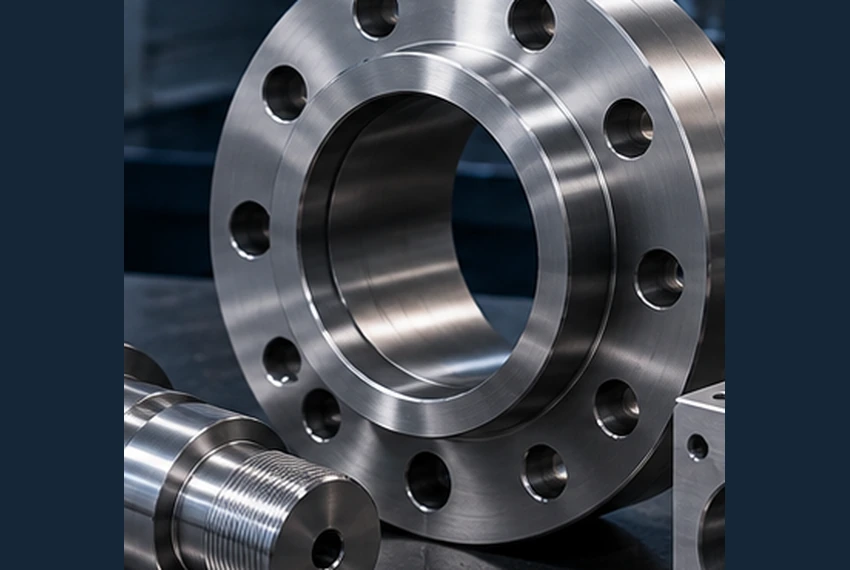
Ask for the records your order requires: the material designation, product specification, supplied condition and heat or lot identification. State any mill, country-of-origin or approved-source restriction before material is ordered.
A dimensional report does not replace a heat-treatment record, and a material certificate does not show that the finished geometry passes. Identify which records you need and how they should refer back to the order.
For non-destructive testing, positive material identification, pressure testing or other special checks, provide the method, acceptance criteria, sampling and provider requirements. Availability and responsibility are confirmed in the quote.
For valve, pump or instrument parts, include the medium, concentration, temperature and pressure. Material selection and pressure-design approval remain separate from machining acceptance.
State the duty cycle, operating environment and any drawing-controlled source or qualification requirement. General alloy information is not a qualification for a particular engine or safety-critical component.
For rings, shafts, sleeves and brackets, describe the mating parts and the features that control assembly. Existing approved drawings are a better starting point than a generic application label.
Compare quotes against the same grade, product form and supplied condition. Include any approved-source requirement and the records needed with the stock; a lower raw-material price may cover a different scope.
Stock allowance, deep features, tool access and separate setups affect the manufacturing plan. Nickel-alloy cutting conditions and tool wear also matter when estimating the work. [4]
Ask for sample and batch quantities to be priced separately where useful. Include heat treatment, finishing, specialist tests, packing and required documentation so you can compare complete quotations.
Send the CAD model, drawing, material specification and order quantities. Identify critical features and any source or inspection restrictions.
Confirm material responsibility, manufacturing scope, treatment sequence and acceptance criteria. Resolve proposed changes before releasing production.
Define the sample quantity and what needs approval. Keep sample acceptance separate from any further application or qualification testing.
Agree the final report, part identification and packing. Repeat orders should reference the approved revision and any authorized process changes.
“I want you to know who is making your parts, what has been agreed, and how you can check the result.”
Kevin vetcnc
I have spent ten years in the CNC industry, following my father into the family business. With factories in China and a wider circle of manufacturing partners, my aim is to make that experience easier to understand and access online.
For an Inconel inquiry, we first review the actual grade, geometry and required processes. Where a partner is a better match, we can discuss coordination through vetcnc or a direct introduction. The manufacturing responsibility and commercial arrangement should be clear before you place an order.
Read Kevin’s StorySend a matching CAD model and dimensioned drawing, grade and product specification, supplied and required delivery conditions, quantity, finish and inspection requirements. Include the application and any approved-source restrictions that affect procurement.
Alloy 625 derives its principal strengthening from solid solution, while 718 is age-hardenable. They are not interchangeable by name or by a single strength value; use the grade and condition specified for the application. [1][2]
Yes. State both the incoming stock condition and the required condition at delivery. Where treatment or property testing is required, include the specification and records, then agree the sequence of machining and final inspection.
A component may need turning, milling, drilling, threading or several operations. Send the geometry and material condition for review; the proposed route depends on tool access, workholding and the features that must be inspected.
Tolerance acceptance is drawing-specific. The review considers part size, shape, material condition, treatment sequence and measurement access. Mark critical fits and datums rather than relying on one tolerance for the entire component.
Yes, it can be discussed. Share the material certificate, stock dimensions, condition and available allowance. Acceptance, traceability, remaining tests and responsibility for supplied material must be agreed before it is machined.
This page is not an inventory list. The exact product form, size, condition, source and documentation are checked for each inquiry. Any suggested substitute requires your approval before material is ordered.
Include the records you require with the inquiry. Material certificates, heat-treatment records, dimensional reports and specialist test reports cover different things. Their scope, provider and link to the order must be agreed separately.
No application approval is implied by the grade name or these illustrations. The drawing authority or customer must identify the applicable design, qualification, material-source and process requirements; acceptance of that scope needs specific confirmation.
The alloy’s supplied condition affects machining behavior. Nickel-based superalloys can also present work-hardening, heat and tool-wear challenges, so quotes should use the same material condition and manufacturing scope. [4]
Discuss the sample quantity and the purpose of the trial—fit, dimensional verification or process approval, for example. Specify any condition or inspection requirements that must already apply to the prototype.
The proposed scope should identify whether work is handled by our factories or an agreed partner, including any outside treatment or specialist test. We can also discuss a direct introduction when that arrangement suits your project.
Agree confidentiality and the transfer method before sharing sensitive or restricted files.
These sources describe materials and machining principles, not vetcnc inventory, equipment ownership or application approvals. INCONEL is a trademark of the Special Metals Corporation group of companies. Its use identifies the material family and does not imply a commercial affiliation. Procurement must follow the approved grade, product specification and source requirements.