Which plastics can I discuss with vetcnc?+
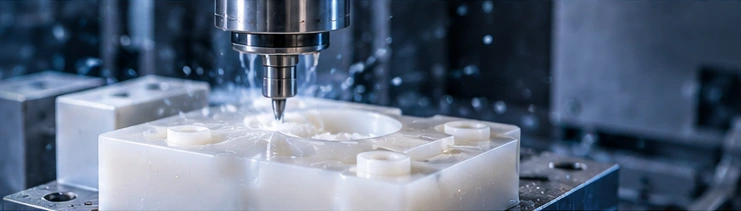
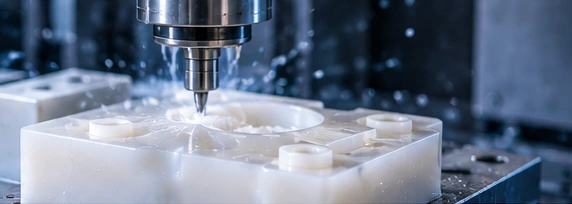
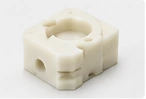
This page covers PEEK, POM / acetal, nylon and acrylic. Send the exact material specification, stock form, color and required records. Other polymers can be reviewed, but a listed material is not a claim of current inventory or confirmed suitability for every geometry.
How do I choose between POM and nylon?+
POM has low moisture absorption and useful sliding properties. Nylon offers a different balance of toughness and moisture behavior. Give us the load, motion, mating surface and environment; selection should be checked against the actual grade data and your design. [2] [3]
Can you machine PEEK parts for elevated temperatures?+
PEEK is a high-performance polymer used where thermal and mechanical demands occur together. State the exact grade, continuous and peak temperature, exposure time and load. Suitability and machining feasibility are reviewed for that specification rather than assumed from a generic temperature rating. [1]
Will a machined acrylic part be fully transparent?+
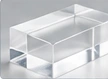
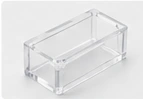
Not necessarily on every face. Identify which faces are viewed through, the acceptable marks and any required polishing. Agree appearance and dimensions separately, including a reference sample when useful. [4] [5]
What tolerances can you hold on plastic parts?+
Send the drawing with the critical dimensions and datums identified. We review the polymer, geometry, stock condition, feature access and measurement method before accepting tolerances. A blanket tolerance on this page would not describe every part reliably.
Should nylon be measured dry or after conditioning?+
That needs to be agreed for the application. Nylon absorbs moisture, and this can change dimensions and mechanical properties. Put the intended moisture or conditioning state and acceptance method into the specification. [3]
Can I replace a metal part with the same shape in plastic?+
Do not treat a material change as only a change of raw stock. Review the assembly load, temperature, clearances, fastening method and acceptance criteria with the drawing authority. A proposed plastic version should be evaluated before it replaces the original design.
Can you add threaded inserts or markings?+
Include the insert specification or part number, installation requirements, retention checks and marking location. We can then review the requested work and confirm what is included in the quote. Do not assume every insert or process suits every plastic.
Do you supply material certificates or application declarations?+
Tell us exactly which records are required and the material source restrictions. Required documents and the scope of verification must be agreed before sourcing. A generic polymer name does not establish compliance for a finished component.
Do I need a prototype before ordering a batch?+
A sample is particularly useful when assembly fit, appearance or handling needs confirmation. State the approval criteria and whether production must wait for written approval. Sample quantity, timing and batch release are agreed with the quotation.
What should I send for a plastic machining quote?+
Send a matching 3D model and dimensioned drawing, the exact material requirements, quantity and required delivery date. Add the operating environment, important dimensions, finish, sample approval and inspection records. The brief on this page helps collect those details.
Will my drawings go to another factory?+
Discuss confidentiality and the permitted sharing scope before sending restricted files. If the project needs a partner, agree the arrangement and responsibility with vetcnc first; direct introduction is also an option to discuss.