Nylon bushings and bearing sleeves
Send the shaft and housing dimensions alongside the bushing drawing. Include the intended clearance, load, lubricant and the condition in which the bore must be accepted.

Send the shaft and housing dimensions alongside the bushing drawing. Include the intended clearance, load, lubricant and the condition in which the bore must be accepted.
Specify the tooth profile, module or pitch, pressure angle, bore and hub. The cutting method and tooth inspection need to be agreed for the geometry, rather than assumed from the word “gear.”
Mark the running face, travel direction and fixing points. Include the counterface material and cleaning conditions so the review covers how the guide is located and used.
Identify the faces that carry load and the bore that locates the ring. Add the fastening arrangement, clearance and any installed measurement needed before accepting the assembly.
Show the working surface, recessed fasteners and replacement limits. Give the load, movement and contact material instead of using “wear resistant” as the only requirement.
Define the locating surfaces and how the part will be held. Include the inspection or assembly environment, especially when alignment needs to be repeated at another site.
Extruded PA6 is an established engineering stock material for mechanical components. Its combination of toughness, damping and wear behavior makes it relevant to guides and bushings. [2]
PA66 and PA6 are different polyamides, not interchangeable names. Compare the selected grade’s mechanical and thermal data under the conditions your part will experience. [1]
Cast nylon 6, often designated PA6G, is a stock-shape option as well as a material choice. A cast-nylon blank can still be finish-machined to your drawing; this is not the same process as injection molding a finished part. [3]
A filled or lubricated formulation needs its own material review. For example, a MoS₂-modified cast PA6 is a different product from an unfilled grade; do not assume that every dark nylon contains the same additive. [4]


A note that only says “nylon” leaves the PA type, stock route, additives and supply condition open. Send the current material specification and identify permitted alternatives. An equivalent color, family name or supplier description is not approval to substitute material.
Material options are for discussion, not a live stock list. Grade, source and available blank size must be confirmed for each order.
Polyamides can take up moisture from their surroundings. The effect depends on the material, part size, humidity, temperature and time. A dimension measured after machining should not be assumed to remain identical after storage or use. [5]
Select a measurement condition to include in your nylon parts brief.

Identify the faces that locate the part and the areas that carry load. We review access, part support and the sequence of features against your drawing. Provide the matching model so pockets, radii and drilled passages can be discussed together.
The bore, outside diameter and shoulder positions need to be read as an assembly. Send the shaft or housing details and the required condition at inspection. A turned dimension alone does not define the installed running clearance.
Gear teeth, inserts, cross holes, conditioning and functional checks may require a separate operation or specialist support. Confirm what is included, who performs the work and which results accompany the parts.
| Feature | Put on the drawing | Agree for inspection |
|---|---|---|
| Bores and bearing seats | Diameter limits, mating shaft or bearing, temperature and required moisture state. | Agree loose-part measurements and any installed-bore check separately. |
| Guide faces and flat pads | Datums, flatness or parallelism, support condition and fixing arrangement. | Use the agreed support; do not force a flexible part into the drawing shape. |
| Threads and inserts | Thread form, depth, insert specification and any assembly or torque requirement. | Define the thread check and insert trial rather than relying only on hole diameter. |
| Thin walls and deep features | Minimum wall requirements, accessible inspection points and working surfaces. | Confirm how each critical feature can be measured without distorting the part. |
| Sliding contact and wear faces | Surface finish where functional, mating material and expected motion. | A dimensional result is not a wear-life result; define a separate functional test when needed. |
| Condition-dependent dimensions | The accepted condition, conditioning procedure if any, and drawing revision. | Record the measuring environment and the time or state required by the agreed plan. |
There is no single tolerance that describes every nylon grade, geometry and service condition. Send the limits that matter to function. We confirm the achievable limits and how they should be checked before you place an order.
For a sliding guide or bearing sleeve, provide the counterface, speed, load and lubrication. Include whether the load is continuous or intermittent and how failure would be assessed in a sample trial.
Mark the areas that may be clamped and any face that must remain untouched. Agree whether a flexible part is inspected free-standing, supported or assembled, and show the fixture where it affects acceptance.
Describe ambient humidity, fluid contact, cleaners and storage conditions alongside the operating temperature. These details are part of the requirements review, not a reason to infer a universal moisture allowance.
The mating component can explain a dimension better than a tighter tolerance. Show the fastening method, interference or clearance intent and access for installation. Discuss inserts and replacement access before approving the part.
No review topics selected.
Send the machine interface, travel and replacement requirements. For a pad or guide, distinguish mounting surfaces from the faces intended to make contact.
Share the full geometry and mating mechanism, together with load, speed and the required test. Agree the process for the teeth, hub and locating features as one part of the order.
Identify what the fixture touches and which faces establish position. Include cleaning, humidity and storage conditions where the fixture is used at more than one location.
A requirement for food contact, electrical behavior or another controlled use needs an exact approved grade and the relevant documents. A generic nylon designation does not establish that a finished part meets the application requirement.
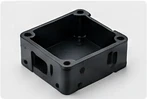
Specify roughness only where it serves a functional or appearance requirement. Identify the measuring area and distinguish a running face from a nonfunctional outside surface.
Call out edge breaks, cross-hole intersections and any edge that must stay sharp. Agree the result without allowing deburring to alter a locating diameter or sealing feature.
Provide the drawing limit and counterface details. Discuss the finishing method for the selected nylon rather than assuming a decorative polish improves the working contact.
Specify allowed cleaners, marking location and handling restrictions. Include packaging and storage instructions where maintaining the agreed delivery condition matters.
Surface finishing, conditioning and functional testing are separate requirements. Specify each one when it is needed.
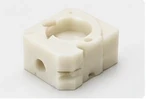
Agree the PA type, manufacturer or approved supplier, formulation, color and lot information needed. A material certificate should identify the material actually supplied; alternatives require a separate approval.
Link measured features to the released drawing and inspection plan. Include the temperature, relevant humidity or conditioning state, support and sample quantity, so incoming inspection is not comparing two different acceptance conditions.
A dimensional report does not establish wear life, load capacity or application approval. Define any conditioning check, assembly trial or other functional test with its method, limits and responsible party before production.
Supplier designation, fillers, stock size and approved substitutions affect the material requirement. Ask for the approved grade to remain identifiable on the quotation.
Small accessible features are a different quotation task from deep pockets, thin sections or features on several faces. A complete model helps identify these requirements early.
A defined conditioning step, recorded dimensions or an assembly trial adds scope beyond cutting the geometry. Specify it before comparing quotes so each offer covers the same requirement.
Provide separate quantities for evaluation, the first order and repeats. Sample approval, inspection effort, packaging and planned changes can then be discussed for each stage.
Include a matching model, PA grade, quantities and the conditions that affect acceptance.
Confirm substitutions, conditioning, inspection and the approval needed before a batch is released.
Use the agreed measuring condition and document approved changes under a new revision.
Confirm the grade, condition, records, packing and requested delivery again when reordering.
Selections are included with your inquiry. They are not a material recommendation, an order approval or a calculated fit. Your selections are included when you submit an inquiry.
I have spent ten years in the CNC industry, following the manufacturing business my father’s generation built. With our factories in China, I want to make the first conversation easier: share the drawing, ask how the work would be done, and agree what you need to check.
When a project is outside our own capabilities, I can discuss a partner route or introduce you directly. The arrangement and responsibilities should be clear before you commit.
Meet vetcncAsk which factory will perform the machining and who will handle additional operations. We can discuss direct production, coordinated support or a direct introduction without leaving the arrangement unclear.
Start with the drawing, load, temperature, environment and required records. PA6 and PA66 are different polymers; cast PA6 also identifies a stock manufacturing route. Specify a full grade rather than expecting a family name to settle the choice. Availability and suitability are confirmed for the actual order. [1] [3]
Yes. Polyamides can absorb moisture from the surrounding environment, and the effect depends on factors including humidity, temperature, part geometry and time. Agree the condition at measurement and the conditions expected in storage and use; do not assume a universal growth percentage. [5]
Not as a blanket rule. Send any required procedure and the condition in which the part must be accepted. The selected stock grade, geometry and application need to be reviewed before adding a conditioning step; the brief does not prescribe a drying or soaking process.
The drawing and order should state that. Loose-part dimensions, installed bore and working clearance answer different questions. Provide the shaft, housing and assembly method and agree any installed or functional check explicitly.
Not without approval. Keep the original material designation and required properties on the drawing. A proposed alternative should be identified and reviewed separately, rather than treated as equivalent because it is also sold as nylon.
Send the feature limits, geometry, PA grade and measuring condition. We review the machining and inspection requirements against the part. The agreed limits and measuring method should be stated feature by feature in the quotation.
These are drawing-based examples, not stocked product listings. Send the part drawing and application. For gears, include tooth data and required inspection; for wear parts, include the mating surface, load, motion and acceptance test.
No. The service shown here makes custom geometry from a stock shape by machining. Cast nylon stock may be used where approved, but machining a cast blank is different from molding the final part. Send prototype and production quantities so the appropriate route can be discussed.
Yes, include the exact document and acceptance requirement in your inquiry. Confirm the selected grade, available records, scope and responsible party before ordering. A generic material name or a checkbox does not establish a declaration or completed test.
Send a matching CAD model and dimensioned drawing, the PA grade, quantities, working environment and critical fits. Add the condition at inspection, finishing, records, sample approvals and requested delivery. Agree confidentiality before sending restricted information.
Agree confidentiality and the transfer method before sharing sensitive or restricted files.
These manufacturer references explain material families and handling considerations. They do not confirm vetcnc inventory, equipment, certifications, tolerances or approval of a finished part. Use the current documentation for the exact grade and application. References reviewed 18 September 2026.
General PA6 and PA66 distinctions; exact grade data must be used for design.
Example of a PA6 engineering stock grade, not a vetcnc inventory statement.
Cast nylon 6 stock shapes and the distinction from final-part molding.
Example of a MoS₂-modified cast PA6; formulations are not interchangeable.
Section 4 discusses storage, dimensional changes and moisture-dependent properties.