Bushings and Sleeves
Plain sleeves, flanged bushings and stepped bearings locate a shaft within a housing. We machine the bore, outside diameter and end faces as related features, with grooves or retention details where specified.
CNC turning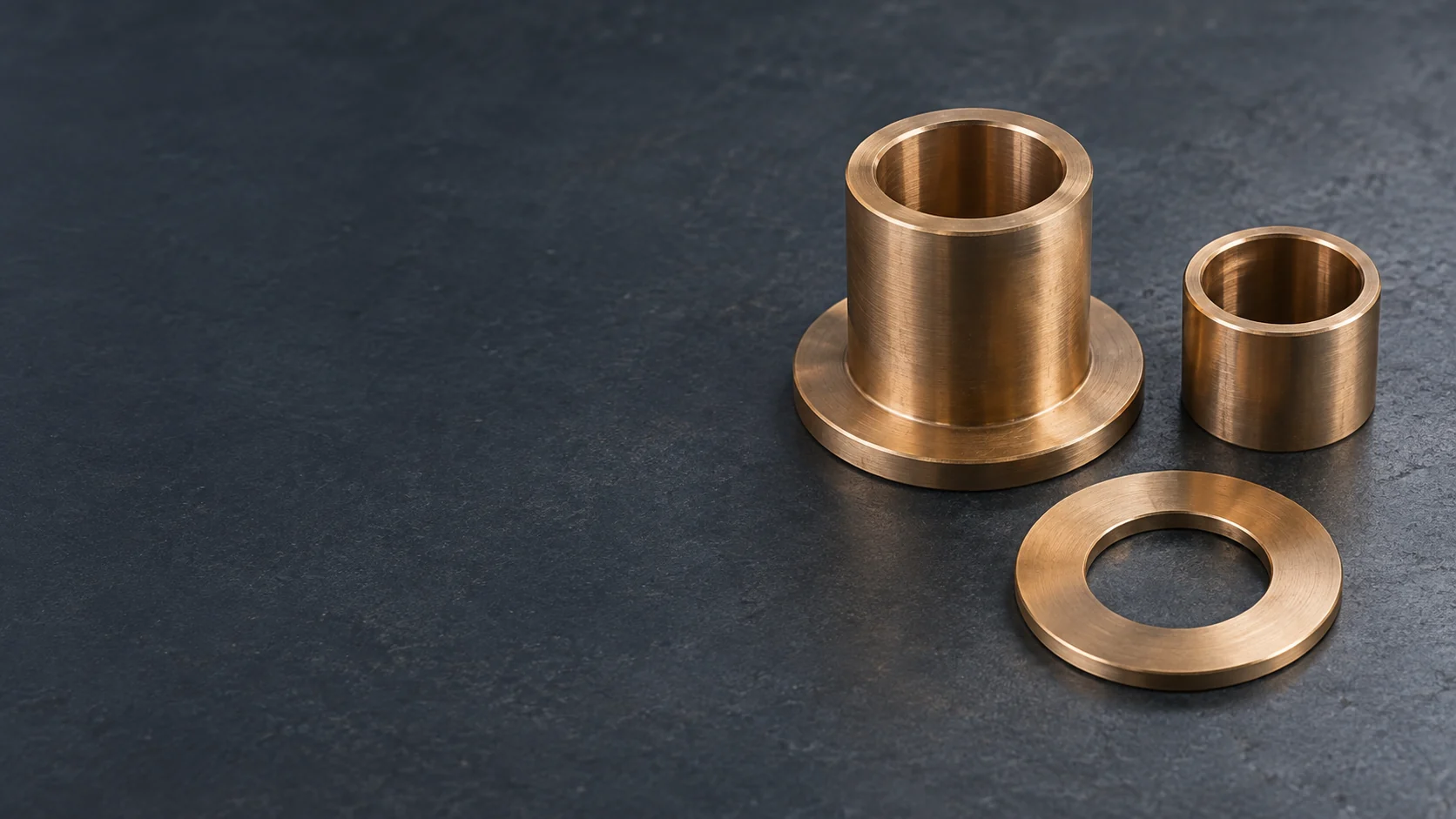
Our CNC turning and milling services cover cylindrical bearing parts and components with flat wear faces, mounting patterns or threaded connections.
Plain sleeves, flanged bushings and stepped bearings locate a shaft within a housing. We machine the bore, outside diameter and end faces as related features, with grooves or retention details where specified.
CNC turningThrust washers carry axial contact; guide blocks and wear plates provide sliding faces. Flatness, thickness and mounting-hole position control how these parts seat against their mating surfaces.
CNC millingValve bodies, collars and spacers can combine turned seats with milled flats, cross-holes and threads. We machine these secondary features from the same component drawing.
Compare the alloy designation and stock form first. C93200 is a cast bearing bronze, C95400 is a cast aluminum bronze, and C54400 is a wrought leaded phosphor bronze.
| Alloy | Stock form | Typical components | Machinability rating | Main alloying elements (wt%) |
|---|---|---|---|---|
| C93200 · Bearing bronze | Cast stock | Bushings; sleeve bearings | 70 | Sn 6.3–7.5; Pb 6.0–8.0 |
| C95400 · Aluminum bronze | Cast stock | Loaded bearings; wear parts | 60 | Al 10.0–11.5; Fe 3.0–5.0 |
| C54400 · Leaded phosphor bronze | Wrought rod / bar | Screw-machined parts; valve parts | 80 | Sn 3.5–4.5; Pb 3.0–4.0 |
Source: CDA alloy profiles. Machinability is a relative rating with free-cutting brass C36000 = 100, not a cutting-speed percentage. Composition values are specification ranges.
For loaded bearings, C95400 aluminum bronze brings strength and wear resistance, but needs a compatible hard shaft, good alignment and reliable, clean lubrication. C54400 suits machined components made from wrought rod or bar. C93200 and C54400 contain lead; the specified alloy must meet the end-use requirements.
A continuously rotating shaft and a slowly oscillating pivot place different demands on the bearing. Lubrication, load and shaft condition matter alongside the alloy.
Where the bearing operates on a continuous oil film, clearance and oil supply help keep the shaft separated from the bronze. Shaft finish and alignment also affect that working film.
Start-stop or reversing motion can leave more contact between the mating surfaces. The alloy, shaft hardness and lubrication arrangement must suit that duty; a stronger bronze alone does not establish a longer service life.
We combine turning for circular fits with milling and drilling for features that locate, retain or lubricate the part.
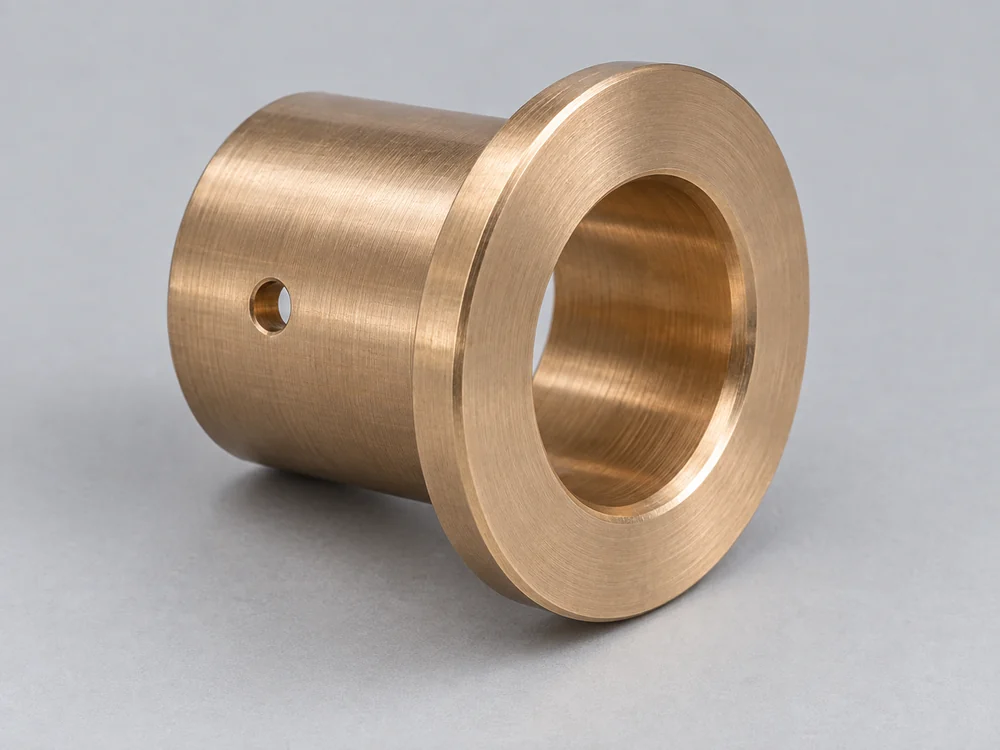
Thin sleeves need support during machining so clamping does not distort the finished bore. A press fit can also close the bore after installation. Free-state bore size and installed running clearance therefore describe different checks.
Flange faces and fitted diameters are turned features; grooves and cross-holes add access and deburring requirements. The machining sequence must allow access to remove burrs where an oil hole meets the bore or groove, without rounding a working edge.
Bearing surfaces, seating faces and exposed surfaces have different finish requirements. We retain those distinctions in the finished component.
Surface roughness belongs on the contact area that needs it. A uniform cosmetic polish can round an oil-groove edge or remove material from a fitted diameter; local finishing keeps those functional features distinct.
Chips trapped in a cross-hole can reach the bearing surface at assembly. Passage cleaning and handling protection need to suit the part’s next use, including any bonding operation or fluid-system cleanliness requirement.
Alloy identity, finished size and geometric relationships are separate inspection items.
The material record identifies the alloy, stock form and supplied condition. Casting and wrought-stock designations are not interchangeable, even where the finished parts look similar.
Bore and outside-diameter readings establish size. Roundness, bore-to-OD runout and flange perpendicularity require the corresponding geometric checks when specified. Requested measurement records are included in the quotation scope.
Solid bronze bushings need the lubrication arrangement specified for their duty. Oil-impregnated sintered bearings and graphite-plugged bearings use different constructions; a solid machined bronze part does not acquire their self-lubricating properties.
Bronze 12 commonly refers to CuSn12 tin bronze. The European cast grade CuSn12-C is CC483K, with 11–13% tin. It is different from C93200; use the complete material designation and stock condition on the drawing.
This service is for finished parts made to a drawing. We quote the component and its specified machining operations rather than standard bronze bar or tube sold by length.
Send the drawing, bronze alloy and quantity. For a fitted bushing, include the mating shaft and housing requirements so we can quote the part in its intended finished condition.