On this page
More sustainable CNC machining starts with reducing unnecessary resource use while delivering the required part. Material utilization, chip recovery, electricity and fluid consumption answer different questions. A high recycling rate alone does not establish a low environmental impact.
For a useful comparison, keep the part’s function, material requirements and accepted quantity consistent. Then identify what is measured and which manufacturing stages are included.
Material utilization measures what remains in the part
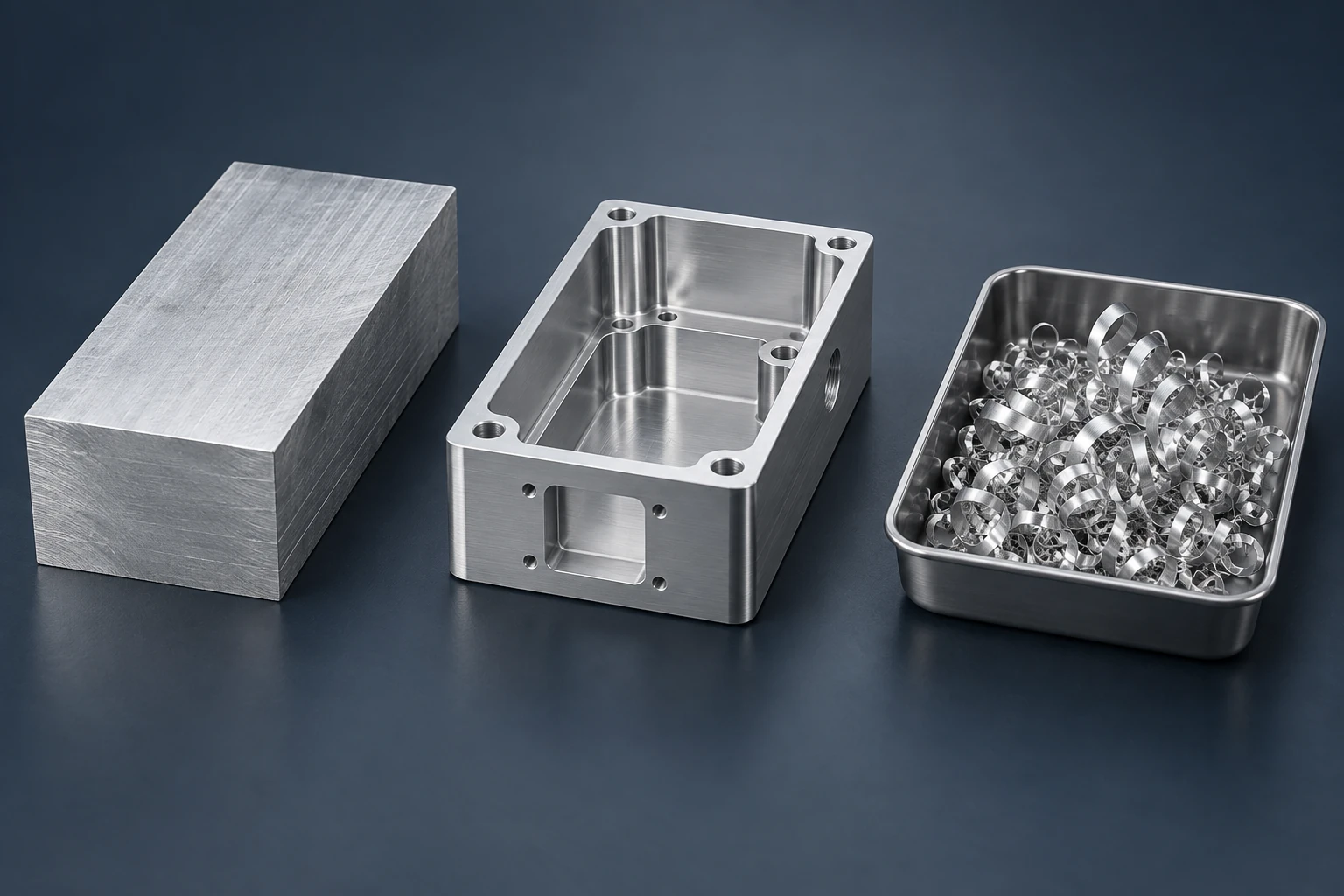
A simple blank-to-part measure is finished part mass ÷ starting blank mass. In a hypothetical example, a 5 kg blank becomes a 2 kg part: utilization is 2 ÷ 5 = 40%. Assume one accepted part, the same material throughout and no added coating. The other 3 kg is removed material, not automatically landfill waste or verified recycled metal.
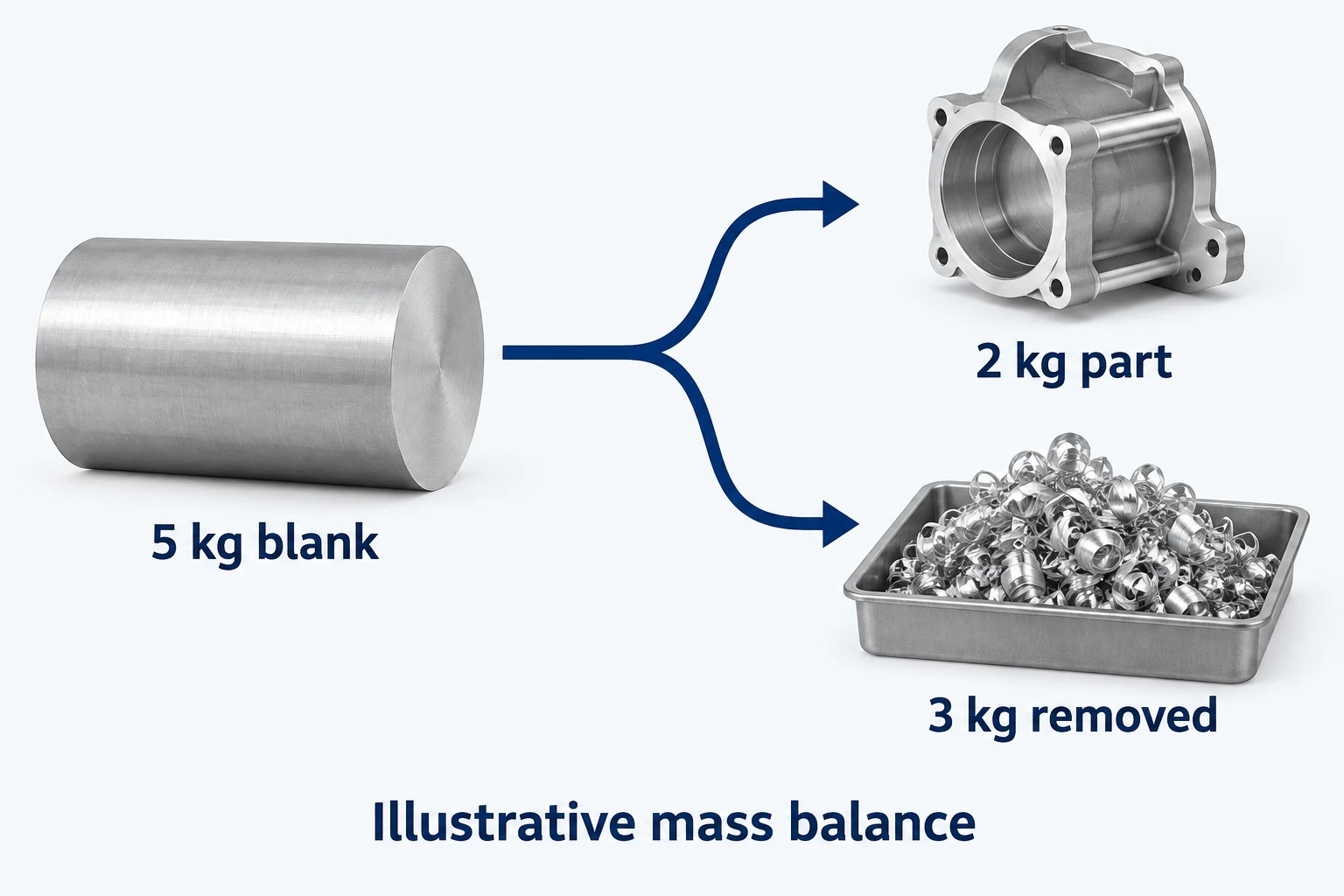
A closer-sized blank may improve this ratio. Keep the stock needed for clamping, cleanup and the chosen material condition. Our material and part-design guide explains how proposed changes relate to functional requirements.
A near-net blank can reduce removal, but producing that blank has its own inputs. Compare the complete routes before concluding that less machining means a smaller overall footprint.
Preventing scrap and recovering it are different actions
The EPA’s pollution-prevention hierarchy distinguishes reducing waste at its source from recycling waste after it exists. Both matter. Improving a blank layout or avoiding rejected parts reduces resources consumed; collecting chips addresses the material already removed.
Chip recovery needs an identified material stream and a suitable destination. The Aluminum Association’s Secondary Production 101 explains why separating aluminum scrap by alloy and controlling contamination improves its value. Mixed alloys are not equivalent to a known, segregated grade.
NIST’s machining sustainability model also treats chip processing as an activity with an environmental burden. Fluid-contaminated chips may need additional processing. A scrap collection receipt establishes a transfer; it does not, by itself, establish the mass of usable metal ultimately recovered.
For a milled component, document starting stock, accepted parts and removed material separately. Keep reusable offcuts separate from chips, and distinguish dry metal mass from a container weight that includes fluid.
Count energy, fluids and rejected parts within one boundary
A machine’s spindle power rating is not the electricity consumed by an order. Energy depends on power over time, including the equipment and operating states being measured. NIST’s model includes auxiliaries such as coolant pumps and chip conveyors, as well as idle energy.
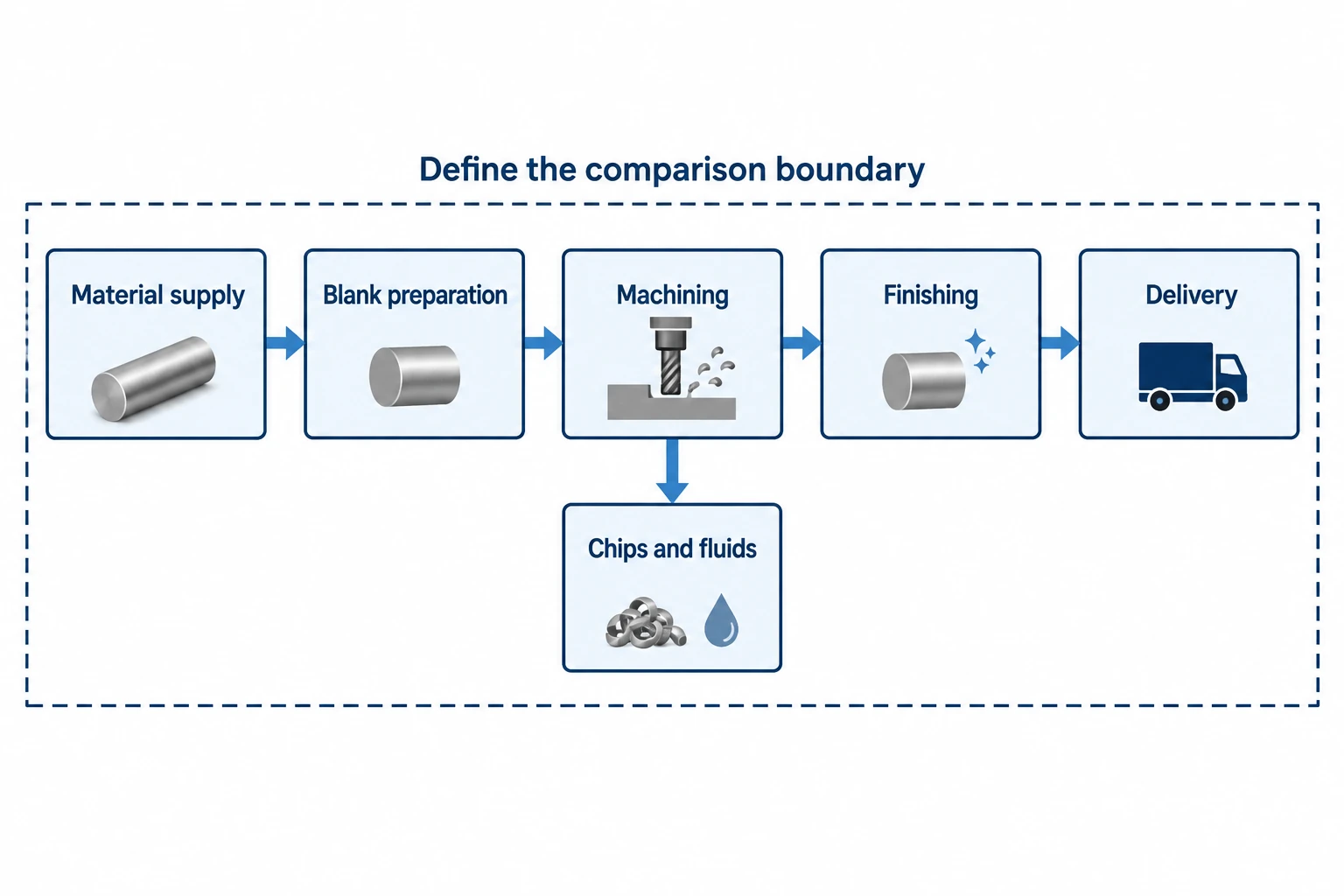
Fluid management is another practical opportunity. The EPA’s Metal Manufacturing and Fabrication fact sheet identifies contamination control and maintenance as ways to extend coolant life. This does not mean running dry is always preferable: the material, tooling and required result still determine the cutting method.
| Record | Useful comparison basis | Important condition |
|---|---|---|
| Starting material | kg per accepted part | Same part definition and material scope |
| Collected chips | Dry metal kg and alloy stream | Separate collected and recovered quantities |
| Electricity | kWh per accepted part | Same equipment boundary and allocation method |
| Working fluid | Concentrate used and waste mixture, separately | Defined period, dilution basis and output |
Include rework and rejected parts in the resources used, then divide by accepted output. Otherwise, a route that produces more scrap can appear efficient simply because unsuccessful attempts disappear from the calculation.
Use the same discipline as a like-for-like machining quote comparison: align the revision, quantity, finishing and inspection scope. If a carbon figure is supplied, request its boundary, data period, emission factors and treatment of recycling. Material savings or lower cost alone cannot supply those missing inputs.
Frequently asked questions
Does recyclable material mean the part contains recycled metal?
No. Recyclability describes a possible recovery route. Recycled content describes the origin of material used to make the supplied product and needs its own supporting information.
Is higher material utilization always the best design?
No. The ratio is one measure. A lighter finished part can have lower blank-to-part utilization yet offer benefits in use. Function, service life and the comparison boundary still matter.
Can a machine’s kWh figure be called the part’s carbon footprint?
No. Electricity needs an appropriate emission factor to estimate associated emissions, and the stated footprint needs a defined scope. Material production, outside processing and transport may sit outside the machine measurement.
Technical references
NIST, A Virtual Machining Model for Sustainability Analysis (2010), system boundaries and resource indicators. EPA, Metal Manufacturing and Fabrication (FY22–23), pollution-prevention opportunities. The Aluminum Association, Secondary Production 101, segregation and alloying.