On this page
No. Automation can lower the cost of a small CNC batch when the handling or machine time it saves outweighs its additional preparation and operating costs. It can also make the first batch more expensive while making an unchanged repeat batch cheaper. The useful comparison follows the same part through loading, machining and preparation for the next cycle—and distinguishes time saved at the machine from time saved by an operator.
Identify the handling task
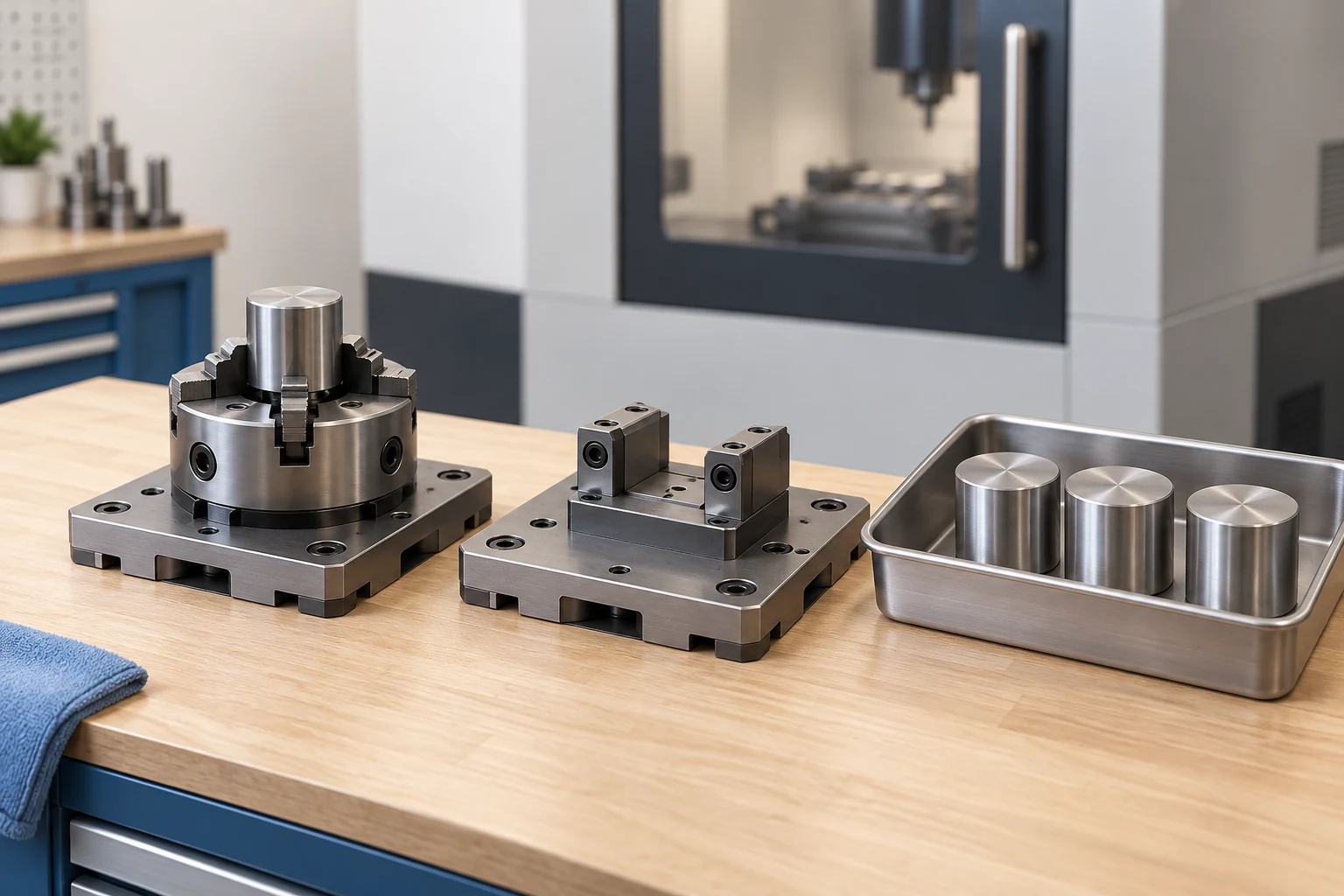
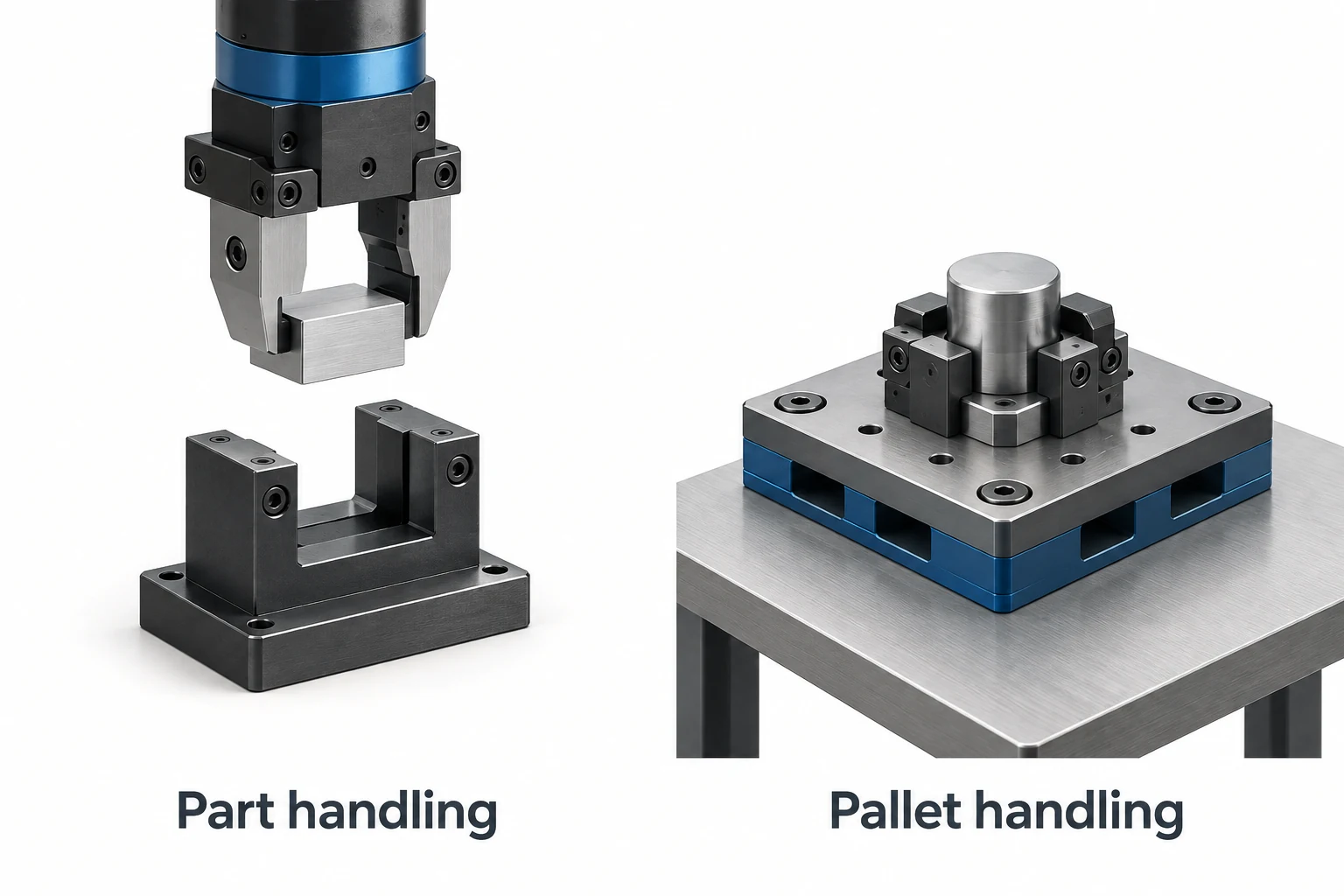
“Automated CNC” can describe quite different arrangements. A parts loader transfers individual blanks and machined pieces. A pallet changer transfers a fixture carrying work already prepared for machining. That preparation may still be manual. A CNC-controlled cutting program alone does not tell you which loading, cleaning or checking tasks happen automatically. [1] [2]
This distinction matters to a small order. A robot-loading proposal may require suitable gripping surfaces, loading positions and a reliable supply of blanks. A pallet proposal may instead move the operator’s preparation away from the machine, allowing it to happen while another part is being cut. The second arrangement can reduce machine waiting without eliminating the operator’s work. Fastems explicitly distinguishes automatic pallet exchange from automatic workpiece loading. [3]
Compare the same accepted part, quantity, material and finishing scope before isolating the handling change. The CNC cost and supplier-selection guide covers that broader quotation baseline. Here, the question is what automation changes within one small production release.
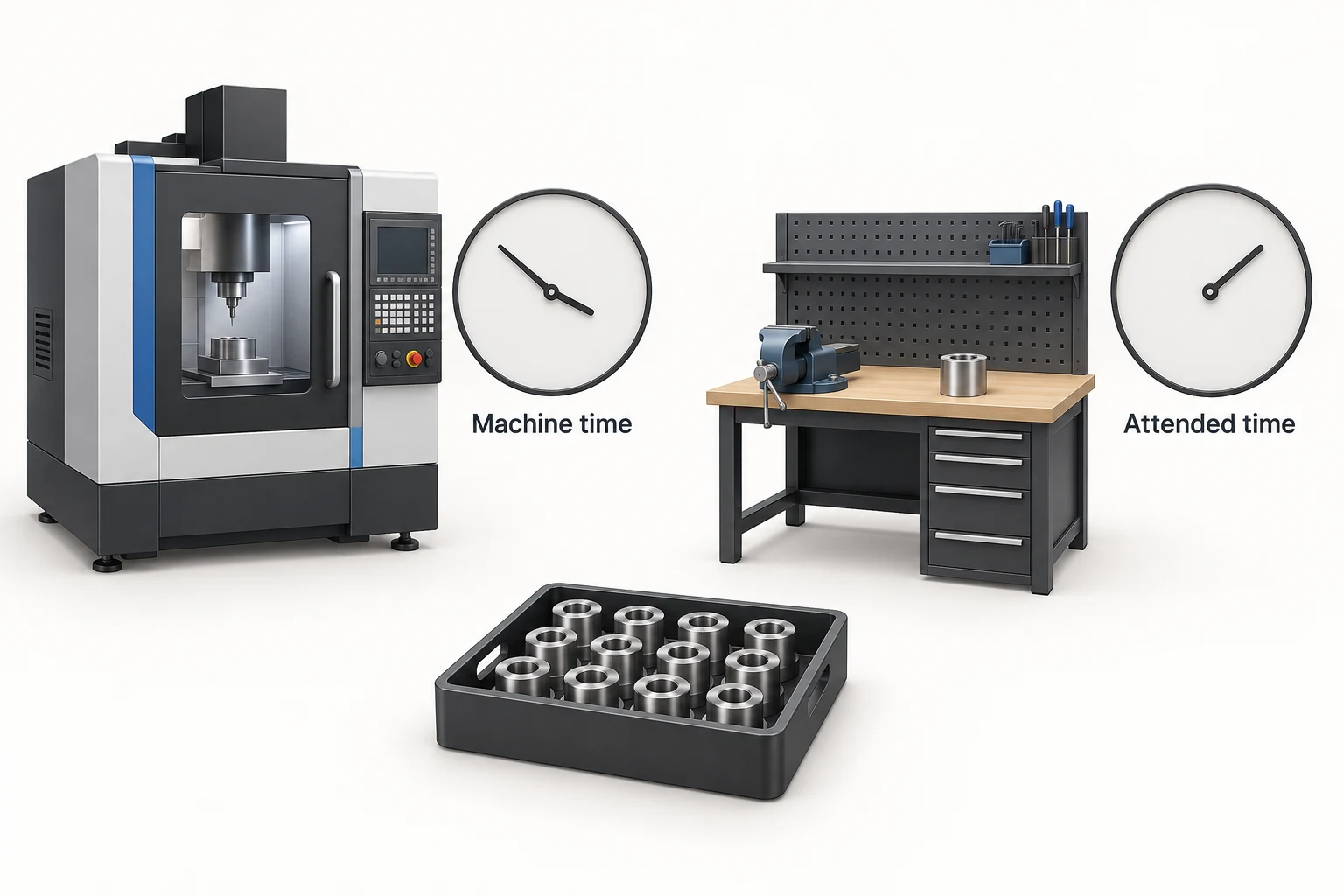
Separate machine time from operator attention
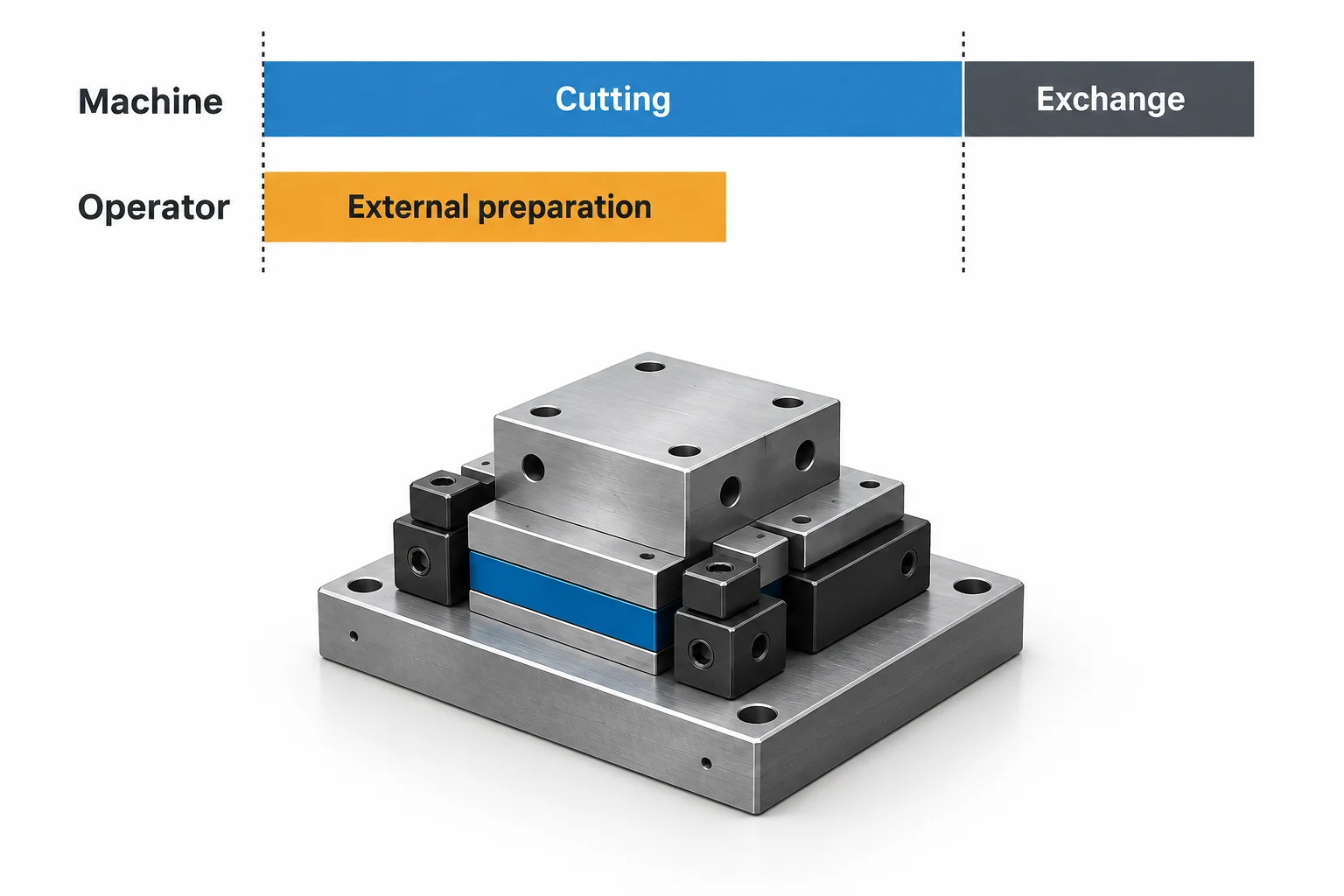
Consider an illustrative two-pallet arrangement with 10 minutes of unchanged machining. Allow 1 minute to unload and clear a fixture, and 1 minute to load the next part. Manual changeover therefore takes 2 minutes while the machine waits. With prepared-pallet exchange, the same work happens externally during machining. Automatic exchange takes 0.5 minute with no additional operator attention. The table shows a steady interval once both pallets are circulating.
| Assumed steady interval | Manual loading | Prepared-pallet exchange |
|---|---|---|
| Machining | 10 min | 10 min |
| Handling that stops machining | 2 min | 0.5 min automatic exchange |
| Operator preparation | 2 min during the machine stop | 2 min overlapping machining |
| Time between successive machining starts | 12 min | 10.5 min |
| Attended handling per change | 2 min | 2 min |
The machine interval falls by 1.5 minutes; attended handling does not fall at all. The external task is still paid work. It has changed position in the schedule. Do not subtract its 2 minutes again after calculating the 10.5-minute interval.
This overlap requires a suitable separate loading position and an available operator who finishes preparation before exchange is needed. If preparation runs beyond the machining interval, the machine waits for the next pallet. If the same person must inspect another part or serve another machine, that conflict can also consume the apparent overlap. [3]
An automatic parts loader could produce a different result: less attended work but a longer machine interruption. Door, gripping and exchange movements belong in that comparison along with transfer time. A faster-moving loader alone does not establish a shorter complete changeover. [1]
These are running intervals, not complete-batch durations. The first load, final unload and initial job preparation still exist. They become especially visible when only a few parts pass through the arrangement.
Compare first and repeat batches
Now consider 10 accepted parts, with nine changes between successive machining starts. The manual route uses 9 × 2 = 18 machine minutes for those changes; pallet exchange uses 9 × 0.5 = 4.5 minutes. The difference is 13.5 machine minutes. For the two-pallet route, load part 2 during the first cut (1 minute), unload and reload during cuts 2–9 (8 × 2 minutes), then unload part 9 during cut 10 (1 minute). That also gives 18 attended minutes. The shared first load of part 1 and final unload of part 10 are outside this comparison.
For this hypothetical cost comparison, assume an equipment-only rate of $60 per hour for either route, including its equipment costs but excluding operator labor. The machine-time difference is 13.5 ÷ 60 × $60 = $13.50. Labor has the same rate and duration, so its difference is zero.
Assume equal first-load, final-unload and other endpoint costs, with no rejects, rework or other cost differences. Those common items are excluded from the difference calculation. No cycle-long operator supervision is assumed; any required attendance beyond handling would need its own allowance. The separate preparation charges below cover work outside the running intervals and attended handling already counted. All amounts are illustrative USD inputs, not market prices or a VETCNC quotation.
| Ten-part release | Manual preparation | Automated-route preparation | Machine-time saving | Automated minus manual cost |
|---|---|---|---|---|
| First batch | $20 | $60 | $13.50 | $26.50 more |
| Unchanged repeat batch | $20 | $20 | $13.50 | $13.50 less |
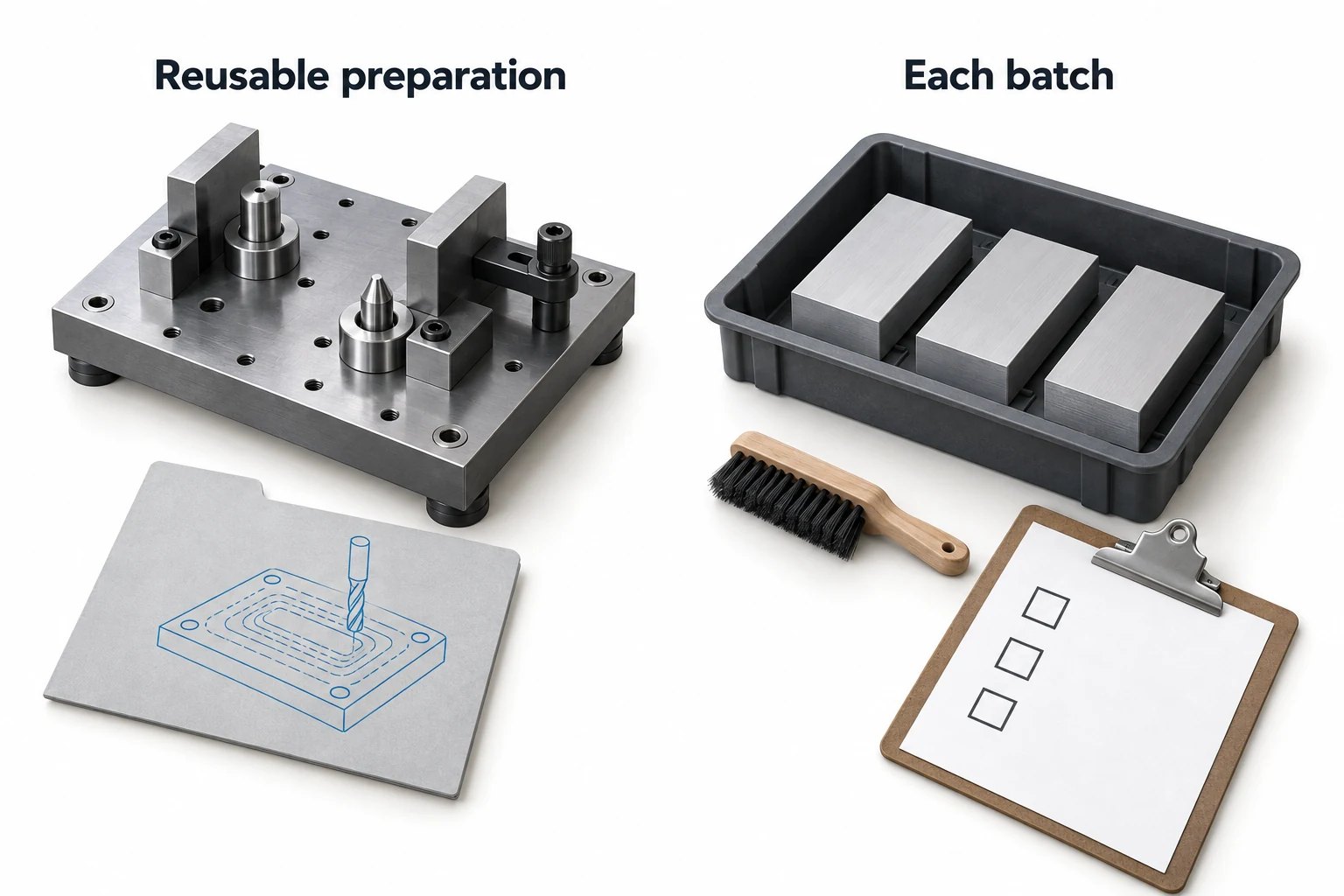
The result reverses because the assumed extra first-job preparation disappears. Repeat preparation is still $20, not zero. In practice, saved loading programs and compatible gripping or fixture arrangements may be reusable, while loading stock, confirming the job and checking the setup still recur. A changed blank, gripping interface or revision can require new preparation. [1] [4]
Our prototype and production service distinguishes the first release from repeat supply. Keep those quantities and retained preparation explicit when comparing offers.
Count each cost once
The example uses separate equipment and labor costs deliberately. A supplier’s hourly rate may already include operator labor, tooling or other support. Adding the full attended-labor charge to that loaded rate can count the same cost twice. Compare the quoted rate’s scope before applying a separate time saving.
Automation also depends on the work being ready: the right program, material, tooling and handling arrangement must be available. A stored loading job is useful, but it does not establish that every resource is present or that the next run needs no verification. Tool replacement, chip removal and coolant attention remain process tasks. Where automated probing or tool checks are used, their time and required responses also belong in the route. [6] [7] Fastems’ resource guidance connects small-batch automation with this preparation. [5]
Finally, a machine hour released is not automatically cash saved or a lower offered price. The CNC cost-optimization guide explains that distinction in more detail. For this order, the useful result is a comparable first-batch price and a defined repeat-batch offer, with any different startup, attendance, equipment or inspection costs included once.
Small-batch CNC automation FAQ
Does CNC-controlled cutting mean a batch is fully automated?
No. Part loading, fixture preparation, cleaning, material supply and inspection may still require people. Identify the particular handling task being automated before attributing time or cost savings to it.
Can a pallet changer reduce cost without reducing labor time?
Yes, if preparation moves outside the machine’s occupied time and the resulting machine-time benefit exceeds any added costs. The operator may still spend the same time preparing each part, as in the worked example.
Does an unchanged repeat order have no setup cost?
No. A retained program or fixture may reduce preparation, but restoring and checking the job, preparing stock and loading the system can still take work. Compare an explicit repeat-order charge rather than assuming the first setup never recurs.
Should an annual forecast be used to justify automation for the first order?
Keep the current released quantity separate from potential later batches. Identify what the first order pays for and which preparation can actually be reused. A forecast alone does not establish that future orders will recover an initial charge.
Technical sources
- Haas Automation. Lathe – APL – Operator’s Manual Supplement — 6 – Lathe APL – Operation. Loading-job definition, gripping and positions, and saving or restoring job files.
- Haas Automation. Pallet Pool – Operator’s Manual Supplement — 6 – Pallet Pool – Operation. Pallet scheduling, loading readiness and exchange between machining programs.
- Fastems. Run smaller batches economically (1/3): Part fixturing to machine. External preparation and the distinction between pallet exchange and workpiece loading.
- Fastems. Run smaller batches economically (2/3): Robotic handling and gripping. Gripping interfaces and reuse across compatible workpieces.
- Fastems. Run smaller batches economically (3/3): NC programming and resource management. Program preparation and availability of production resources.
- Haas Automation. Mill Operator’s Manual — 3 – Mill – Safety, sections 3.1, 3.4 and 3.11. Recurring tool, chip and coolant tasks; supervision and setup checks.
- Renishaw. Automation solutions for CNC machining: Precision manufacturing and process control, 2022. Process setting, tool checks, in-process control and final verification.