On this page
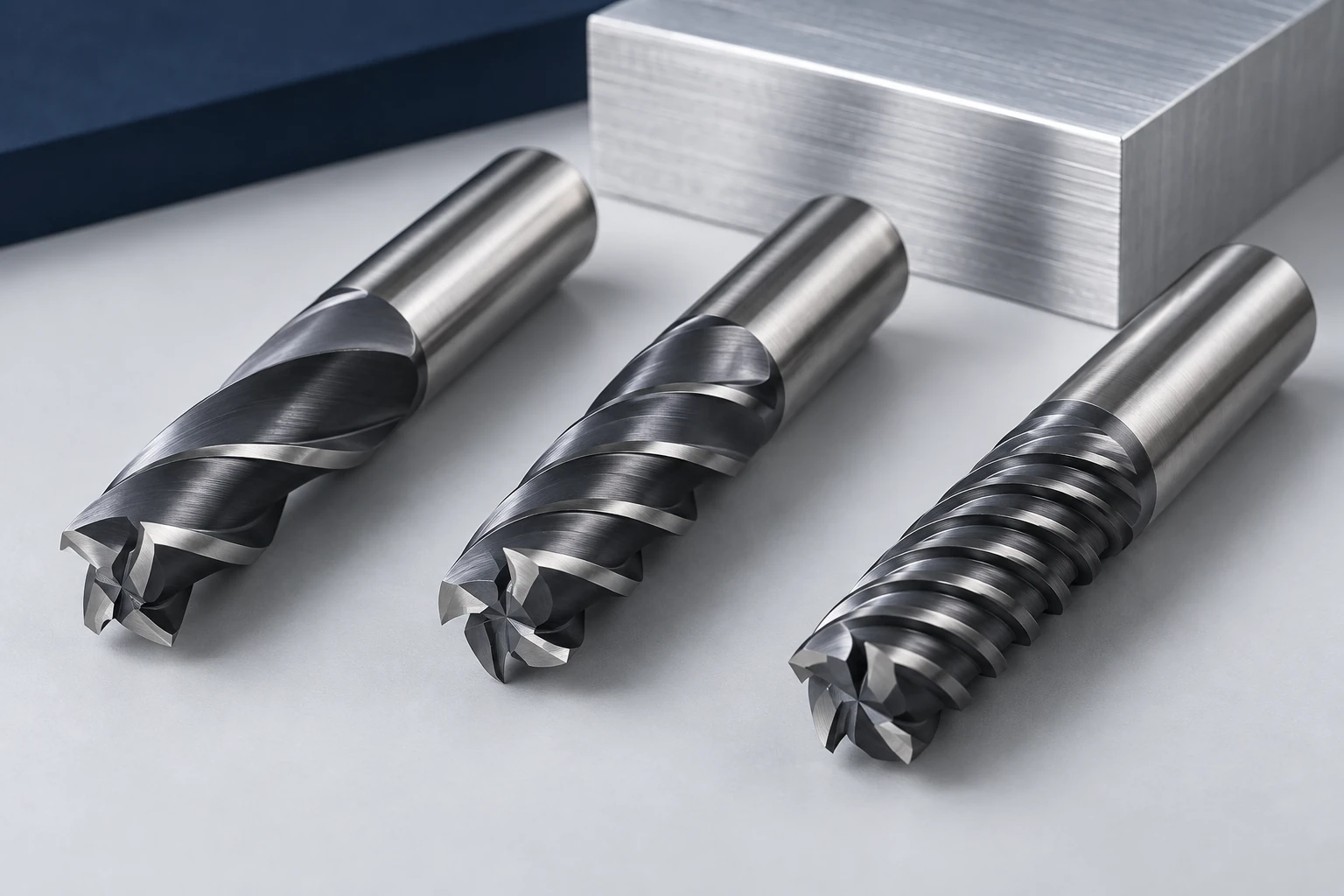
An end mill’s flute count affects how much room chips have to escape and how often a cutting edge passes through the cut. More flutes can support a productive finishing or light-engagement strategy, but they can also restrict chip space. The useful choice depends on the material, tool geometry and operation.
For a part designer, this explains why the cutter used to clear a slot may differ from the one used to finish its walls. A flute count alone cannot specify the finished surface.
Flutes provide chip space as well as cutting edges
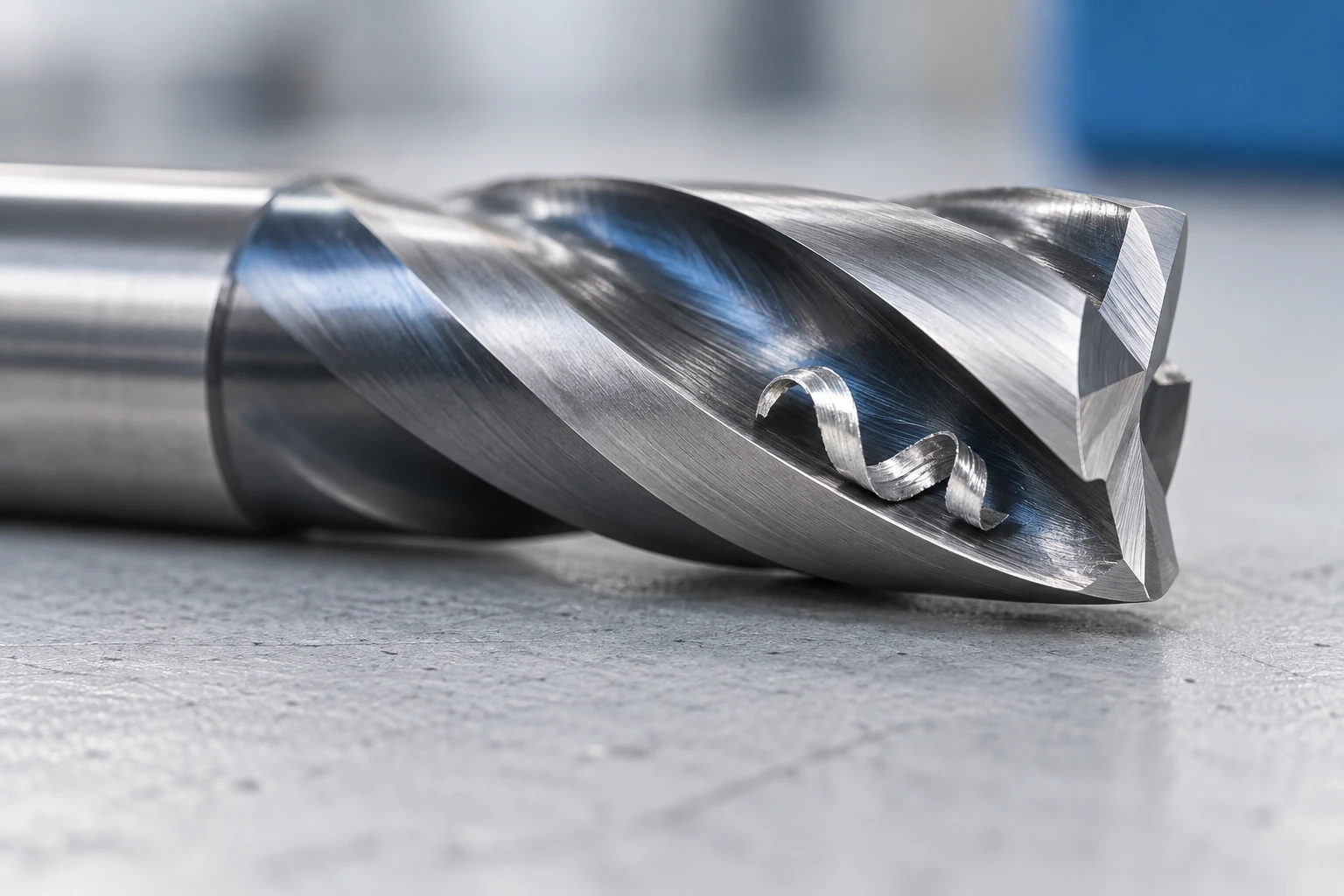
A flute is a groove alongside a cutting edge. In comparable tools of the same diameter, adding flutes generally leaves smaller valleys and a larger central core. The larger core can improve rigidity, while the smaller valleys limit the room available for chips. Actual geometry varies between tool families.
Harvey Performance’s Why Flute Count Matters describes this tradeoff. Chip packing becomes a concern when the operation produces more chips than the tool and delivery arrangement can clear. The CNC milling process guide explains how engagement changes as a cutter moves through a feature.
Match the material and the cut together
Two- and three-flute tools are common choices for aluminum and other nonferrous applications. That is a starting point, not a rule excluding higher counts. Steel tooling spans a wider range, and a tool intended for light finishing may be unsuitable for clearing a full-width slot.
| Cutting situation | Selection priority | Condition that matters |
|---|---|---|
| Full-width slotting | Chip room and evacuation | Cut depth, material and available chip exit |
| Light radial engagement | Balance more edges with chip clearance | Tool-specific feed and engagement limits |
| Wall finishing | Stable edges and controlled remaining stock | Runout, rigidity and surface requirement |
| Miniature features | Core strength and small-tool behavior | Runout relative to tool size and edge geometry |
High-efficiency milling uses controlled, light radial engagement to make higher flute counts useful in some roughing applications. “Roughing always needs few flutes” is therefore too broad. Conversely, a miniature tool may need more core support even in slotting; its manufacturer’s guidance can call for reduced cutting depth to preserve chip clearance.
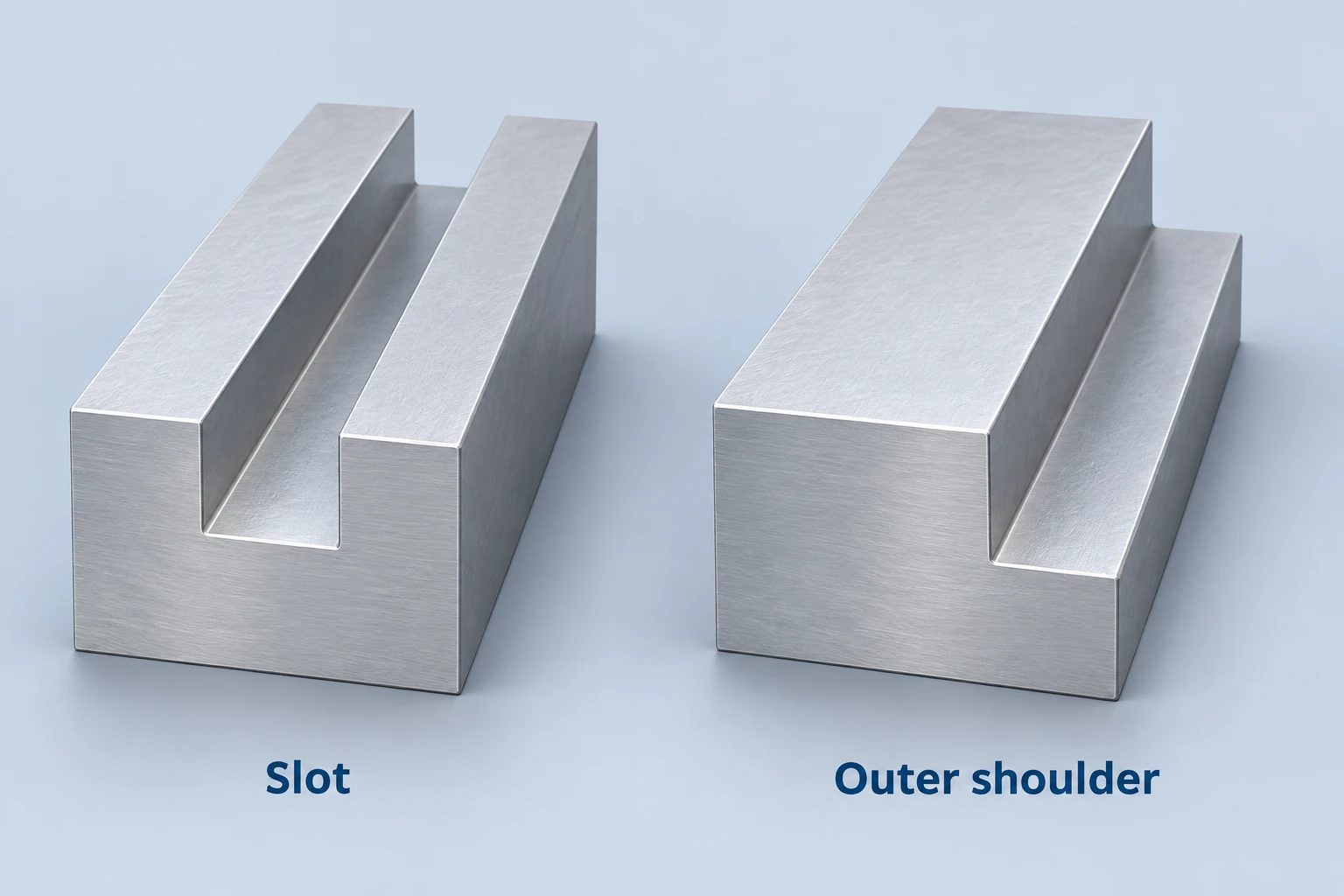
A wider opening or accessible outside wall can permit a different toolpath from a narrow enclosed feature. The part-design guide helps evaluate access changes while preserving the interfaces the part needs.
Changing flute count changes the feed calculation
For a conventional end mill with one effective peripheral cutting edge per flute, feed per tooth is table feed ÷ (spindle speed × flute count). Sandvik Coromant’s milling formulas use the more general term “number of effective teeth.”
In a hypothetical comparison at 6,000 rpm and 600 mm/min, a three-flute tool has a nominal feed of 0.033 mm/tooth; a six-flute tool has 0.017 mm/tooth, rounded. The second value is half the first before rounding. These numbers illustrate the relationship; they are not cutting recommendations.
Preserving the original feed per tooth would require twice the table feed, but that arithmetic does not establish that the tool, chips, workholding or machine can accommodate it. Feed per tooth also differs from instantaneous chip thickness, which depends on the cutting geometry and engagement.
More edges do not guarantee a better finish
Runout makes cutting edges share the work unevenly. Vibration and edge condition also influence the surface; reducing nominal feed per tooth indefinitely can lead to rubbing rather than effective cutting. These effects are particularly significant with miniature tools.
Define the required surface on the drawing instead of specifying a flute count as a substitute. For a CNC milling review, identify the material and condition, feature depth and surfaces that control function. The process can then combine tools and passes around those requirements.
Frequently asked questions
Is a four-flute end mill unsuitable for aluminum?
Not necessarily. Suitability depends on the tool’s geometry, coating and intended application, together with chip evacuation and engagement. Use its aluminum-specific application data rather than deciding from flute count alone.
Can I change flute count without changing the program?
Do not assume the existing cutting parameters remain suitable. Even when tool diameter is unchanged, the same spindle speed and table feed produce a different nominal feed per tooth. The tool and operation need a fresh parameter review.
Does flute count determine the smallest pocket corner?
No. In conventional end milling, the cutter’s rotating diameter constrains the concave corner between vertical walls. Flute count affects cutting behavior; it does not remove that geometric limit.
Technical sources
Harvey Performance: Why Flute Count Matters; 5 Questions to Ask Before Selecting an End Mill; Speeds and Feeds 101; and How to Optimize Miniature End Mill Performance, particularly runout, chip thickness and miniature slotting. Sandvik Coromant: Formulas and definitions for milling — Metric and the published introduction to The Importance of Chip Thinning in Machining. Selection ranges are application guidance, not universal settings.