On this page
For a machined part, the main reason to choose 316L instead of 316 is to limit sensitization during later welding. The lower carbon limit helps preserve resistance to intergranular corrosion around the weld. It does not make 316L universally stronger, easier to machine or immune to chloride attack. If the part will remain unwelded, the specified product standard, supplied condition and actual material certificate can matter more than the extra letter.
This comparison covers parts machined from wrought stock. Start with the service environment and manufacturing sequence, then compare stock that meets the drawing. A low-carbon composition alone is not permission to substitute one certified grade for another.
What changes between 316 and 316L?
Both are molybdenum-bearing austenitic stainless steels. The “L” identifies the low-carbon version. The following selected composition limits are reported in ATI’s technical data sheet for its ASTM A240/ASME SA-240 sheet, strip and plate products. They explain the grade distinction; the order’s applicable specification and certificate govern acceptance. [1]
| Designation or element | 316 | 316L |
|---|---|---|
| UNS designation | S31600 | S31603 |
| Carbon, maximum wt.% | 0.08 | 0.030 |
| Chromium, wt.% | 16–18 | 16–18 |
| Nickel, wt.% | 10–14 | 10–14 |
| Molybdenum, wt.% | 2–3 | 2–3 |
Maximum carbon is a limit, not a target. A heat of 316 may contain less carbon than its permitted maximum. Its actual composition and other required properties determine whether it can also be certified as 316L.
Strength needs a separate comparison. ATI lists lower minimum tensile and yield strengths for annealed 316L flat products than for annealed 316 under those specifications. That does not establish the strength of two particular bars: compare the same product form, supply condition and required properties. Do not transfer a plate value to a cold-worked bar or use a typical data-sheet value as a guaranteed minimum.
Later welding can decide the grade
Welding heats material beside the joint without necessarily melting it. In susceptible stainless steel, this thermal exposure can allow chromium carbides to form at grain boundaries, reducing corrosion resistance nearby. This is sensitization; the resulting attack follows grain boundaries rather than simply producing pits on an otherwise unaffected surface. Lower carbon reduces this risk during welding. [2]
Consider a machined collar that will later be welded to a tube. Its final service condition includes that weld, even if the machining supplier delivers a clean, unwelded component. The designer should evaluate 316L for the complete assembly, with the joining procedure and finishing sequence included.
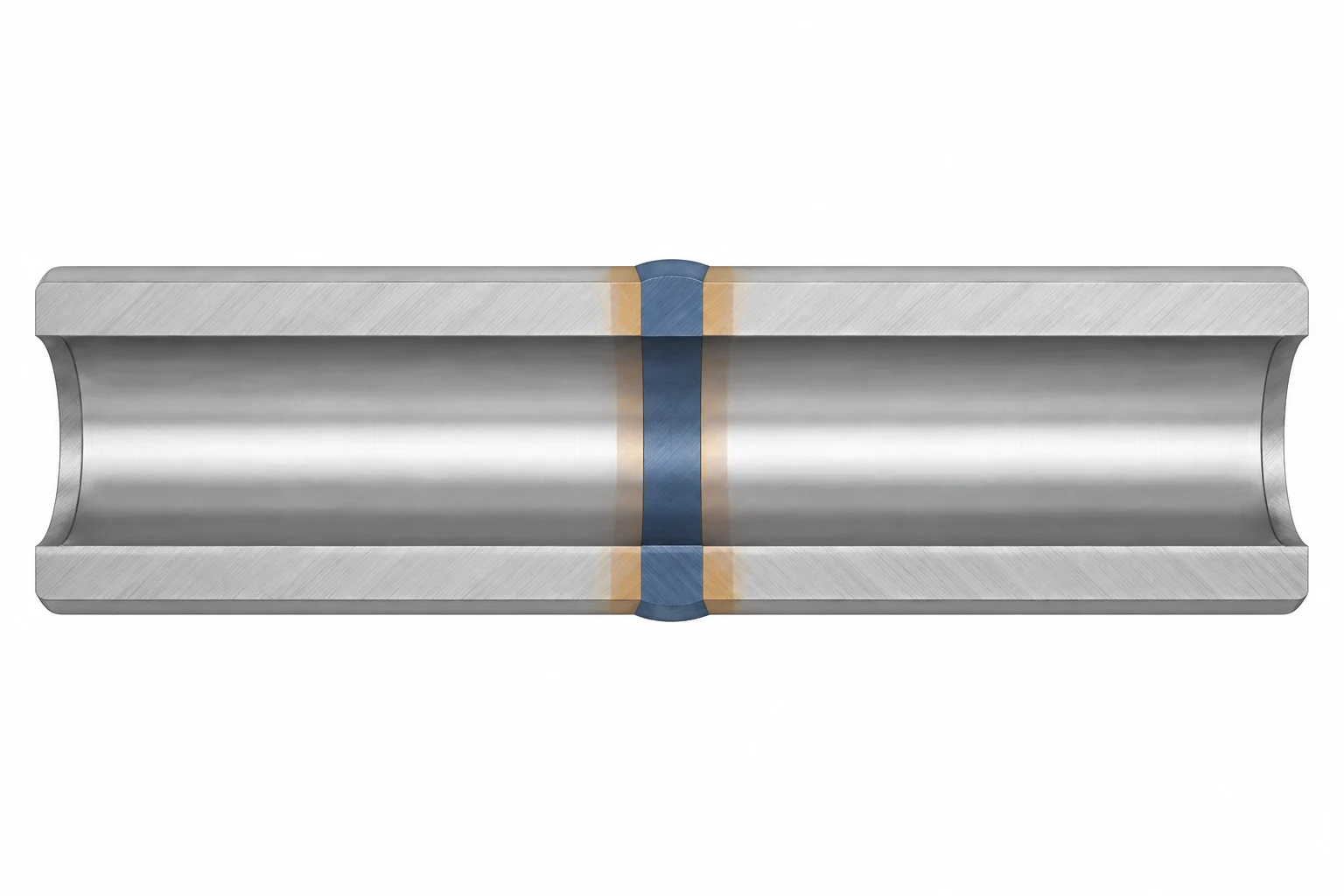
Low carbon does not remove every welding concern. Joint geometry, filler selection and surface cleanup still matter. Low carbon delays sensitization but is not a universal high-temperature solution. For sustained hot service, use the design temperature, applicable material requirements and engineering assessment. [3]
Machinability depends on more than the L
Both grades retain the machining challenges of austenitic stainless steel: work hardening, difficult chip breaking and a tendency for material to adhere to the cutting edge. Changing the drawing from 316 to 316L does not remove those mechanisms. The stock condition, cutting tool and setup still determine how a bore, thread or pocket behaves during machining. [3]
There are also deliberately modified products within the grade family. Outokumpu identifies Prodec 316L as a version with improved machinability. That is evidence that metallurgy beyond the grade label matters, not a reason to assume all 316L cuts faster than all 316. Any proposed stock change must still meet the component’s material requirements. [4]
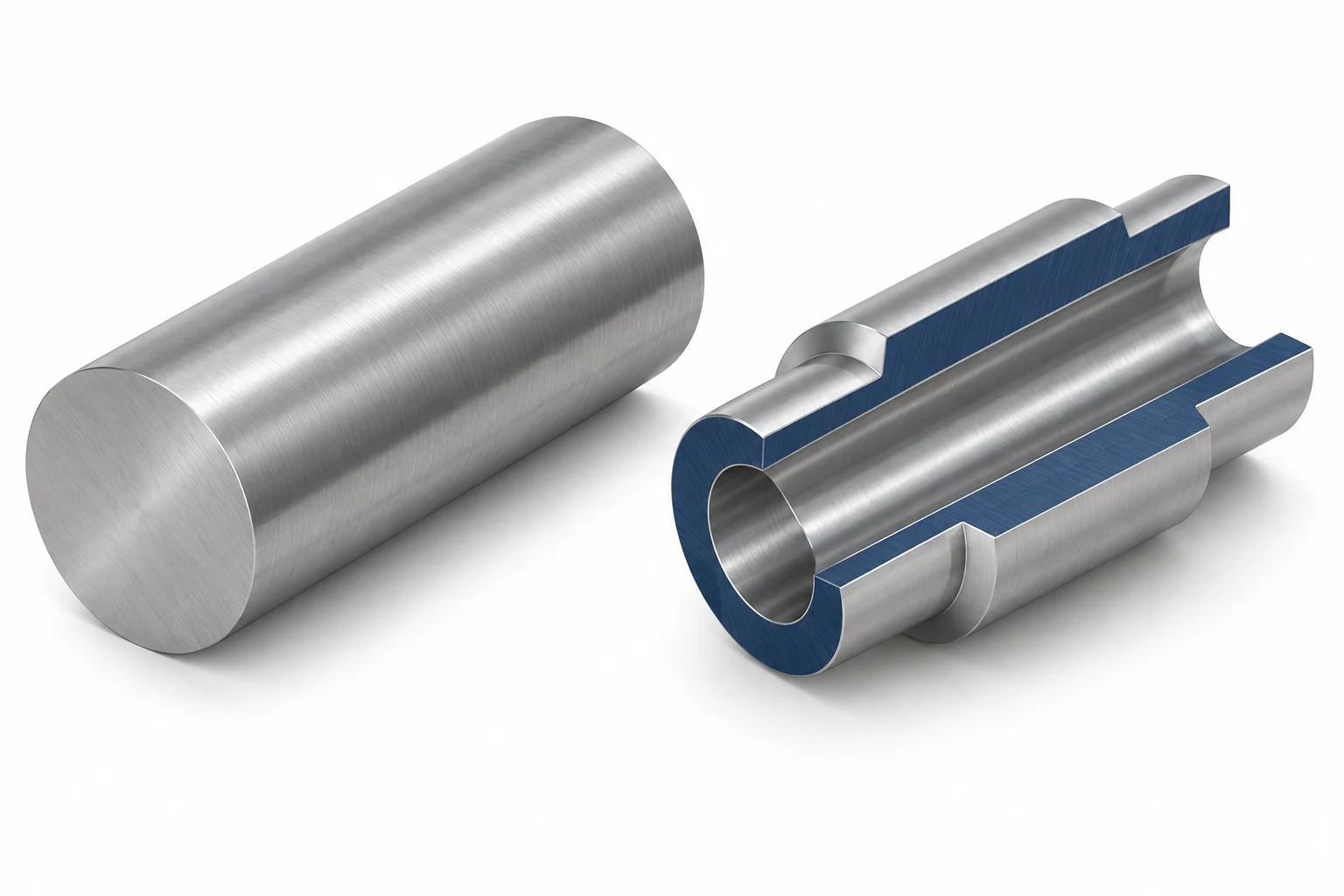
For a meaningful manufacturing comparison, keep the finished geometry, stock condition, quantity, finish and inspection scope fixed. Then examine the operations that consume time: long tool reach, chip removal from holes, interrupted cuts and additional setups. Outokumpu’s machining guidance emphasizes a rigid setup, short tools and chip evacuation; its cutting data are starting points for a specified product and setup, not universal feeds and speeds. [5]
The practical cost question is therefore the price of the finished, accepted part from available compliant stock. There is no dependable percentage saving from choosing or deleting “L.” Our stainless steel CNC machining page covers the corresponding part features and finishing requirements.
Choose by the finished part’s conditions
The following situations illustrate selection decisions, rather than a list of applications automatically approved for either grade.
| Part situation | Selection direction | Decisive check |
|---|---|---|
| Unwelded bushing or mounting component | Compare compliant 316, 316L or dual-certified stock | Required strength, condition and actual exposure |
| Machined collar welded into a fluid assembly | Evaluate 316L for weld-related corrosion resistance | Complete joining and finishing route |
| Part exposed to chlorides, deposits or tight crevices | Review whether either grade is suitable | Fluid chemistry, temperature and joint geometry |
| Loaded component in sustained hot service | Select against the applicable design requirements | Temperature-dependent properties; no automatic L substitution |
Weld sensitization and chloride corrosion are different selection problems. Neither 316 nor 316L is immune to pitting, crevice corrosion or chloride stress corrosion cracking. The low-carbon suffix alone does not resolve a trapped-fluid joint or an aggressive cleaning environment. [3]
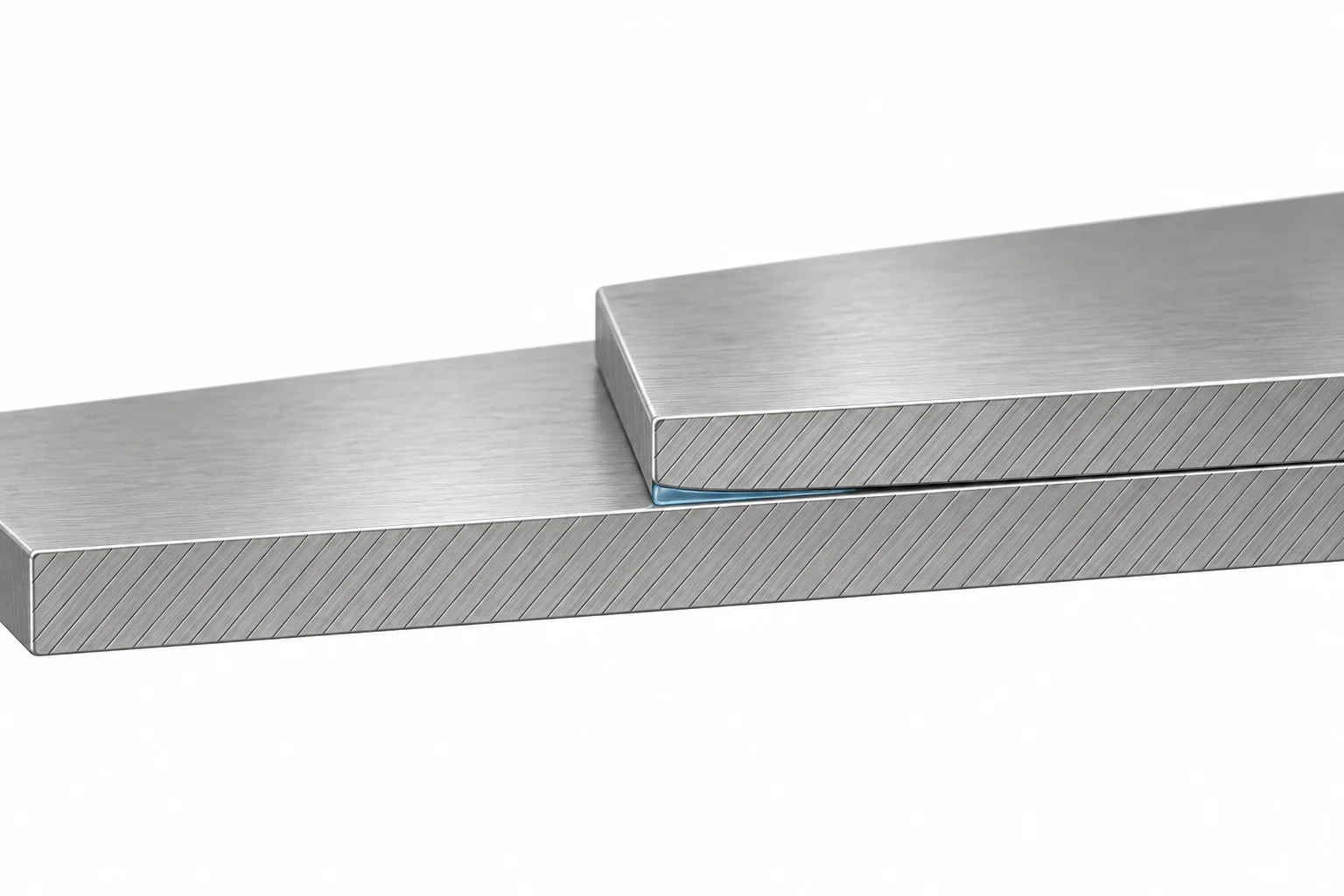
For a washdown component, for example, evaluate the cleaning solution as well as the normal process fluid. For a bolted assembly, include contact surfaces and places where liquid can remain. These questions help determine whether the grade comparison is sufficient or whether the alloy or assembly design needs a broader review. The materials and design guide connects that review to functional dimensions and finishing.
What dual-certified 316/316L does—and does not—mean
Dual certification means the supplied material satisfies both grade designations within the stated specification. It is more than a low carbon result: the other applicable chemical, mechanical and product requirements must also be met. BSSA describes dual-certified material as a way to supply either grade within a particular standard. [2]
A useful purchasing check links three things: the drawing’s material requirement, the stock identity, and the certificate for that stock. Review the standard and revision, grade designation, product form and condition together. Then confirm that the required results and heat identity belong to the material being supplied.
If the certificate names only 316L while the drawing requires 316, the low carbon result does not settle acceptance. Obtain evidence of compliance with the specified grade or an approved material change before release. A drawing that explicitly requires 316L likewise cannot be satisfied by an unverified “316 equivalent.” This avoids turning a purchasing convenience into an undocumented design substitution.
316 vs. 316L questions
Is 316L stronger than 316?
Not inherently. Published requirements can allow lower minimum strength for 316L in the same annealed product form. Compare the actual specification and supply condition; cold-worked material cannot be judged from an annealed-plate table.
Does 316L eliminate the need for surface treatment?
No. The grade does not specify the finished surface or remove contamination introduced during fabrication. Keep required cleaning, weld-oxide removal and other specified treatments in the manufacturing plan.
Should every unwelded CNC part use 316 instead?
No. Either grade may be suitable, and compliant dual-certified stock may be an option. Choose against the drawing, service conditions and available certified stock; the absence of welding is not a reason to override an existing 316L requirement.
Technical sources
- ATI, ATI 316, ATI 316L, ATI 317, ATI 317L Technical Data Sheet, version 1, April 18, 2012; composition and annealed flat-product properties, pp. 1–3 and 8.
- British Stainless Steel Association: comparison of standard and low-carbon grades; carbon limits, weld-related corrosion and dual certification.
- Outokumpu, Supra Range Datasheet; intergranular and localized corrosion, cold working, machinability and welding.
- Outokumpu, Prodec Range; Prodec 316L/4404 product description.
- Outokumpu, Machining Guideline for Prodec 304L and Prodec 316L, North American version, February 2016; setup and chip-control guidance.