On this page
Acrylic is a useful starting point for a rigid, clear machined component whose appearance matters and whose impact exposure is limited. Polycarbonate is usually the stronger candidate when accidental knocks or toughness drive the design. Both can be CNC machined, and both need a finishing and assembly plan.
Acrylic is polymethyl methacrylate, or PMMA; polycarbonate is PC. Compare the specified grades and the finished part—not just two pieces of transparent stock. The choice can change when the viewing surface is cut, the cover is fastened, or the cleaning method is defined.
Compare the properties the part will use
Impact resistance, stiffness and clarity answer different questions. A cover can resist breakage yet deflect more than the assembly permits. A stiff, clear window can still be a poor choice for a location where it will be struck.
| Design priority | Acrylic / PMMA | Polycarbonate / PC |
|---|---|---|
| Clear appearance | Strong candidate for clear viewing faces and polished edges | Transparent grades available; specify the required finished view |
| Accidental impact | More sensitive to notches and brittle damage | Usually the tougher candidate |
| Resistance to bending | Generally stiffer than unfilled PC | Check deflection of the selected thickness and support |
| Warm operating conditions | Check load, exposure time and grade-specific limits | Generally more thermal margin; still evaluate the actual conditions |
| Outdoor or scratch exposure | Good weatherability; finish and surface protection still matter | Select the appropriate UV-protected or abrasion-resistant product |
These are selection tendencies for common clear stock, not specifications for every formulation. ACRYLITE’s cell-cast data and Plaskolite’s TUFFAK guide describe particular products; impact-modified acrylic and coated PC need their own comparison. A material’s impact value does not qualify a complete protective assembly. [1] [2]
Choose the stock as well as the polymer
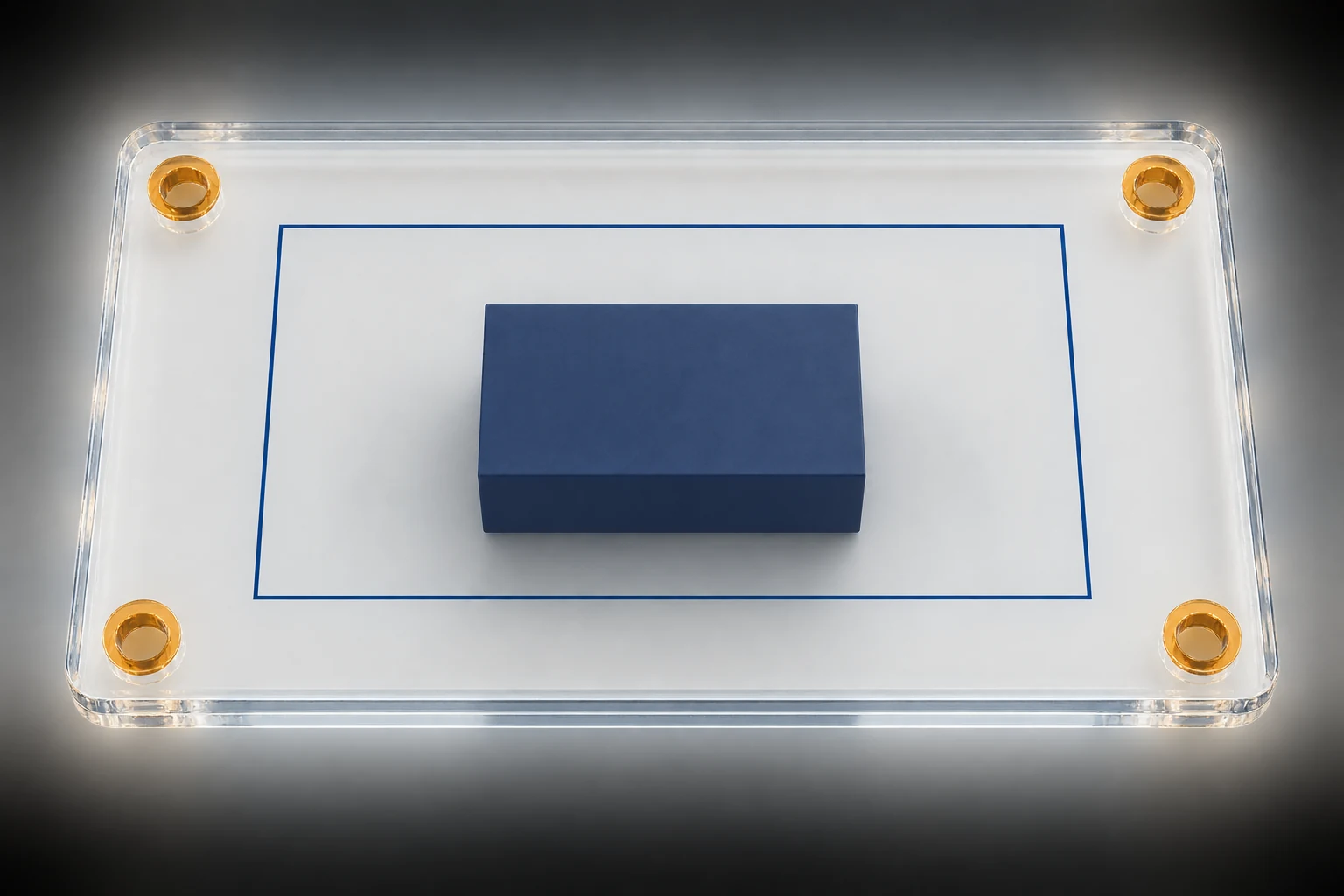
For acrylic, identify cast or extruded stock and the exact grade. Cell-cast ACRYLITE GP is described as having low internal stress, but that does not make a heavily machined part stress-free. Stock thickness variation also matters if an original face must remain untouched. Check the available stock tolerance before assigning a tight finished thickness.
For PC, distinguish general-purpose, optical, UV-protected and coated stock. A coating on the original sheet face does not automatically protect a newly machined recess. Put any surface that must retain its coating outside the material-removal plan. The broader materials and design guide explains how to connect grade, stock form and service conditions.
Control heat and support the cut
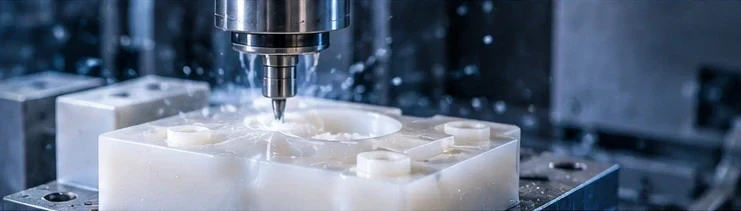
Acrylic’s notch sensitivity makes damaged hole edges and sharp, loaded features important. During drilling, the exit needs support: the drill can chip the last unsupported material as it breaks through. A suitable backing piece and drill geometry reduce that risk. ACRYLITE’s drilling guidance also emphasizes chip removal as the hole deepens. [3]
PC can leave melted or burred edges when cutting conditions are poor. Plaskolite identifies insufficient milling feed as one possible source of heat and distortion. Slowing the feed alone is therefore not a reliable cure. Review tool sharpness, engagement, chip clearance and cooling together. [2]
For both materials, support thin areas without forcing them flat under excessive restraint. Inspect the released part in its specified condition. Check cutting-fluid compatibility with the actual stock; a fluid suitable for metal may cause crazing in acrylic. Avoid assigning one spindle speed or feed to every cutter and feature. [4]
Specify which surfaces must stay clear
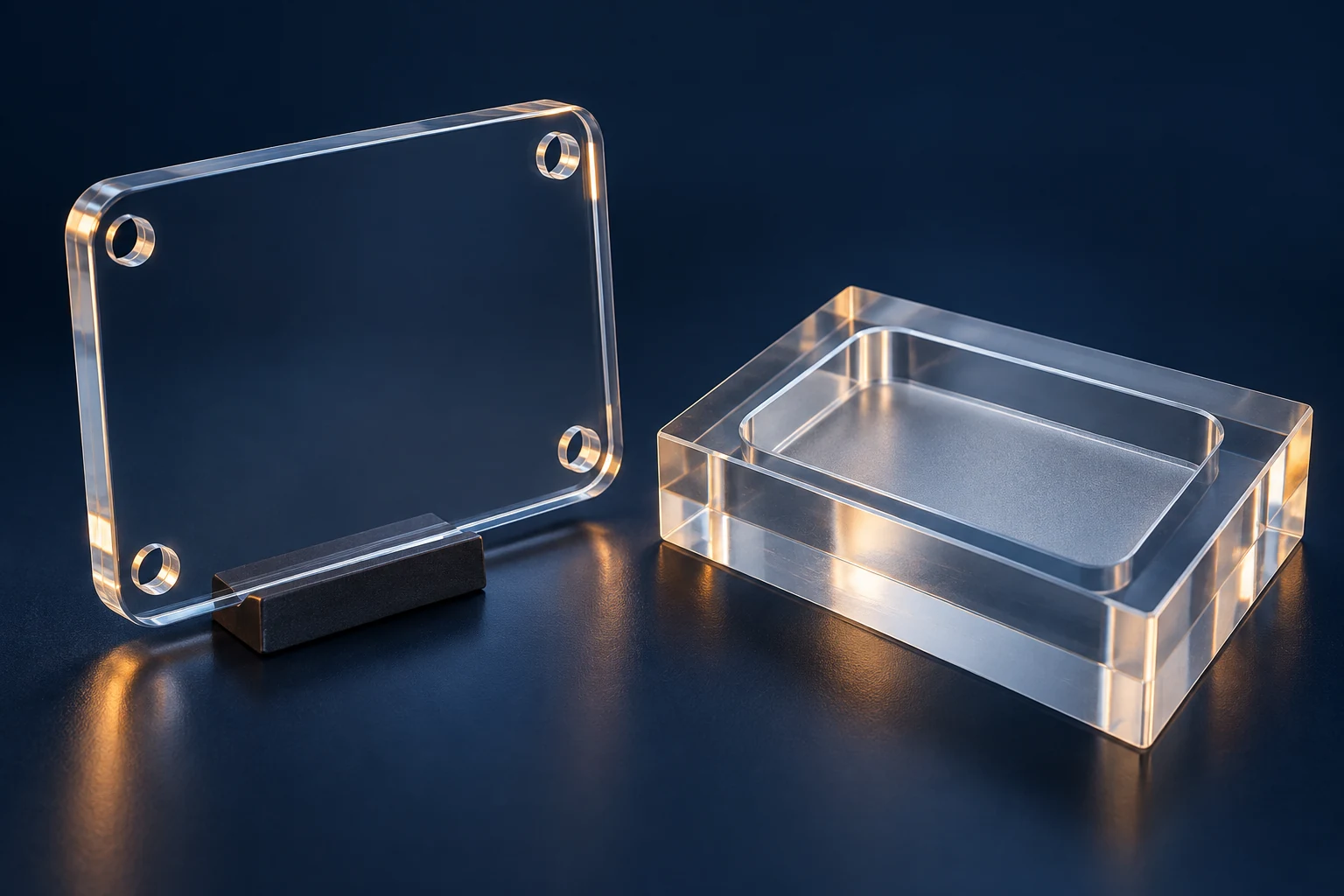
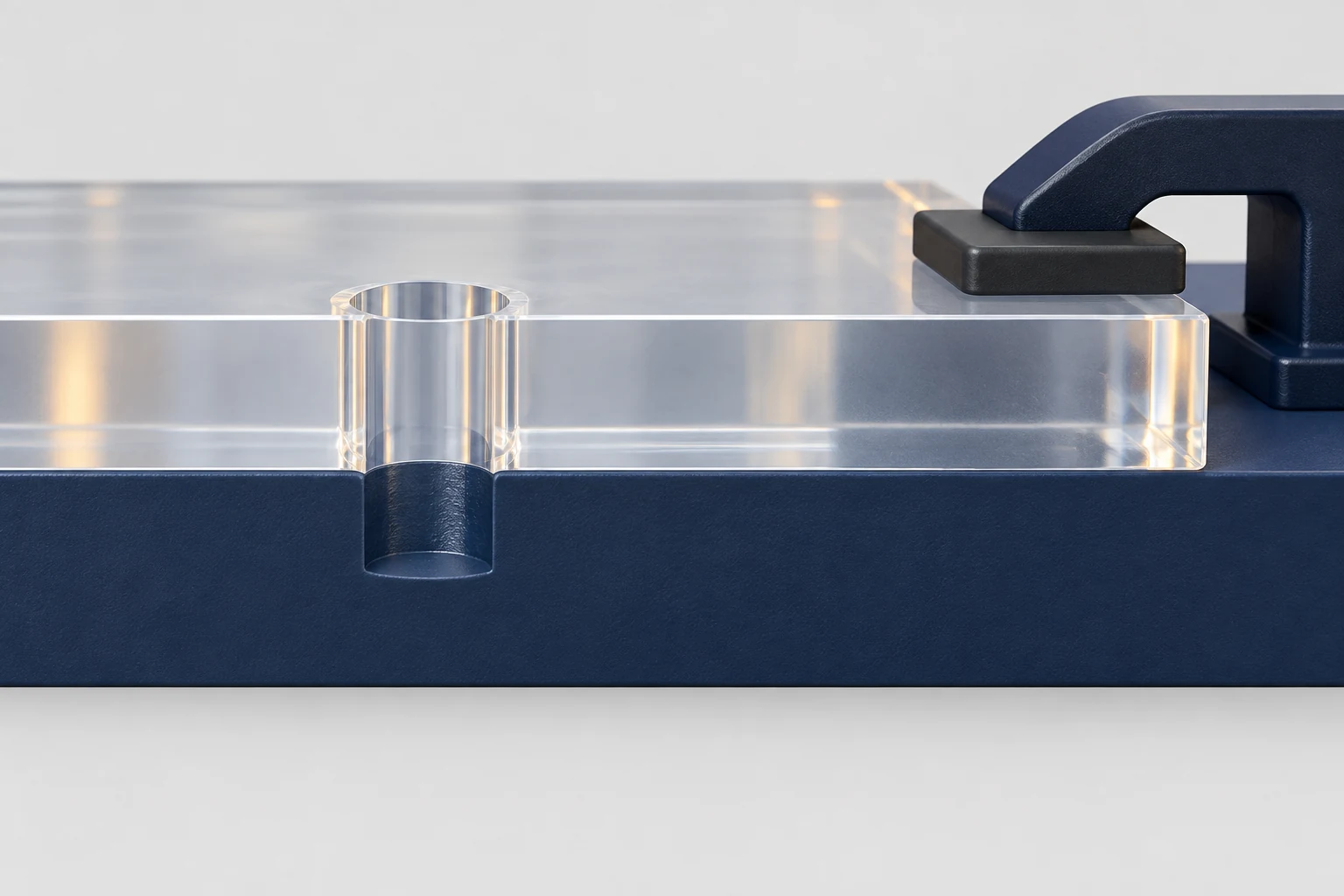
An untouched sheet face and a milled pocket floor are different surfaces. If the original viewing face meets the requirement, preserving it may avoid unnecessary finishing. If the viewing path crosses a machined surface, assess that surface after its planned finishing route.
Acrylic edges can be polished to improve their appearance. The amount of work depends on the starting cut; polishing cannot be treated as a cosmetic step with no dimensional consequence. Control material removal near a fit or sealing edge. Flame polishing also introduces stress, which matters for later bonding and chemical exposure. [5]
For PC, agree a finish appropriate to the particular product rather than transferring an acrylic finishing recipe. Define what “clear” means: seeing an indicator, reading fine markings, or meeting an optical measurement. A glossy sample alone does not establish haze, distortion or performance at a specified wavelength.
Evaluate cleaning with the installed stresses
Both polymers can develop fine cracks called crazing when stress and incompatible chemicals act together. Include cleaners, adhesives, sealants and contact fluids in the material review. Product name, concentration, temperature, contact time and the loaded condition all matter. PC’s toughness does not remove this failure mode. [4] [2]
Stress relief may be useful after machining or finishing. ACRYLITE describes annealing to reduce fabrication stresses; the process needs suitable support and controlled heating and cooling. It does not turn an incompatible cleaner into a compatible one. Agree the process sequence and final inspection stage for the chosen grade. [6]
Apply the choice to an inspection cover
Consider a removable cover through which an operator reads an internal indicator. For a sheltered, lightly loaded installation, acrylic is a reasonable candidate. Preserve the original central viewing face where possible and keep edge finishing separate from the mounting seats.
If the cover will regularly be handled or knocked, investigate PC first. Recheck its deflection, fastener arrangement and required surface durability. Plaskolite warns that conical fastener heads can introduce harmful local stresses in its sheet; a tougher polymer does not justify copying the fastening detail unchanged. [2]
Evaluate a finished sample in the proposed mounting arrangement. Confirm the indicator remains readable, then assess the agreed cleaning and use conditions. If the cover must contain a hazardous impact, define and validate the complete protective assembly separately. If neither candidate survives the required environment, reopen the material or assembly design.
Compare quotes for the same finished requirement
Specify the approved grade and stock, mark the viewing surfaces, and state final dimensions after finishing. Include the cleaning conditions and the sample acceptance method. Compare machining, polishing, any stress relief, inspection and protective packing at the same quantity. Raw sheet price alone cannot establish which finished option costs less.
For the PMMA route, our acrylic CNC machining page covers drawing and surface requirements. Keep a proposed material change separate from a quote for the released design so it receives its own approval.
Frequently asked questions
Is polycarbonate always better than acrylic?
No. PC is usually the stronger candidate for impact exposure, while acrylic may better fit a stiff, clear component with limited impact. Compare the actual grade, geometry, surface condition and environment before choosing.
Will CNC-machined acrylic be clear without polishing?
Original stock faces may remain clear, while cut surfaces can show tool marks. Identify the viewing path and judge a surface made by the intended machining and finishing route. “Clear acrylic” does not define the finished appearance of every face.
Can I use the same cleaner on PMMA and PC?
Do not assume so. Check the exact product and concentration for the selected grade and service conditions. Evaluate compatibility with the stresses and exposure expected in the finished assembly.
Technical sources
- ACRYLITE, Cell Cast Sheet (GP): Physical Properties, 1235G, September 2024. Product-specific material properties and stock considerations.
- Plaskolite, TUFFAK Polycarbonate Sheet Fabrication Guide. Product selection, machining, chemical exposure and mechanical fastening.
- ACRYLITE, Drilling. Tool geometry, heat, chip removal and support at breakthrough.
- ACRYLITE, Machining. Notch sensitivity, cutting heat and fluid compatibility.
- ACRYLITE, Edge Finishing. Machined surfaces, polishing and heat-induced stress.
- ACRYLITE, Annealing. Stress relief and support during processing.