On this page
A successful CNC prototype shows that the tested part worked under the recorded test conditions. A pilot batch checks whether the proposed production route can reproduce the required result across parts, operations and handoffs. Before a repeat order, verify the released revision, material and finish, manufacturing differences, inspection coverage, unresolved defects and the scope of approval.
The pilot should answer the questions the prototype left open. Making more copies without defining those questions can produce a box of acceptable parts and still leave the next production run poorly understood.
Start with what the prototype actually proved
Record which tests passed and what they covered: assembly clearance, locating fit, load response, sealing or appearance. Keep the tested part’s revision, material condition and finish with the result. “Sample approved” is too broad when only one mounting interface was checked.
Also list deliberate sample-only differences. A prototype might use available stock, omit a coating or receive extra manual fitting. Those choices can be appropriate for development, but the result cannot automatically be transferred to a different delivered condition. The rapid prototyping methods guide explains how the test question determines which aspects of a sample must represent production.
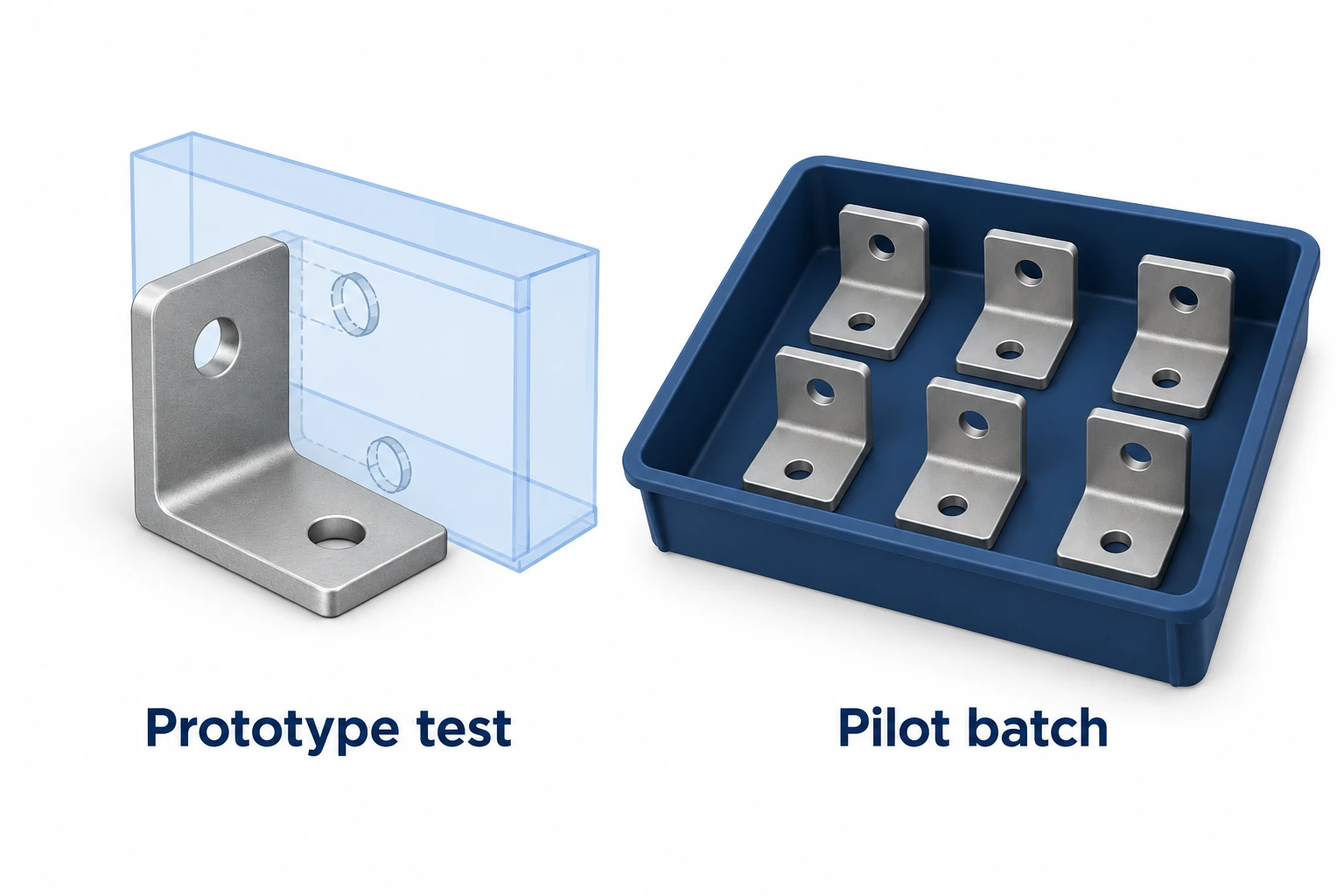
Make production differences visible before the trial
Use a short difference register between the prototype build and the proposed pilot. The point is not to forbid improvements. It is to identify which evidence needs to be collected again when the route changes.
| Possible change | Question for the pilot | Useful evidence |
|---|---|---|
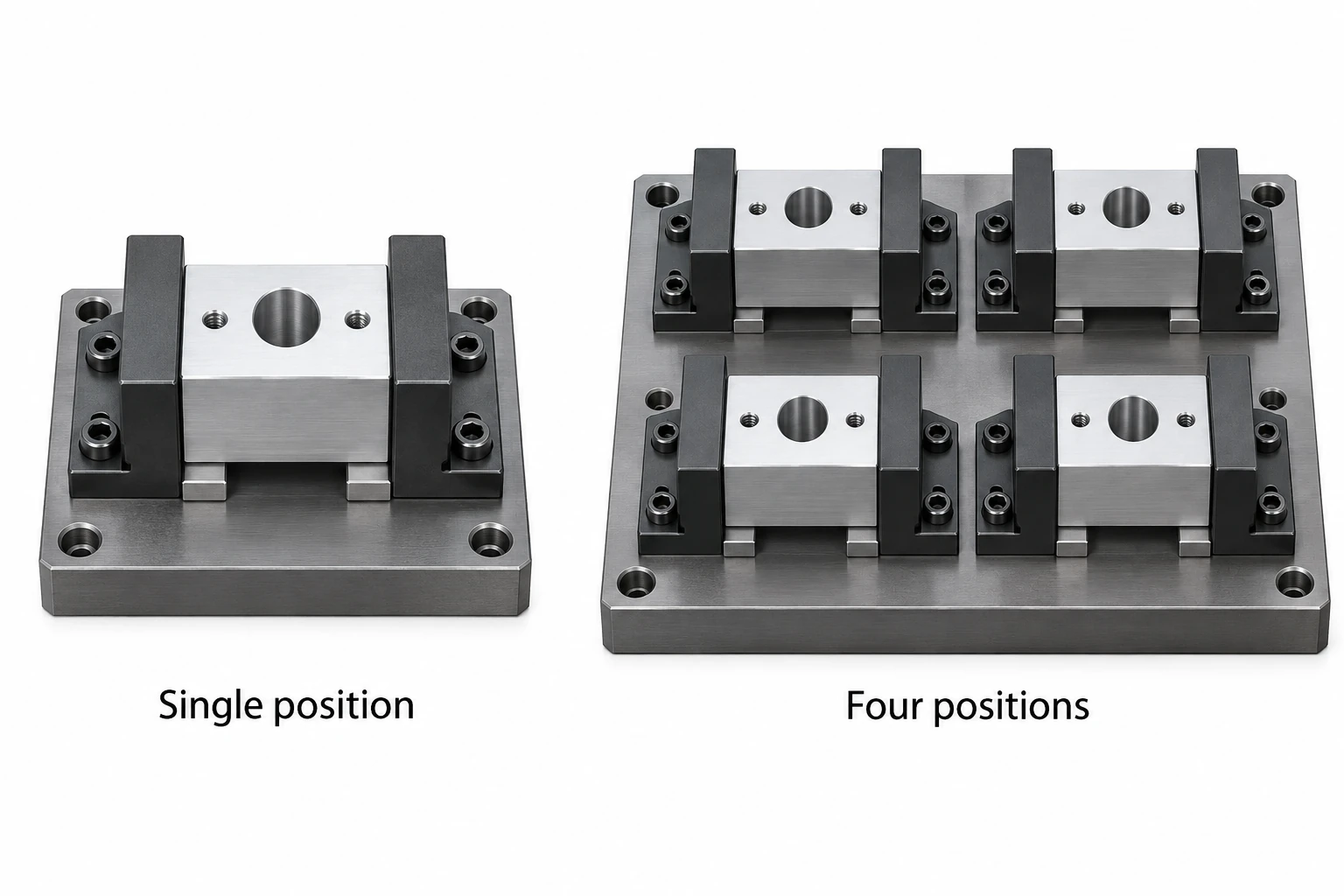
| Single-part fixture to multiple positions | Do all positions locate and support the part correctly? | Feature results identified by fixture position |
| Different stock form or material condition | Is the change approved and suitable for the design? | Material records and affected functional checks |
| Revised machining sequence | Are datum relationships and final dimensions preserved? | Checks after relevant operations and in the delivered condition |
| Added coating or heat treatment | Do fit, geometry and finish still meet the requirements? | Final-state measurements and specified process records |
| Different packing or outside processor | Are identity, surface protection and required results maintained? | Returned-part checks and shipment identification |
For example, a bracket machined individually for a fit trial may move to a fixture holding several blanks. The new arrangement changes loading, chip clearance and the relationship between fixture locations and part features. A passing result from the easiest position does not address the other positions.
Define the planned manufacturing route with the supplier, including which arrangements are representative and which remain temporary. Our CNC prototyping and production service separates prototype, pilot, production and reorder scope so that approval at one stage has a clear meaning for the next.
Plan a trial that exposes the important variation
Choose the pilot quantity and duration around the decisions needed. Relevant sources of variation may include repeated loading, fixture positions, setup restarts, tool changes, stock lots and outside-processing batches. A trial that never encounters an expected production event cannot show the effect of that event.
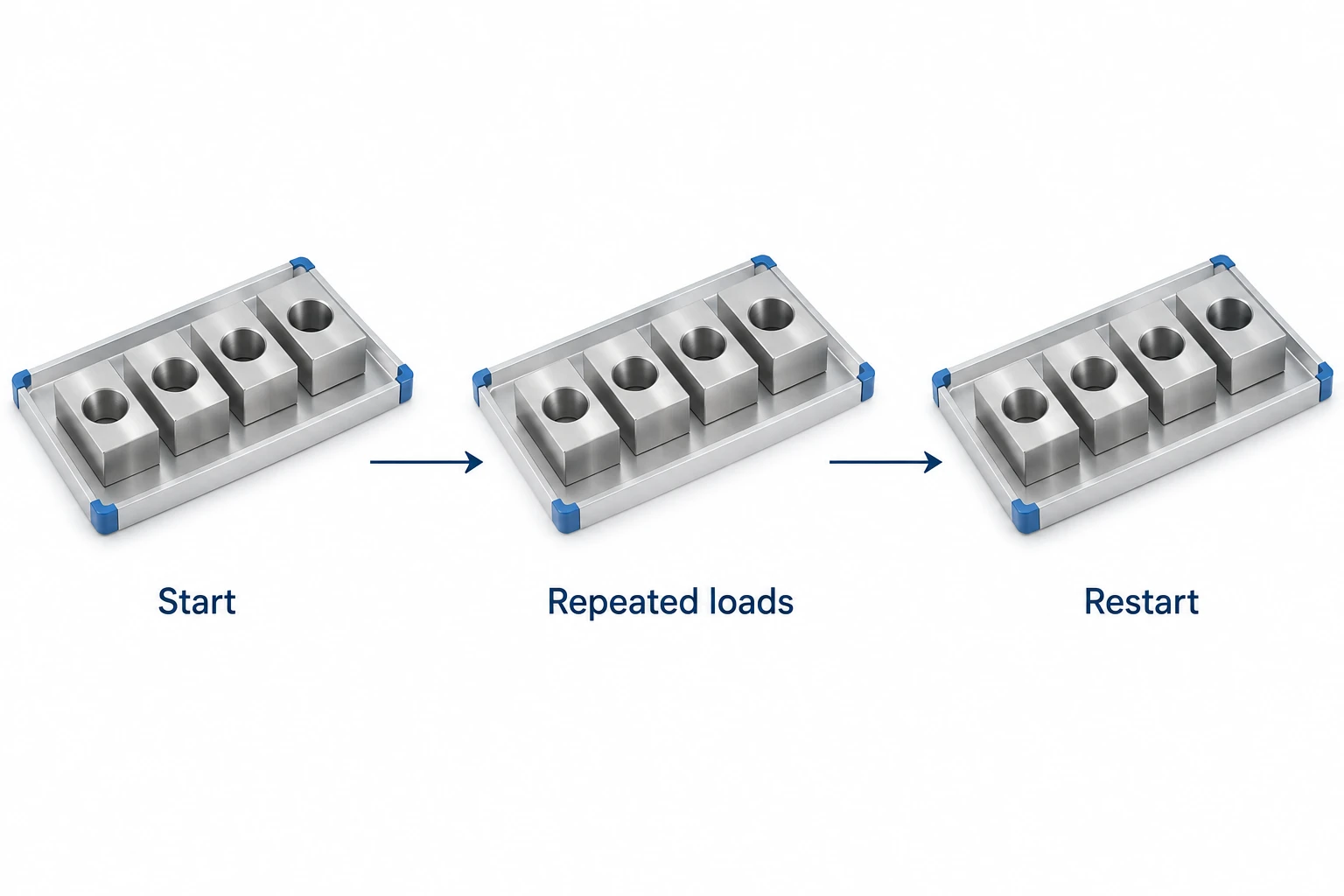
For an illustrative four-position fixture, identify results by position and sequence through repeated loads. If a restart is an important risk, include a planned restart and compare the affected features before and after it. Do not introduce every conceivable disturbance; select the ones that could change acceptance for this part.
Keep trial coverage separate from the inspection rule used to release the lot. The plan should name the drawing characteristics, measurement methods, units to inspect, functional tests, acceptance limits and response to a failure. Sampling across a sequence can reveal a trend; a sample chosen for that learning purpose is not automatically a valid acceptance-sampling plan.
For programs requiring the Production Part Approval Process (PPAP), follow the customer’s specified submission and approval requirements. AIAG describes PPAP around consistent conformance during actual production at production rates. That does not make the same submission package or run quantity mandatory for every general CNC purchase. [1]
Read the results as a process history
Averages can hide a bad fixture position or a gradual drift. Review important measured characteristics in production order and by relevant grouping, alongside setup changes, adjustments, rework and scrap. Retain the initial results as well as the results after correction; otherwise the accepted parts can conceal how much intervention they needed.
All inspected values falling within tolerance is useful evidence of those inspected parts. It is not, on its own, proof of a stable or capable process. NIST treats stability over time as a prerequisite for capability analysis. Capability indices also depend on adequate data and appropriate distribution assumptions; a small pilot should not produce a confident Cpk claim merely because software can calculate one. [2] [3]
Review timing with the same discipline. Separate normal cycle and handling time from trial investigation, initial programming, rework and outside-process waiting. The cost and supplier-selection guide explains why preparation charges, recurring work and release quantities need separate treatment. The shortest observed cycle is not a reliable delivery commitment.
Release the next quantity with a defined scope
Use a release decision that identifies the part revision, production route, accepted evidence, remaining restrictions and quantity authorized. Three outcomes are useful:
- Release: the agreed pilot criteria are met and the required records support the next order.
- Restricted release: an authorized decision permits a defined quantity or use with explicit limits, containment and follow-up.
- Hold and repeat the affected trial: an unresolved issue prevents the intended release; correct it and gather the missing evidence.
Suppose the trial reveals a hole-position problem at one fixture location. Repairing the fixture is only part of the response. Identify affected parts, verify the correction and check whether it changed other locations or features. Do not combine unmarked pre-correction and post-correction parts into one apparent success.
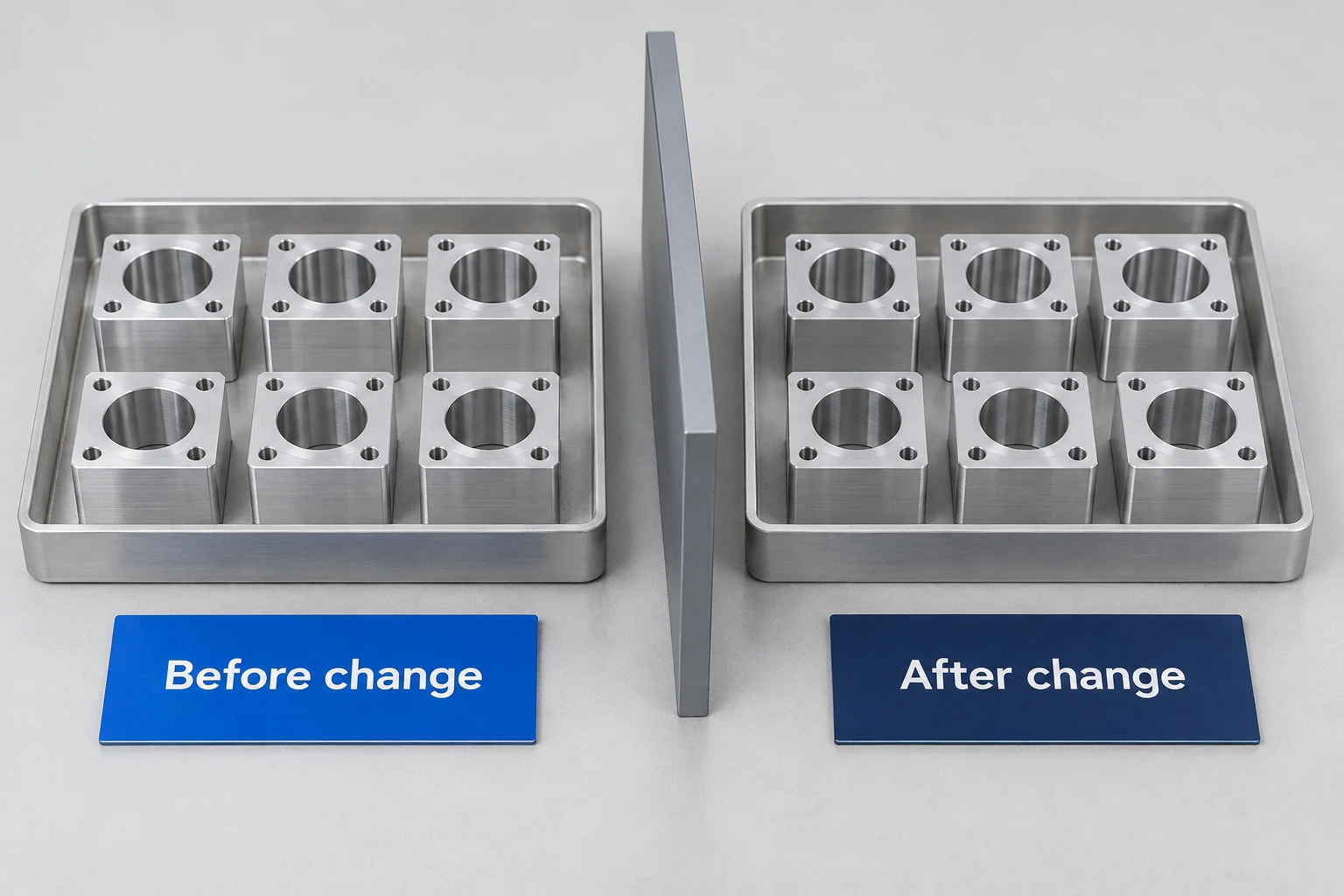
NASA’s product-verification guidance connects results to the applicable configuration and records discrepancies and corrective actions. The same evidence discipline is useful here without adopting an aerospace approval system for an ordinary commercial part. [4]
Carry the accepted revision, material and finish, inspection scope, approved exceptions, reusable tooling and change-notification requirements into the next CNC machining RFQ or repeat order. A later change should be assessed for its effect on the accepted evidence; it need not automatically repeat every previous test.
Pilot-batch questions
How many CNC parts should a pilot batch contain?
There is no universal quantity. Define the variation and decisions the trial must cover, then select the quantity and duration with the responsible manufacturing and quality teams. Apply any customer-specific approval requirements. A few parts may answer a fixture-access question while leaving long-run variation unresolved.
Is a first-article report the same as pilot approval?
No. A first-article report documents a defined initial verification. Pilot approval addresses the agreed trial objectives, which can include repeated production, finishing, handling and release readiness. State whether either approval is required before continuing or shipping.
Can pilot parts be used in production assemblies?
They can when they meet the applicable requirements and have been released for that use. Development labels do not make nonconforming parts acceptable, and a trial-only material or process exception must not disappear when the parts are delivered.
Must a reorder always repeat the pilot?
No. Review changes in revision, material, route, tooling, processor and previous results. Use the agreed change-control rules to decide what needs renewed evidence. An unchanged part number alone does not establish that the manufacturing conditions are unchanged.
Technical sources
- AIAG. Production Part Approval Process, public overview. Customer-specific requirements govern the actual submission.
- NIST/SEMATECH. Assessing Process Stability.
- NIST/SEMATECH. What Is Process Capability?. Data and distribution assumptions matter when interpreting indices.
- NASA. Systems Engineering Handbook, 5.3 Product Verification. Configuration, results and discrepancy records.