Contoured cavity electrodes
We mill the raised working form and its supporting base from the released electrode model.
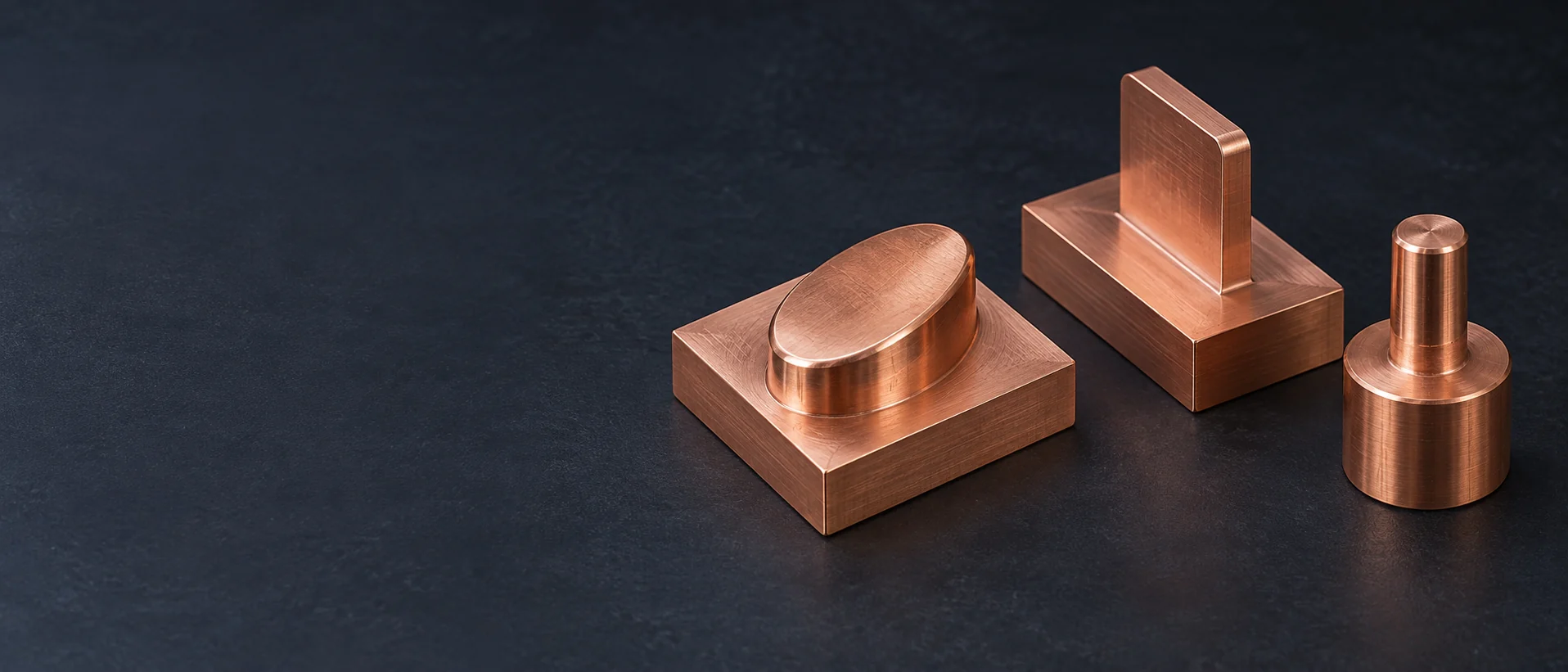
We mill the raised working form and its supporting base from the released electrode model.
Raised copper blades and ribs form narrow recessed details in the tool.
Circular working faces, steps and ring forms suit electrodes whose principal geometry shares a common axis.
We turn electrode diameters, shoulders and mounting shanks, with secondary holes or flats where the drawing requires them.
Several working features can share a common copper base, preserving their specified positions within one machined component.
Small shaped electrodes address a selected corner, step or detail rather than reproducing the complete cavity.
We machine specified fluid passages through accessible electrode geometry, including the entry and exit defined on the drawing.
Copper blanks can be supplied with mounting holes or prepared reference faces for subsequent electrode machining.
No matching electrode forms. Try another name or filter.

C11000 provides high electrical conductivity without the free-machining addition used in tellurium copper. For a detailed electrode, we account for chip formation and burr control when planning the cuts.

Tellurium improves chip breaking and machinability while retaining high conductivity. We use C14500 when it is specified or approved for the electrode, rather than substitute it solely to simplify machining.

C10200 is oxygen-free copper. For its fine electrode ribs and tips, stock temper and cutting support influence burr formation and edge stability.
State whether the model is nominal cavity geometry or the final electrode form with the required undersize. We machine the agreed electrode definition; the EDM programmer specifies the applicable compensation so it is neither omitted nor applied twice.
The holder interface establishes how the electrode is located. We need the mounting drawing or holder reference, the electrode origin and an orientation mark, especially when the base looks symmetric.
Show the full electrode, including its shank and base. The working tip may enter a recess while a shoulder or holder still collides with the surrounding tool, so send the full electrode model for the clearance check.
| Property | C11000 ETP | C14500 tellurium |
|---|---|---|
| Electrical conductivity at 20 °C | 101% IACS | 93% IACS |
| Thermal conductivity at 20 °C | ≈391 W/(m·K) | ≈355 W/(m·K) |
| Thermal expansion, 20–100 °C | ≈16.9 µm/(m·K) | ≈17.1 µm/(m·K) |
| Density at 20 °C | ≈8.91 g/cm³ | ≈8.94 g/cm³ |
| Elastic modulus | ≈117 GPa | ≈117 GPa |
| Relative machinability | 20 | 85 |
CDA approximate engineering references; electrical conductivity values refer to annealed material, and machinability uses C36000 brass = 100. Specify the stock form and temper separately. The values compare materials; your burn parameters and electrode wear limits come from the EDM process itself.

We use milling for nonround working forms and turning for coaxial diameters. Features that need both retain a defined relationship to the mounting reference through the machining sequence.
We retain support while machining slender copper features and review the cutter’s access to adjacent surfaces. The drawing defines which rib edges are functional and which can receive an edge break.
A flushing passage needs a defined inlet, exit and connection to the supplied fluid route. The drawing must also show where a hole is prohibited on the working face; its location is part of the electrode design, not a machining convenience.
We distinguish a specified surface-texture limit from permitted visible tool marks. A general instruction to polish the electrode does not define which surfaces or edges may be altered.
Burr removal must preserve the working profile. We keep a controlled corner or rib edge separate from the nonworking base edges that can be chamfered for handling.
Drilled exits can leave burrs where the passage meets the active form. Those intersections need access for cleaning and checking before the electrode is packed.
Place electrode numbers and orientation marks on a defined nonworking area. The marking position must remain visible in the intended holder without crossing a reference face.
We check the required positions and heights from the specified electrode datums. A correct local profile can still be misplaced relative to the holder origin.
Inspection must use the released electrode geometry and its revision. Comparing a compensated electrode against the nominal finished cavity can create an apparent size error where the undersize is intentional.
Thin ribs and small tips need protection during measurement as well as packing. The inspection scope identifies these features so a contact check or support point does not damage the form being accepted.

We quote the listed electrode IDs, quantities and material specifications. Keep any roughing and finishing versions distinguishable in the files.
The approved electrode model and mounting definition are the manufacturing reference. Changes to the burn strategy that alter the geometry require an updated release.
We associate the requested dimensional records with the electrode identification used in the order, so the receiving toolroom can distinguish similar forms.
Packing separates working faces from neighboring parts and supports the base. Long tips and thin ribs should not carry the load of the electrode during shipment.
Our electrode quotation covers the agreed machined components and records. If the order also includes burning a cavity, the workpiece, EDM operation and final-part acceptance are a separate scope within the quotation.
| Item | Include |
|---|---|
| Electrode model | Revision and nominal/compensated status |
| Holder and origin | Mounting interface, datums and orientation |
| Electrode set | IDs, stage and quantity for each form |
| Material and acceptance | Grade, temper, surface limits and required records |
Identify who releases the electrode compensation and any changes to the machining definition.
Use the EDM plan’s stage quantities rather than a fixed number per cavity. Material removal, electrode wear, the required corner condition and final surface finish can call for separate roughing, intermediate and finishing electrodes. The programmer should release the quantities and undersizes for each stage; we quote that defined set.
A worn electrode can help identify the holder and general form, but its working face no longer proves the original geometry. Use the released electrode model or reconstruct it from the approved cavity and burn plan. Machining a direct copy of the worn tip would preserve the wear that prompted replacement.
No. The rating compares conventional cutting behavior, which affects making the electrode. Discharge speed, electrode wear and achievable cavity finish are separate results that your EDM process defines, so confirm C14500 for that process even where it mills or turns more easily than C11000.
No. Cavity finish also depends on the machine’s discharge conditions, effective working area, debris removal and finishing strategy. An electrode’s surface requirement and the finished cavity’s acceptance limit are separate specifications. The burn result is accepted on the finished cavity, under the machine's own discharge and flushing conditions.
It can be a practical way to reach or machine separate regions, provided the EDM plan defines each electrode’s location and where the burns meet. The designer must account for overlap, witness lines and access. Dividing the CAD model alone does not resolve those transitions.
Physical holder compatibility is only the first check. The receiving setup also needs the electrode orientation, measured offsets and a suitable EDM program for that machine. We can supply the agreed electrode definition and records, but transferring the tooling does not transfer a validated burn process automatically.
Send the electrode model, holder reference and quantity. We will review the copper grade, working form and machining scope.
Material data and electrode-definition references.
We use Google Analytics to see how this site is used. Analytics cookies are set only if you accept. Privacy Policy
