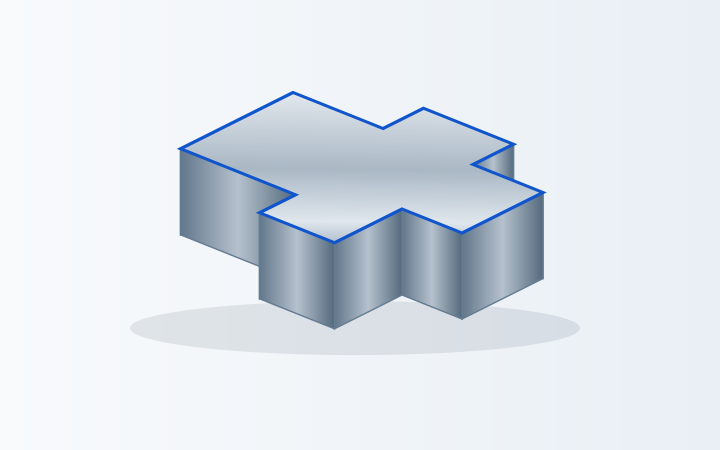
Profiled punches and inserts
Show the working contour, stock thickness and the surfaces used to locate the part. Keep edge radii and any taper explicit on the drawing.
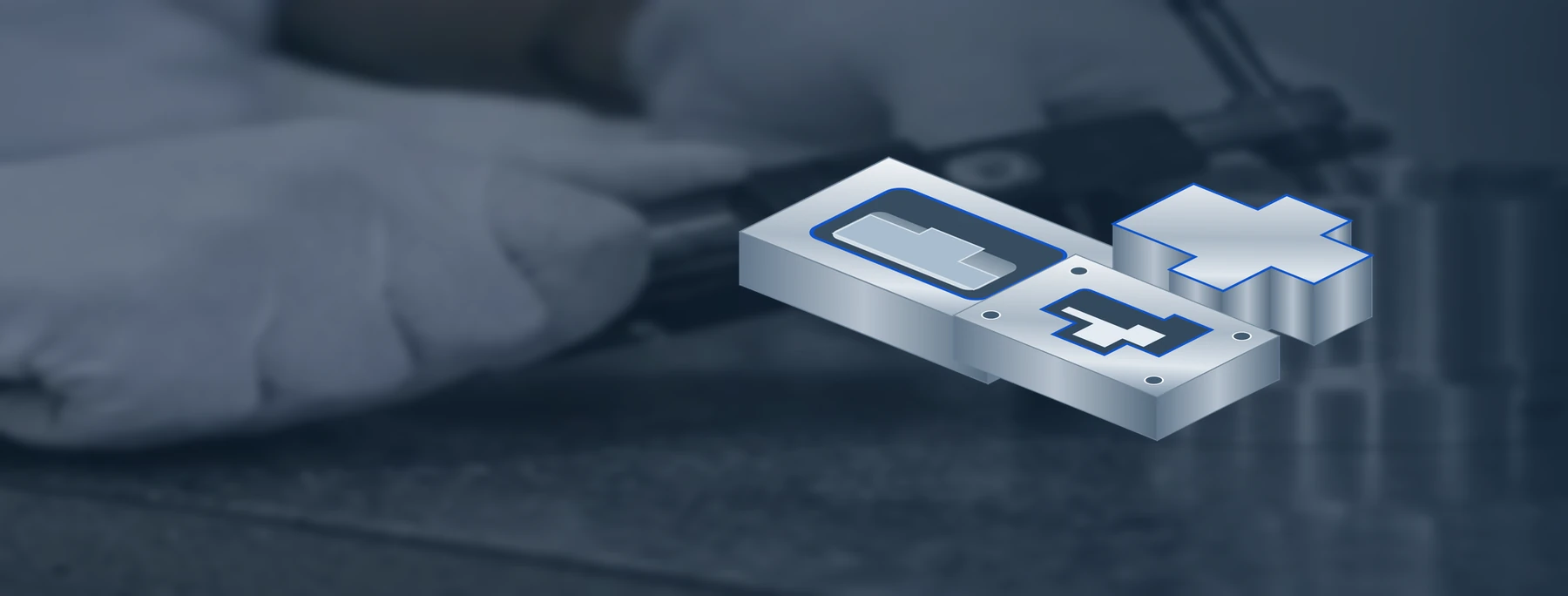
Discuss wire EDM for through-profiles and sinker EDM for blind cavities in conductive materials. We confirm the machining route, manufacturing responsibilities and inspection requirements against your drawing.
Show the working contour, stock thickness and the surfaces used to locate the part. Keep edge radii and any taper explicit on the drawing.
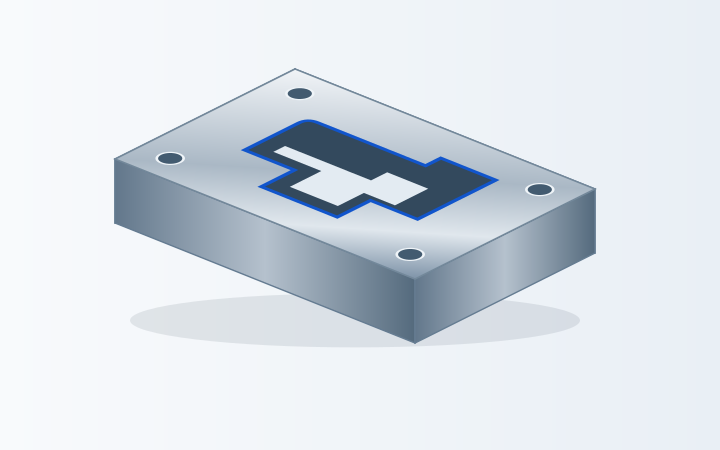
For a closed opening, include the permitted wire-start location and identify the opening relative to the mounting or locating features.
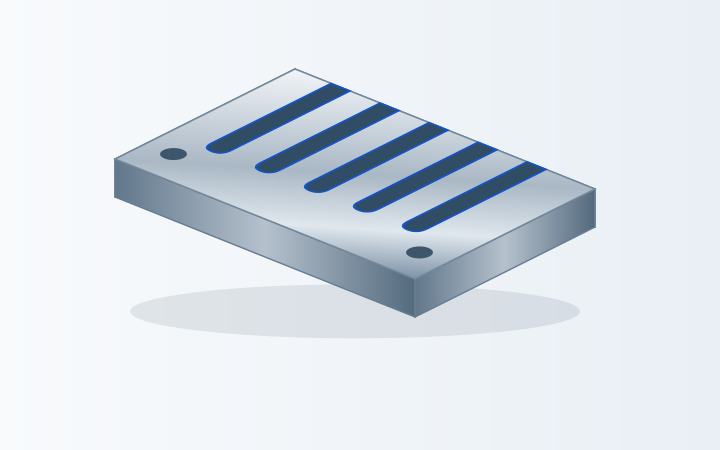
Mark slot width, depth through the plate and the webs that must remain. Include any restrictions on holding or supporting delicate sections.
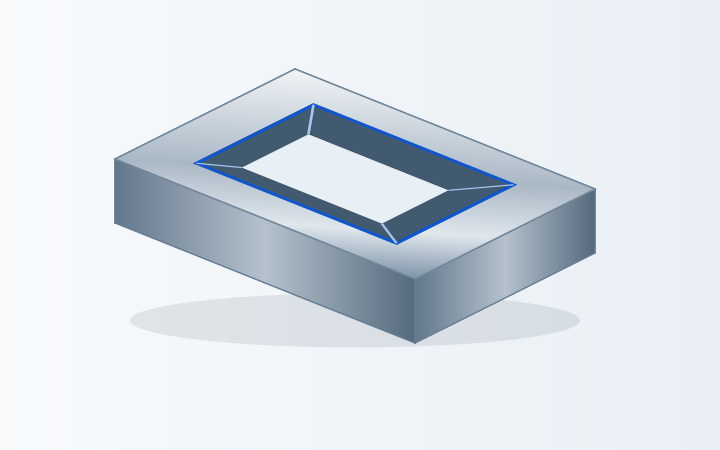
Provide both face profiles, material thickness and the intended taper or angular relationship. These details belong in the process review together.
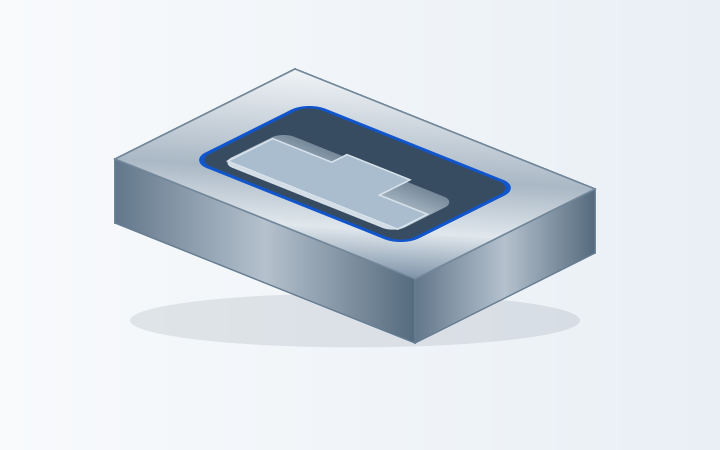
Send the cavity model with its depth, floor shape, corner radii and location. Identify areas already machined and surfaces that must stay untouched. For a tooling insert, mold component machining also covers interfaces with the surrounding mold assembly.
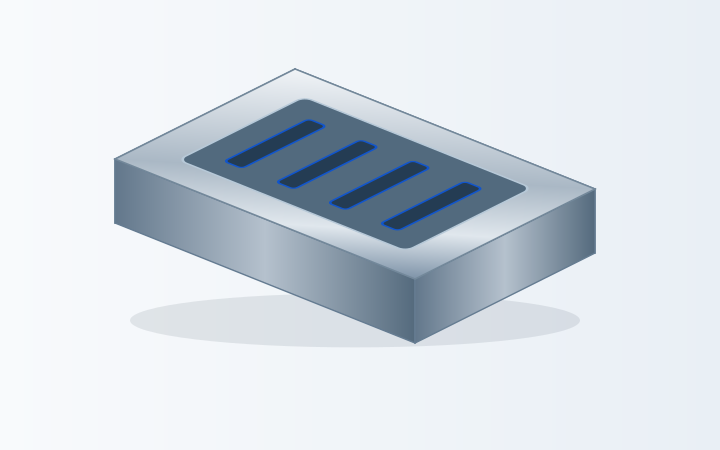
Include the full insert, not just a close-up of the recess. Electrode access, remaining wall thickness and the required surface condition need to be considered together.
No matching examples. Try a different feature or clear the filters.
Send the complete part drawing to review the EDM route and inspection requirements.
Electrical discharge machining (EDM) removes material from conductive workpieces through controlled electrical discharges. Wire EDM is used for through-profiles; sinker EDM can form blind cavities with a shaped electrode. The choice depends on the feature, material, access and inspection requirements. [1]
A continuously fed wire electrode follows the programmed profile through the stock. Think of a die opening, an external contour or a slot that runs through a plate.
Send the stock thickness, entry access and any difference between the top and bottom profiles. Wire selection, flushing and the finishing route affect the cut. [3]
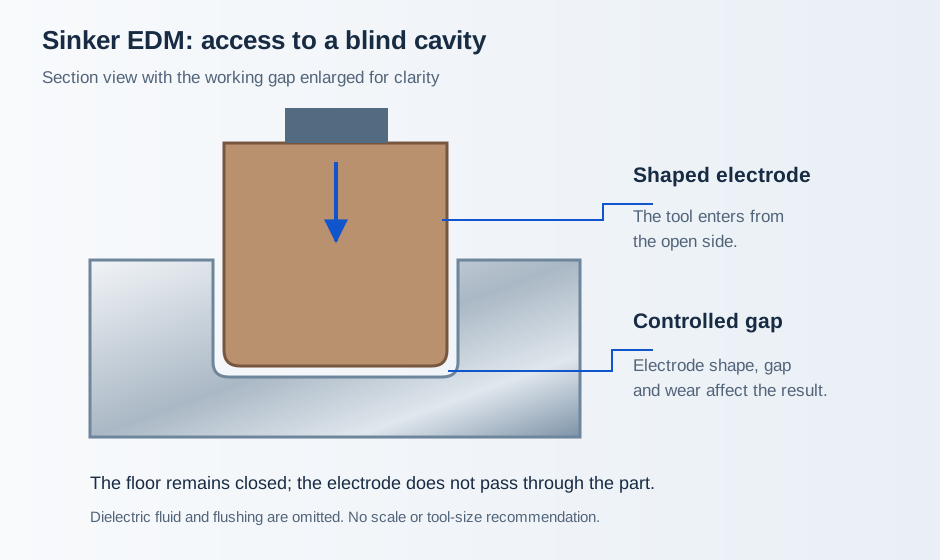
Sinker, die-sinking and ram EDM refer to the shaped-electrode approach. The electrode works into an accessible cavity; it does not need to pass through the part.
Include the cavity model and the required floor, corner and surface details. The electrode, its wear and the controlled discharge gap have to be considered in the manufacturing plan. [2]
A part can be milled or turned first, then sent for EDM on selected features. Open material removal and reference faces may be handled earlier, leaving an internal profile or difficult recess for EDM.
Mark those features and any mandatory heat-treatment sequence. Quote the complete route—or just the remaining EDM work—so preparation and final inspection are assigned clearly.
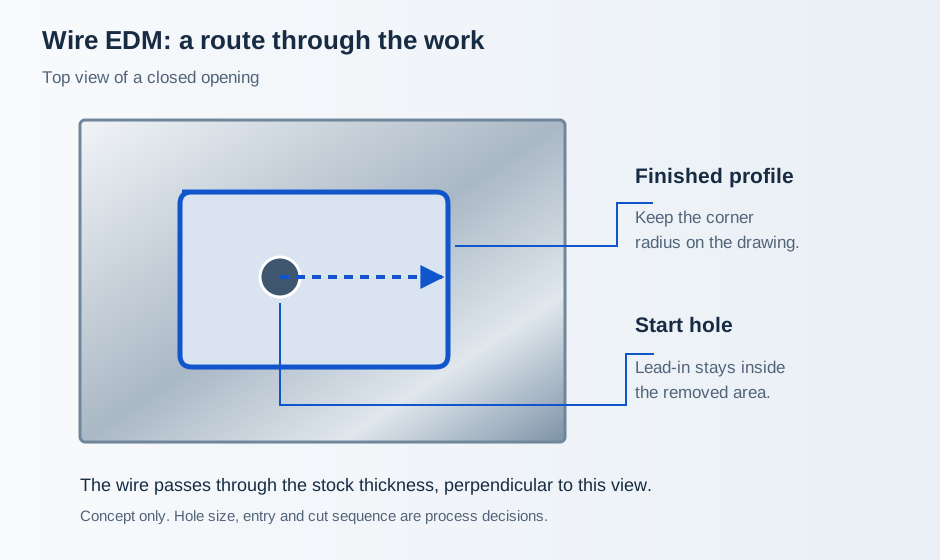
For a closed die opening, identify where a start hole is allowed. For an open contour, show the available edge access. Also mark areas where an entry witness or a temporary holding feature would be unacceptable.
If the two faces have different profiles, supply the geometry for both and name the reference face. A single top-view outline can leave the taper or lower opening undefined.
The cavity floor, side walls and entrance all belong in the model. Show the recess in the full part so the electrode holder and workholding can be reviewed, not just the cavity in isolation.
For supplied electrodes, include their drawing, reference system and identification. Agree who checks the electrode and who is responsible for any roughing or finishing electrodes needed for the job. [4]
Give the exact grade, hardness and treatment history. State whether EDM comes before or after heat treatment, and whether finished datums or ground faces are already present.
Review steel machining →Identify the actual alloy and condition, plus any final surface-integrity requirements. Discuss the material and feature together rather than treating every conductive alloy as the same job.
Browse metal materials →Include the grade, coatings and any dissimilar materials in the blank. For other conductive materials, send the material specification for review.
Compare materials →Conventional wire and sinker EDM require electrical conductivity. Ordinary insulating plastics belong in a mechanical machining review, not a standard EDM quote. [1] Explore plastic CNC machining →
Match the drawing revision to the incoming part. Record stock size, hardness, existing datums and the features still to be made.
Agree wire entry or electrode preparation, support for removable sections and the surfaces available for clamping.
Keep the required profile, depth and final surface condition tied to the released drawing. Separate roughing from finishing where the route calls for it.
Check the agreed characteristics, identify the parts and package delicate edges or finished surfaces for the next operation.
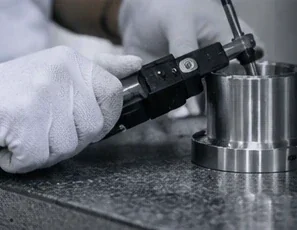
A profile can meet its size limits yet still need a specified surface-finishing step. Where recast-layer or crack limits apply, state the acceptance requirement and test method before the job is quoted. EDM can leave a thermally altered surface; the required follow-up depends on the material and application. [5]
Keep edge treatments on the drawing too. Polishing, blending or removing a surface layer may affect a fit or small radius, so the final inspection state should include that work.
| Requirement | Drawing details | Verification |
|---|---|---|
| Through profiles | Contour, reference face, thickness, taper | Top, bottom, specified intermediate sections |
| Blind cavities | Depth, floor, radii, datums | Access; replica or sectioning if agreed |
| Fits | Mating geometry and limits | Final condition after finishing |
| Roughness | Surface, parameter, units, limit | Numeric measurement and visual criteria separately |
| Surface integrity | Recast layer, cracks, specified limits | Agreed test, sampling, report |
| Material and lot | Certificate, treatment, identification | Sample and batch records |
Send the finished-part drawing and current measurements. Point out existing coatings, treated layers and protected surfaces. Agree incoming acceptance and responsibility for a damaged or undersized blank.
List the complete delivery scope: blank supply, pre-machining, heat treatment where required, EDM, finishing and records. For repeat work, agree electrode or fixture storage and the revision each item belongs to.
Agree the manufacturing site and any outside processors before the order is placed. Kevin can discuss coordination through VETCNC or a direct introduction to a suitable partner; the quotation should name the responsibilities for machining, inspection and delivery.
A sinker job may need electrode design, machining and checking before the first part is burned. For wire work, entry preparation and holding the component are part of the route. [4]
Stock thickness, narrow or deep features and access for flushing affect process planning. Send the full blank dimensions as well as the finished feature. [3]
Final size, roughness and material-integrity checks can require additional operations or records. Quote these alongside the part quantity and required delivery date.
For samples and repeat batches, separate the sample quantity from the released production quantity. Ask which one-time tooling costs are included, what can be reused and what must be reviewed when the drawing changes.
It is worth reviewing for conductive parts with hard-to-reach recesses, intricate through-profiles or difficult hard-material features. Milling often handles open stock removal more efficiently. The useful comparison is the complete route for your drawing, not a rule that one process is always better. [1]
Wire EDM follows a through-profile with a wire electrode. Sinker EDM uses a shaped electrode for an accessible cavity, including a blind recess. Send a section view when it is unclear whether a feature breaks through the part. [2]
Conventional EDM needs an electrically conductive workpiece. Send the exact material grade, hardness and treatment condition so the route can be reviewed. Ordinary insulating plastics are outside that process scope. [1]
A closed internal profile normally needs a through start hole to thread the wire. An open feature may allow entry from an edge instead. Agree the start location and lead-in so they remain compatible with the finished contour.
Specify a measurable radius rather than “perfectly sharp.” Wire diameter and the discharge gap influence a wire-cut corner. Sinker EDM also has electrode geometry, wear and gap effects. The attainable corner has to be reviewed against the actual feature. [2]
Yes, EDM is used on hardened conductive materials. Include the actual incoming hardness, treatment records and finished datums. Any further treatment or surface finishing must stay in the agreed process sequence. [2]
Send the contour, cavity or fit tolerances, surface-finish limits, part size and material. Achievable limits and inspection methods are confirmed for your drawing and the proposed machining route before an order.
That depends on the required final state. EDM can leave a recast layer, and visual smoothness alone does not establish surface integrity. Specify any removal, crack, roughness or test requirements before machining; agree how later finishing affects the dimensions. [5]
You can include either in the request. Supply current dimensions, material records and a clear identification system. For electrodes, include drawings and references, then agree incoming checks, usable condition and responsibility for any replacements.
A dimensioned drawing, 3D model where available, material and condition, blank dimensions, quantity and delivery requirement. Mark through versus blind features, allowed start holes, datum faces and any surface-integrity requirements. State whether you need EDM only or a complete machined part.
Mark the opening, cavity or local detail that needs EDM. Include the surrounding part so access, stock condition and references can be reviewed.
A first request can leave the wire-versus-sinker route open. Tell us the required result rather than guessing an electrode size, wire diameter or spark gap.
For an existing component, send the current revision and identify the surfaces already finished.
References for wire EDM, sinker EDM, electrode preparation and surface integrity. The machining scope, inspection requirements and manufacturing responsibilities are confirmed for each order.