On this page
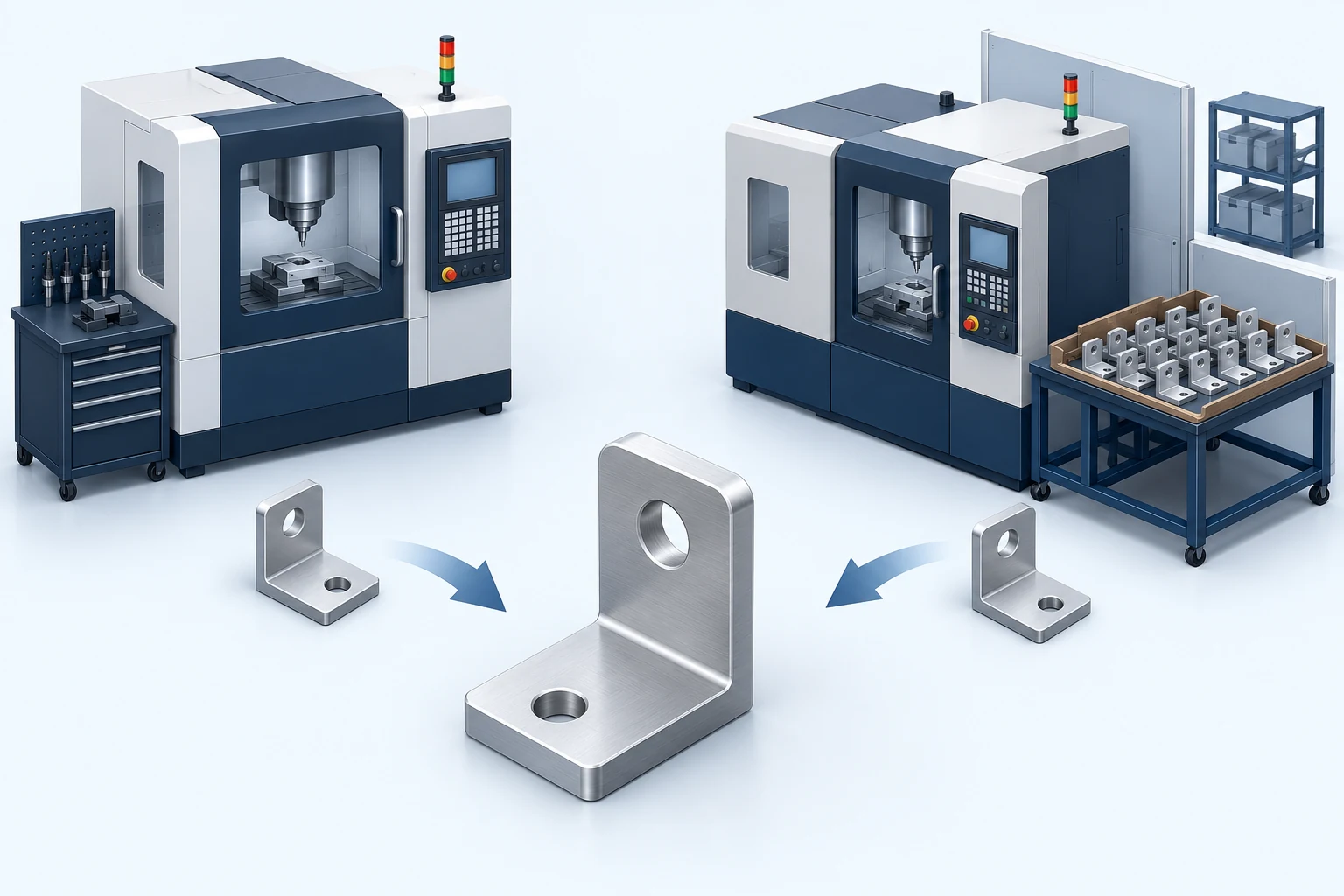
Outsourcing CNC machining can add production capacity, provide a process your shop lacks and avoid an equipment purchase that demand cannot yet justify. It pays when those benefits exceed the supplier’s price plus the coordination, delivery and quality costs you retain. Keeping work in-house can be better when suitable capacity is available, revisions are frequent or the process is central to your product knowledge.
The choice can also be mixed: retain development and selected operations while buying repeat parts or specialist work. Evaluate the part family and the demand period, rather than treating all machining as one make-or-buy decision.
Buy capacity for a specific production constraint
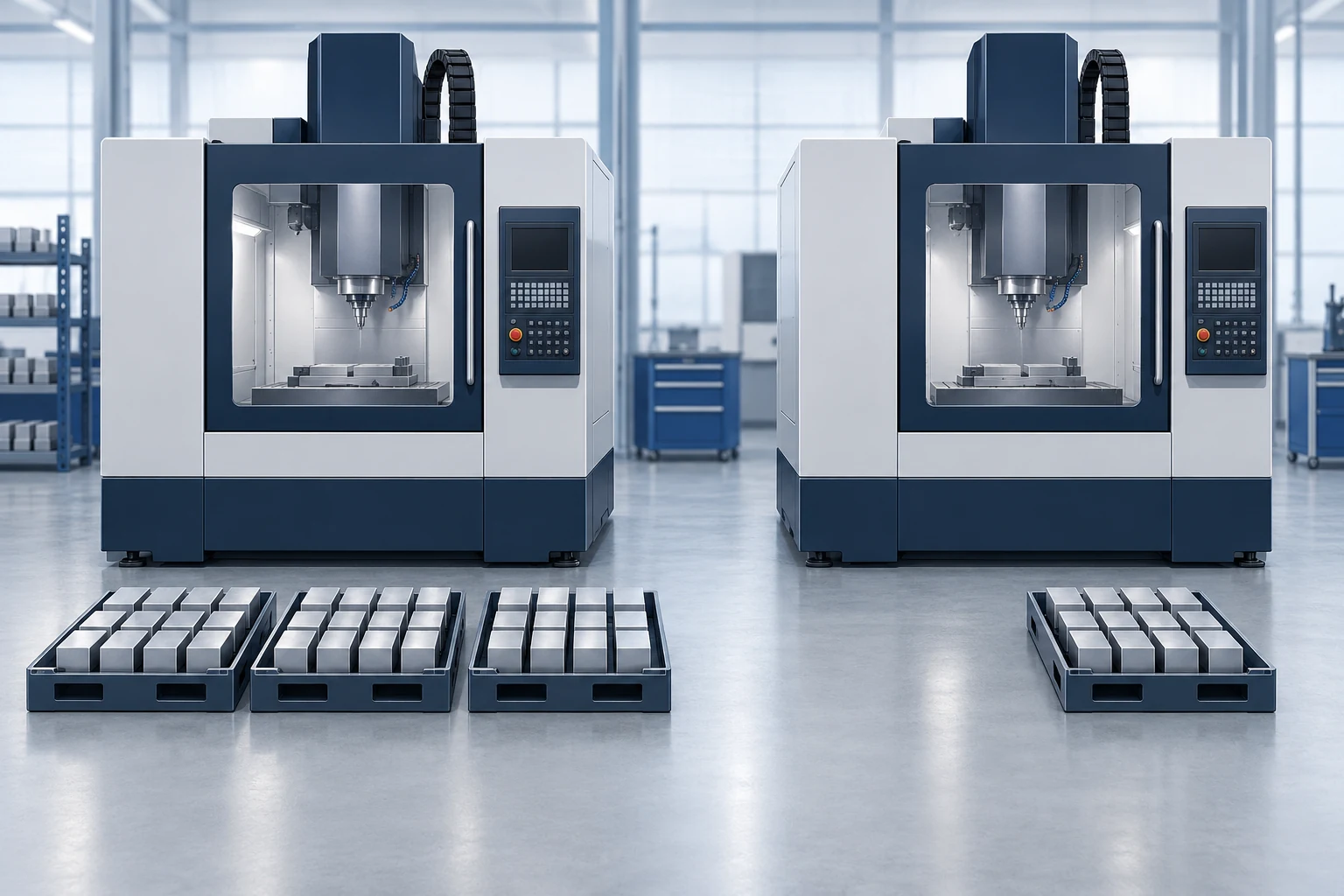
A shop may have enough machines overall and still lack the capacity that a particular order needs. A turning center cannot absorb a backlog of milling work without a suitable route. Inspection or outside finishing can also delay completion after the cutting is done. Identify the operation limiting delivery before outsourcing the batch.
For a temporary peak, external production can protect an internal schedule without committing to another machine, fixture package and staffed shift. That advantage is strongest when the supplier can deliver accepted parts before the internal queue would clear. Moving a job into an equally long supplier queue achieves little.
For uncertain demand, outsourcing can postpone a capacity investment until repeat orders justify it. The tradeoff is a recurring purchase cost and less direct control over scheduling. Once demand becomes steady, the decision may change: a route that was sensible for a launch is not automatically the best route for every later year.
NIST MEP advises manufacturers to examine a supplier’s current capacity and ability to grow, rather than relying on equipment counts. [1] Apply that distinction to the promised delivery period: technical ability to cut the part and an available production slot are separate facts. A forecast is useful for planning, but it does not itself reserve either one.
Access a complete process, beyond another machine
External capability is valuable when it closes a defined gap. A supplier might have a suitable setup for angled features, experience with the specified material or a measurement method for an otherwise difficult characteristic. The benefit is the ability to produce and verify that feature without building the entire process internally.
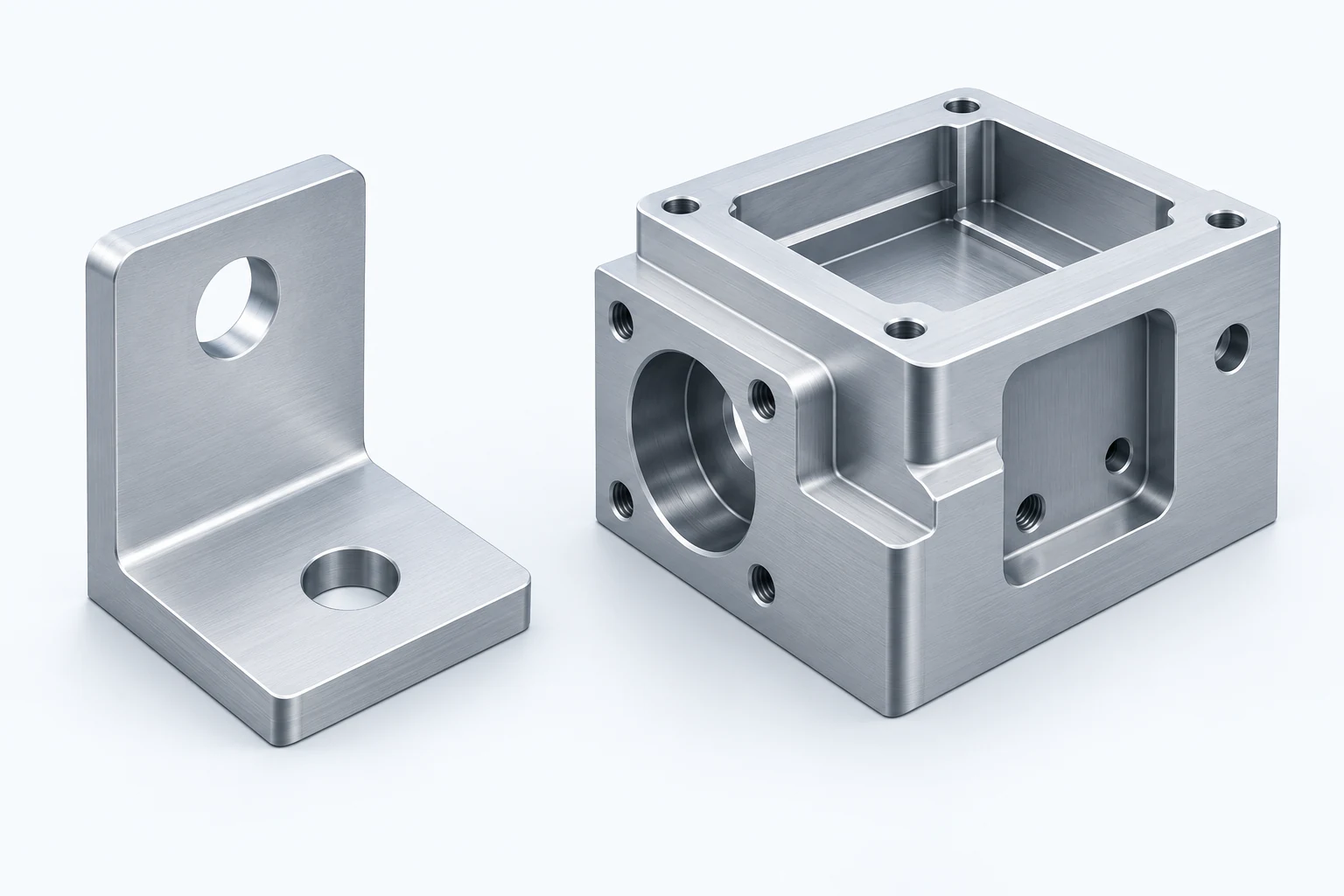
For example, a company making straightforward brackets may receive a housing design with features on several faces. Buying that housing can be more practical than acquiring equipment and developing a new route for an uncertain order stream. The comparison should still include a feasible internal route with additional setups; the presence of more machine axes does not settle the economics.
An equipment list is an initial clue. Connect the proposed resource to access, workholding, measurement and availability for the actual drawing. Reading a machine shop’s equipment list explains that check in detail. Outsourcing transfers production work, but the buyer still needs enough technical understanding to evaluate the result.
Compare in-house, outsourced and hybrid routes
The same situation can support different choices depending on what is already available. This comparison assumes every proposed route can meet the part requirements.
| Situation | In-house route | Outsourced route | Useful hybrid |
|---|---|---|---|
| Temporary production peak | Fits if the constrained operation has usable time | Adds capacity if an external slot meets the date | Keep normal demand inside; buy the overflow |
| Infrequent specialist features | Requires developing the missing process | Uses a supplier’s established route | Buy the specialist operation; retain compatible work |
| Frequent design changes | Short feedback loop between design and machining | Needs revision control across organizations | Keep development close; release stable parts externally |
| Stable repeat demand | May justify dedicated capacity and process learning | Avoids owning that capacity, with continuing supply dependence | Maintain an internal route and a qualified external allocation |
A hybrid route adds handoffs. It is worthwhile when the capacity or technical benefit exceeds the extra transport, setup and verification work. Splitting operations simply to keep every existing machine busy can create more work without improving delivery or cost.
Calculate the costs that actually change
The internal cost shown in a report may include rent, depreciation and salaried support allocated to each part. Outsourcing one batch does not necessarily remove those expenses. OpenStax’s managerial accounting treatment separates avoidable costs from costs that remain under either choice. [2]
Use the decision’s time horizon. Material purchases, paid overtime and job-specific consumables may disappear when a batch moves out. A committed equipment lease may remain. Staff time released for other work is a capacity benefit, but it is not automatically a payroll saving. Longer-term decisions can change which commitments are avoidable.
For a 200-part planning example, assume both routes deliver the same accepted parts on the required date. All amounts are in US dollars:
- Making the batch requires $4,800 in avoidable material, paid work and operating costs.
- Another $1,800 of allocated internal costs remains whether the batch is made or bought.
- The supplier’s complete manufacturing price is $5,400.
- Buying adds $600 for transport, receiving verification and order administration, beyond the supplier’s included scope.
The internal report shows $4,800 + $1,800 = $6,600. Comparing that figure only with the $5,400 supplier price suggests a saving. The relevant difference is:
Outsourcing premium = $5,400 + $600 − $4,800 = $1,200, or $6 per accepted part.
The retained $1,800 exists on both sides. Including it consistently gives $6,600 to make versus $7,800 to buy, the same $1,200 difference.
Now suppose the released production slot allows another order that would otherwise be declined. If that order contributes $2,000 after all its additional costs, outsourcing improves the combined result by $2,000 − $1,200 = $800. If the slot stays idle, that benefit is zero. Use contribution, not the other order’s sales revenue, and count each resource cost once.
This calculation answers a batch decision. Purchasing a machine for several years requires a separate forecast of demand, staffing, maintenance and future commitments. The CNC cost and supplier-selection guide covers the manufacturing charges that must remain consistent when comparing offers.
Keep coordination and quality work in the plan
An outsourced part still needs a released definition, technical decisions and acceptance. Someone must answer drawing questions, approve changes and handle a missed requirement. ASQ includes communication, problem resolution, supplier switching and incoming verification in the cost of a supplier relationship. [3]
Consider a mounting hole moved during a design update. An internal shop may resolve the change in a short engineering discussion. An external route needs an identified revision, confirmation of which work has started and a disposition for the old parts. Both routes require control; the external handoff adds another place where assumptions can diverge. Frequent changes can therefore consume much of the apparent purchasing advantage.
Quality responsibilities also need a practical division. The supplier can perform agreed checks and deliver records, while the buyer decides whether those results cover the part’s use and any receiving requirements. Repeating every inspection by habit adds cost; dropping verification because a report exists can leave a gap. Define the characteristic, acceptance basis and response to a failure.
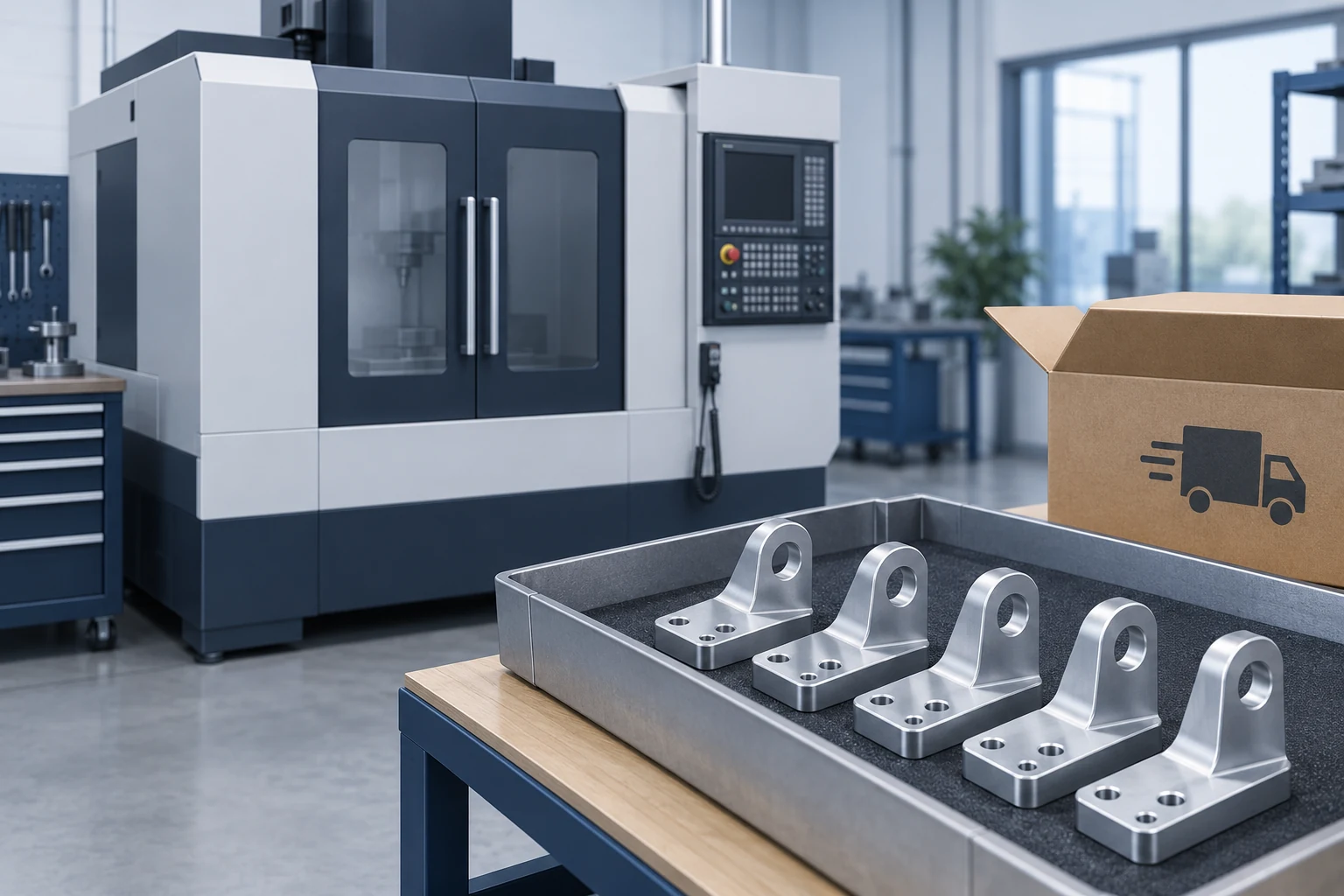
Delivery should mean the date usable parts are available for the next operation. Include required approval, transport and receiving time, rather than using the machining completion date alone. NIST’s discussion of total cost of ownership includes management, inventory, freight and lead-time effects. [4] If outsourcing requires earlier orders or more buffer stock, include the cash and revision exposure created by those parts.
Use a hybrid route where the handoff is clear
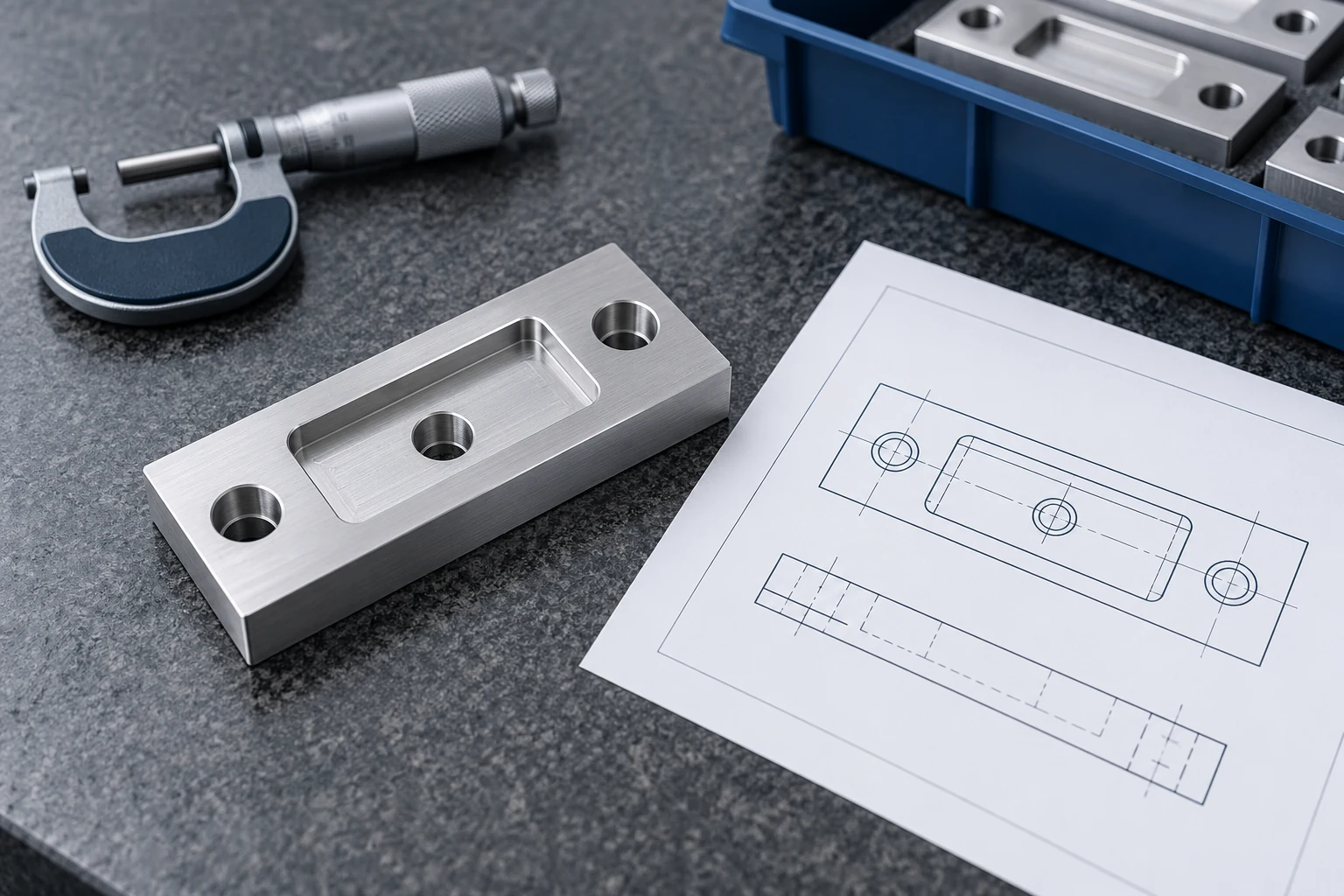
A practical hybrid may separate part families rather than split every component. Keep fast-changing development pieces in-house and outsource stable repeat brackets. That preserves direct design feedback where it matters while freeing repeat-production time. It also avoids transporting partially machined parts between operations.
Splitting one part can work when the interface is well defined. For example, an external supplier could prepare blanks and rough features while an internal operation finishes a critical locating surface. The incoming condition must leave the right material and usable reference surfaces for that finish. If the handoff causes another difficult setup or makes a feature hard to verify, buying the complete part may be the simpler route.
Retaining the last operation is not automatically a quality advantage. It helps only when the internal process adds useful capability, control or product knowledge. A qualified supplier may be better placed to finish related surfaces together. Compare complete routes before assigning operations by ownership.
Another hybrid is a qualified external source for a part normally made internally. This can provide an option during peaks or disruption, but a contact name is not a ready backup. The external route needs current files, suitable preparation and evidence that it can deliver the required condition. Keep the alternative usable at a level appropriate to the consequences of interruption; do not assume identical material and machine names make a transfer automatic.
Judge the first transfer by the reason for outsourcing
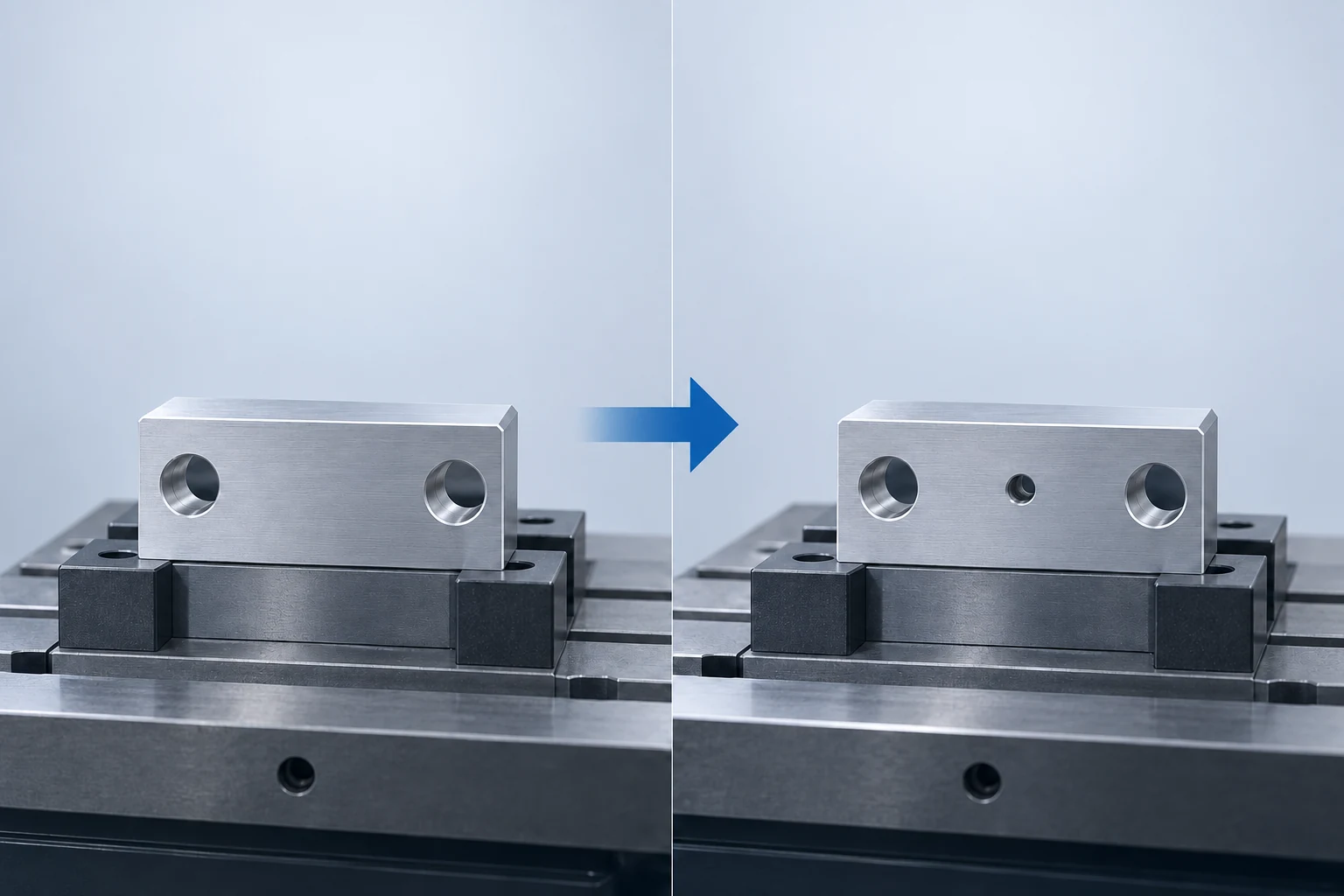
Define the benefit before releasing the work. For overflow, measure whether the internal constraint was relieved and accepted parts arrived when needed. For specialist capability, verify the feature that could not be produced or measured satisfactorily inside. For cost, compare actual additional spending and the work that remained.
A first transfer should also reveal whether questions, revisions, nonconforming parts and delivery changes can be handled without repeated intervention. A good sample is useful, but repeat production can introduce different fixtures, tool changes and outside-process batches. The prototype-to-pilot-batch guide explains how to test those production differences without treating one approved part as proof of the whole route.
Revisit the decision when demand, design stability or internal capacity changes. Outsourcing is strongest when it solves an identified constraint at an acceptable total cost. Keeping or returning work in-house is reasonable when that constraint disappears or the retained process has become more valuable.
Technical sources
- Art Thomas, NIST Manufacturing Extension Partnership, 8 Ways to Improve Your Supplier Selection Process, May 30, 2023. Capability, capacity, quality records and continuity considerations.
- Mitchell Franklin, Patty Graybeal and Dixon Cooper, OpenStax, Principles of Accounting, Volume 2: Managerial Accounting, section 10.3, “Evaluate and Determine Whether to Make or Buy a Component”, 2019. Relevant costs and qualitative factors in a make-or-buy decision.
- American Society for Quality, What Is Supplier Quality?. Supplier relationship costs, responsibilities and performance assessment.
- Gary Steinberg, NIST Manufacturing Extension Partnership, Aligning Domestic Sourcing Efforts with Business Success, February 11, 2022. Total cost, responsiveness and supply continuity.