Straight sleeves
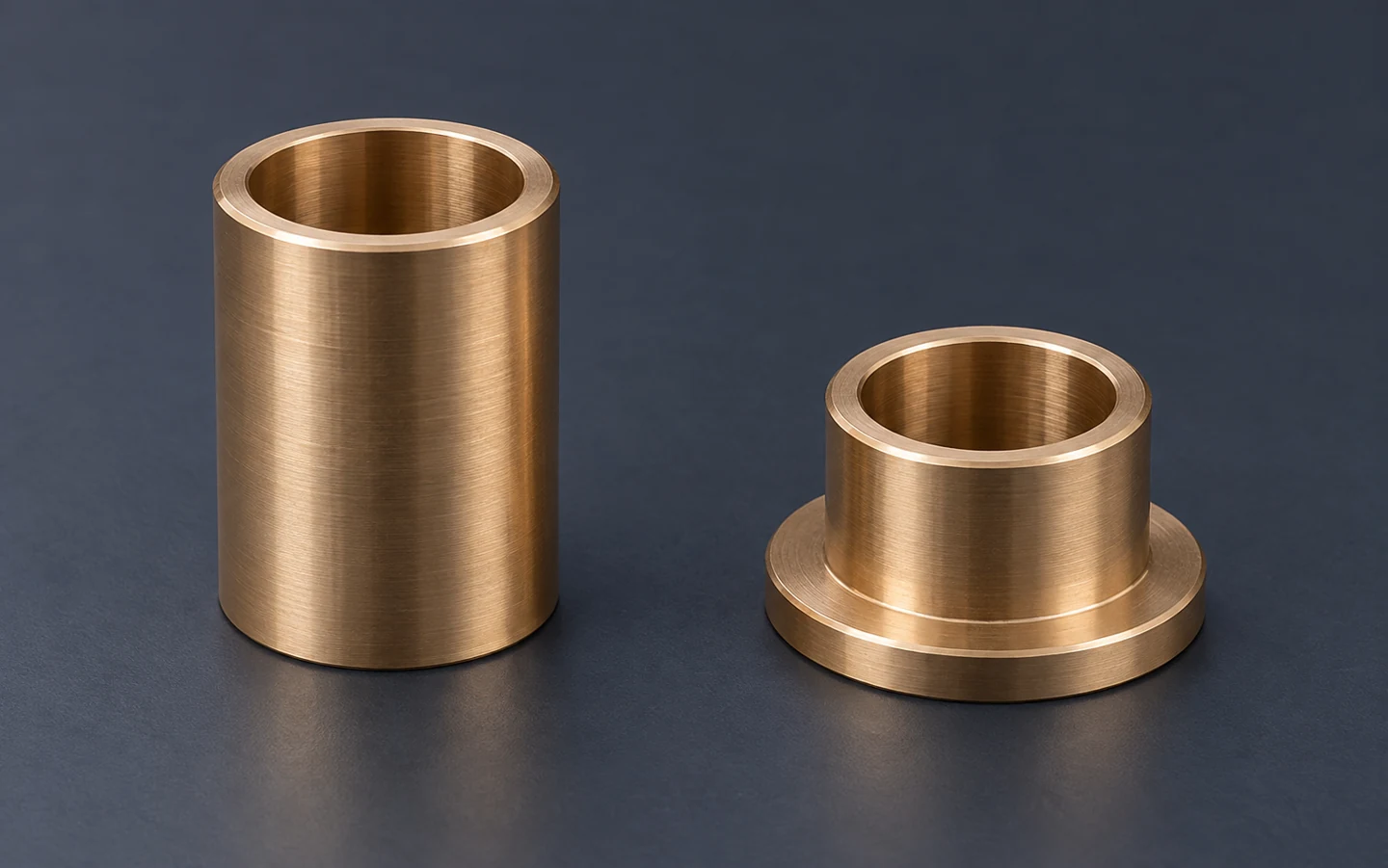
We machine cylindrical sleeves with a working bore and an outside locating diameter for shafts and pivot pins.
We machine cylindrical sleeves with a working bore and an outside locating diameter for shafts and pivot pins.
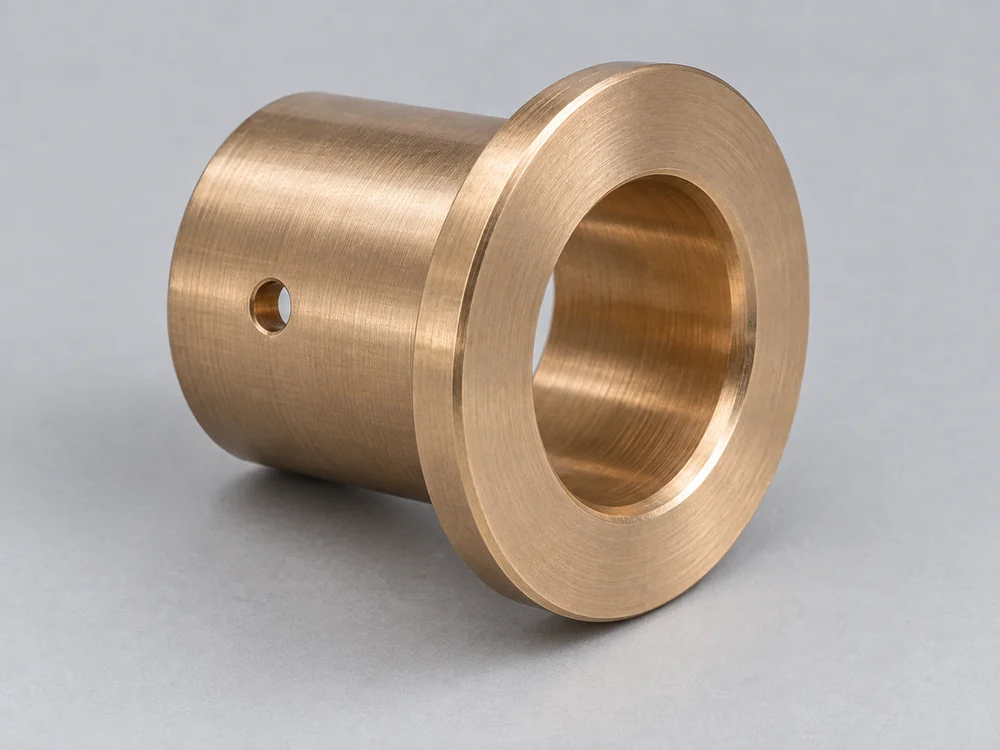
A flanged bushing combines radial guidance with an end face for axial location or sliding contact. We make the bore, flange and seating face to their separate drawing requirements.
Steps in the outside profile locate a sleeve across different housing diameters or against a shoulder. The working bore remains related to those locating surfaces.
Separate bearing halves allow assembly around an existing shaft. We supply the defined half geometry and joint faces for the mating housing arrangement.
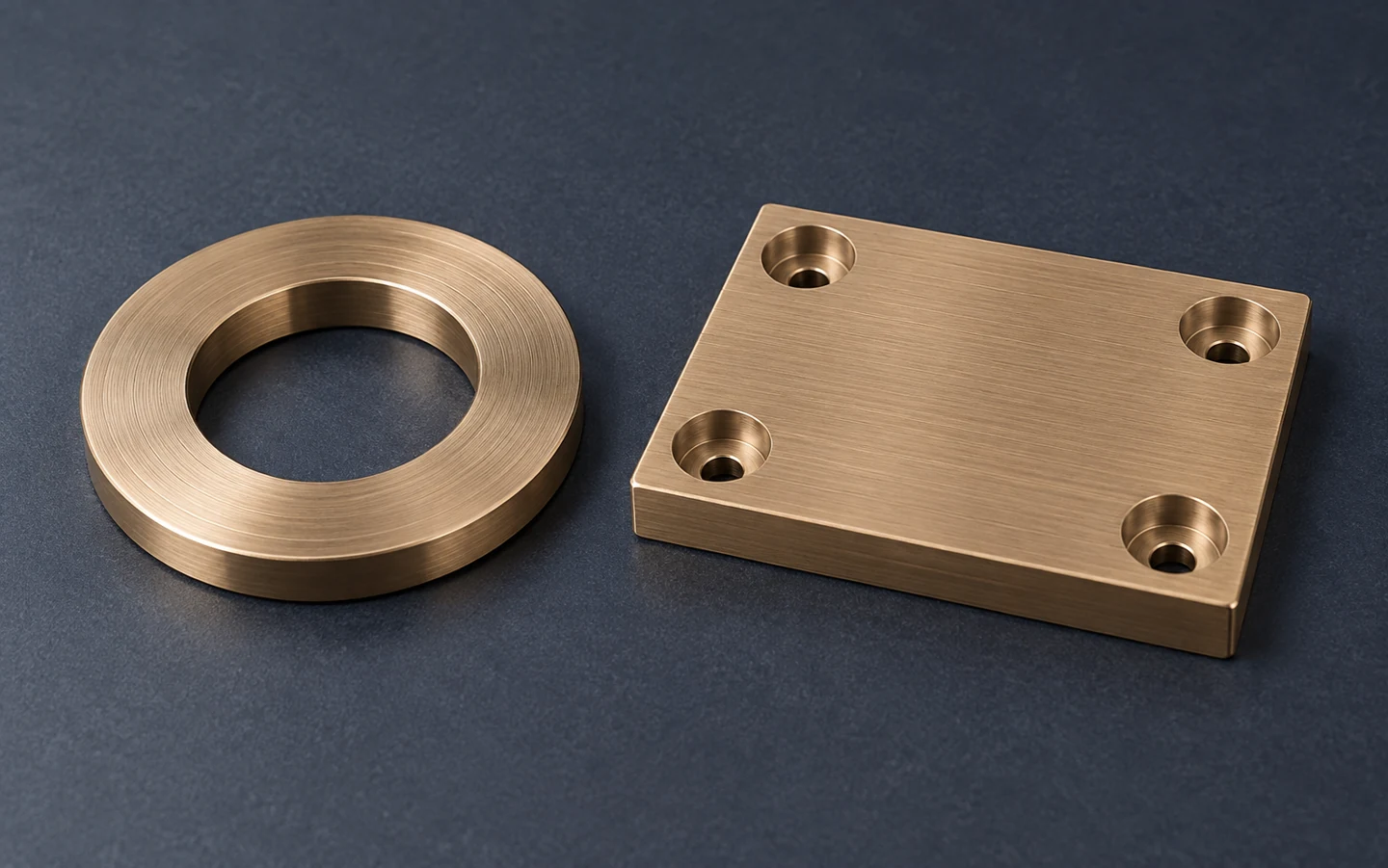
Flat annular components provide an axial sliding face between a rotating shoulder and its support. Thickness and the working annulus determine where contact occurs.
Replaceable flat wear faces guide a moving member while protecting its supporting structure. Recessed mounting features keep the fixings clear of the sliding path.
An open channel locates a mating rail or profile. We machine the sliding lands, side faces and attachment features as one component.
Blocks with a bore combine shaft guidance and a mounting body. They suit assemblies whose attachment pattern cannot be accommodated by a simple sleeve.
No matching bearing forms. Try another name or filter.
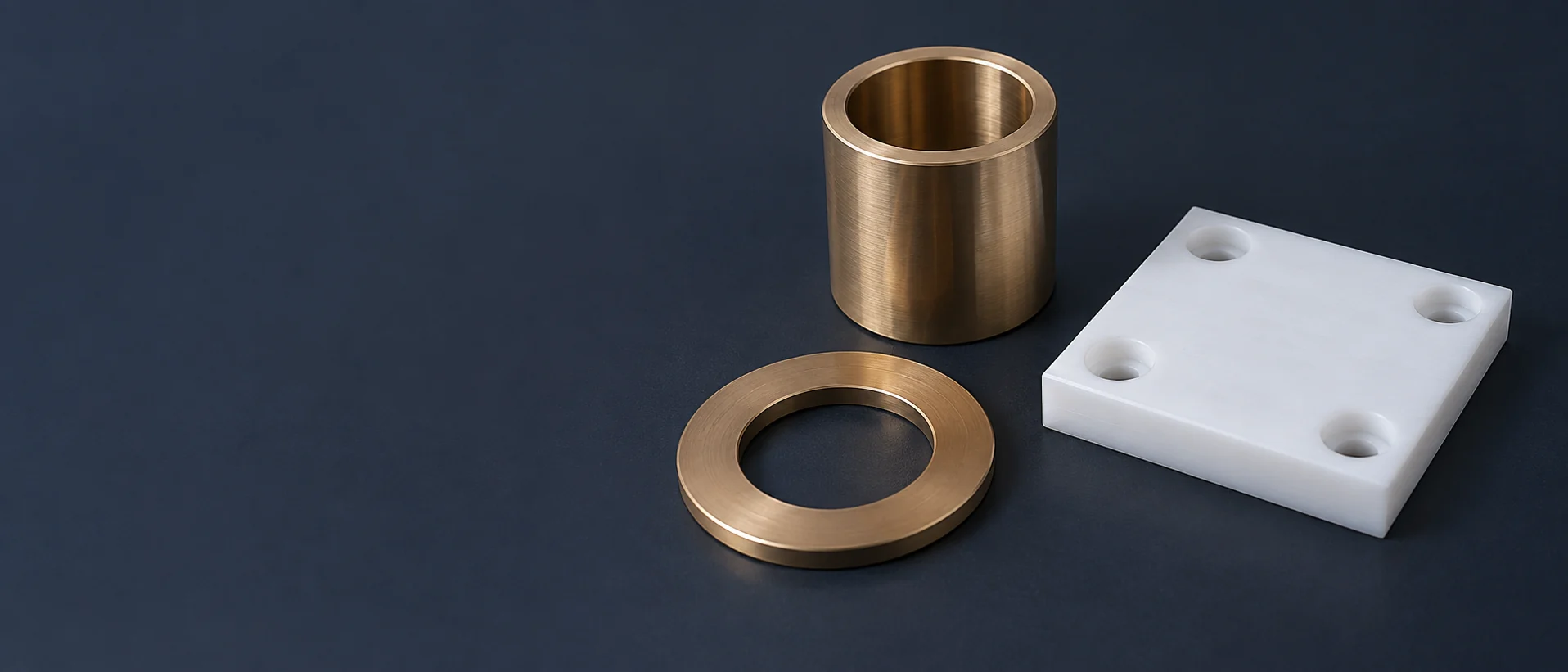
We machine solid bronze stock to the specified alloy and supplied condition. C93200 is a leaded tin bronze used for bearing components; the selected lubrication system remains part of the bearing design.
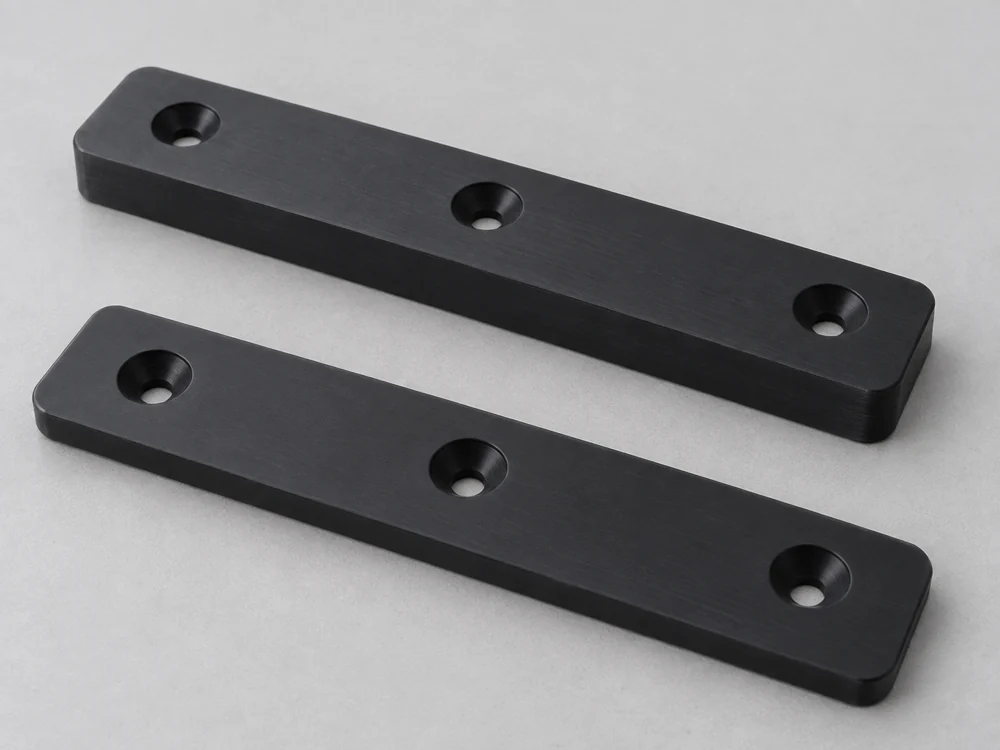
POM-C offers lower moisture uptake than unfilled PA6 and is useful where a polymer sliding component needs dimensional stability in changing humidity. The drawing still needs the exact grade: an unfilled acetal and a bearing-modified compound are different materials.
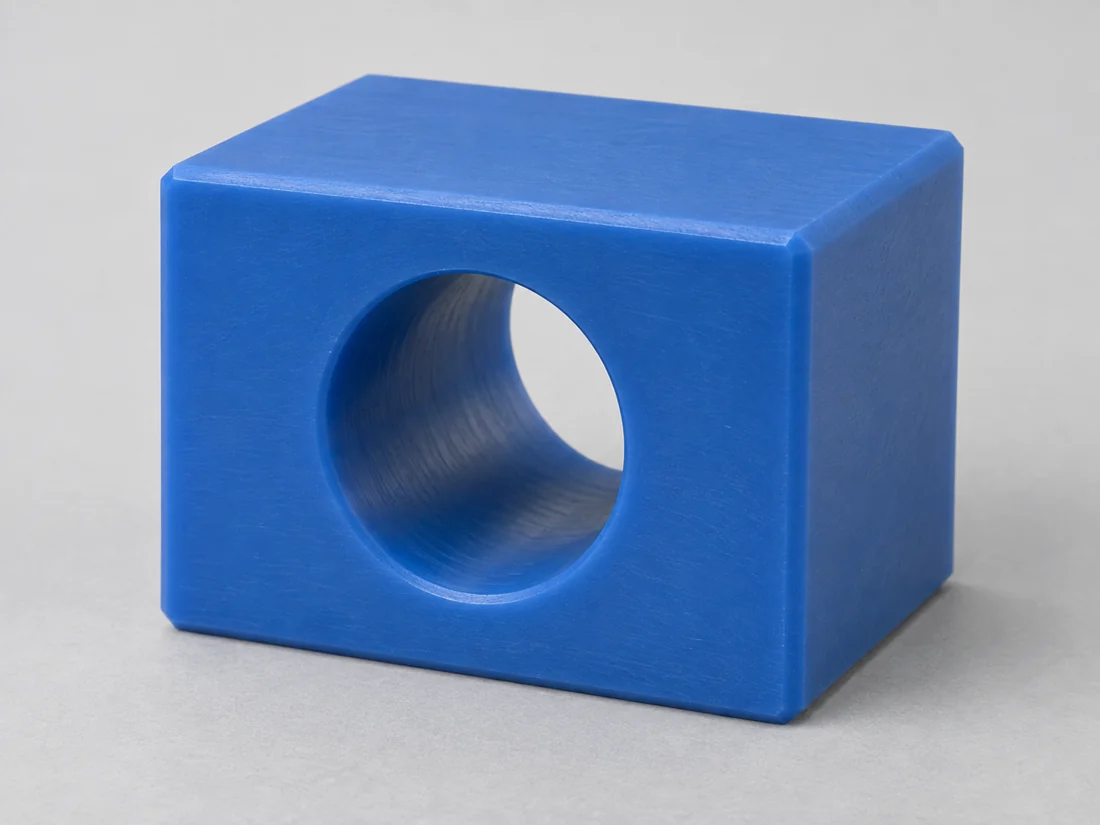
PA6 is used for wear blocks and bearing components, but absorbed moisture changes its dimensions and stiffness. We retain the specified stock grade and conditioning state so a dry-machined bore is not confused with the intended in-service condition.
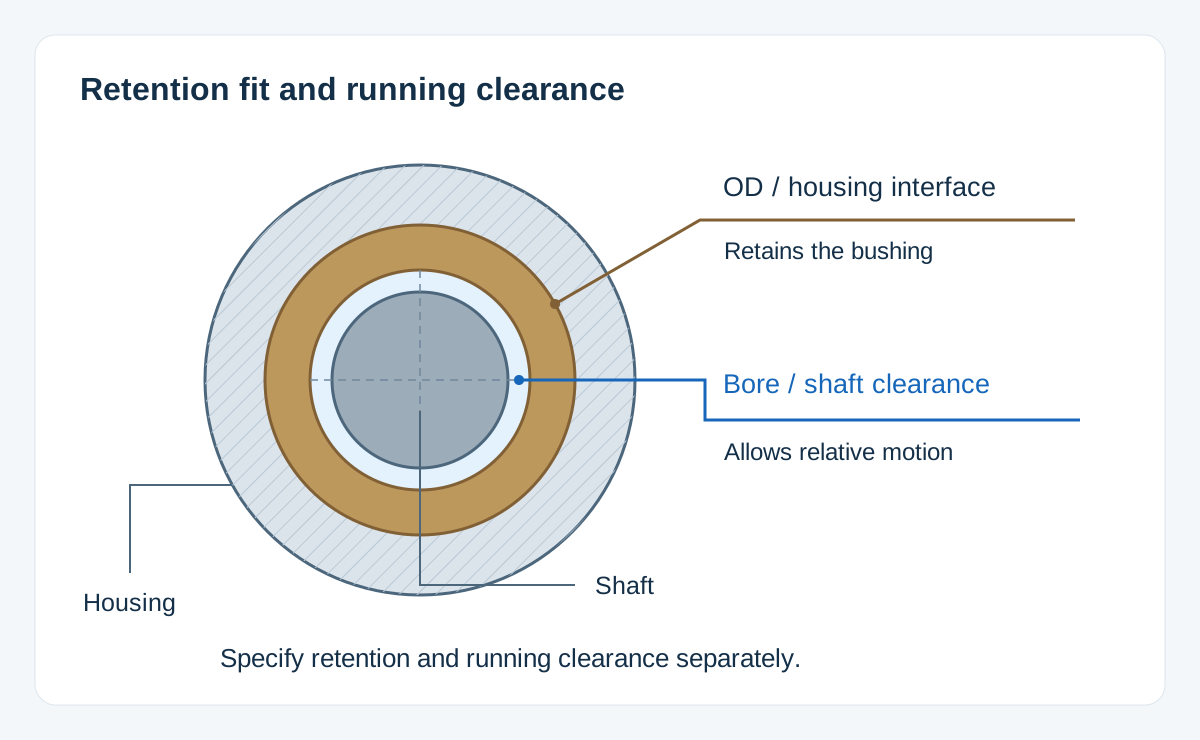
The outside diameter retains a bushing in its housing; the bore provides clearance around the shaft. Pressing the bushing into place can change that bore. We distinguish the free-part dimensions from the installed requirement and use the mating shaft limits to define the intended clearance.
A flange can act as a stop or a working thrust face. The drawing identifies the contact annulus, flange thickness and corner clearance, so the shaft shoulder reaches the intended face without catching the root radius.
Two individually correct bores can bind a shaft if their installed axes disagree. We need the assembly datums or the agreed final-machining arrangement when separate supports guide the same shaft.
| Reference material | Property and condition | Typical value |
|---|---|---|
| C93200 cast bronze | Tensile elastic modulus | ≈100 GPa |
| C93200 cast bronze | Linear expansion, 20–100 °C | 18 µm/(m·K) |
| Acetron GP / Ertacetal C POM-C | Tensile modulus, dry at 23 °C | 3.0 GPa |
| Acetron GP / Ertacetal C POM-C | Linear expansion, 23–60 °C | 110 µm/(m·K) |
| Nylatron MC901 PA6 | Tensile modulus, dry at 23 °C | 3.3 GPa |
| Nylatron MC901 PA6 | Linear expansion, 23–60 °C | 80 µm/(m·K) |
CDA alloy data and Mitsubishi Chemical Group stock-shape data; polymer modulus follows ISO 527. These values compare stiffness and thermal response, not allowable bearing pressure. We retain the drawing’s specified alloy or polymer grade and conditioning state.
We plan the bore, outside locating diameter and end-face operations around the specified relationships. Thin sleeves need support that holds the part without making clamping distortion part of the finished geometry.
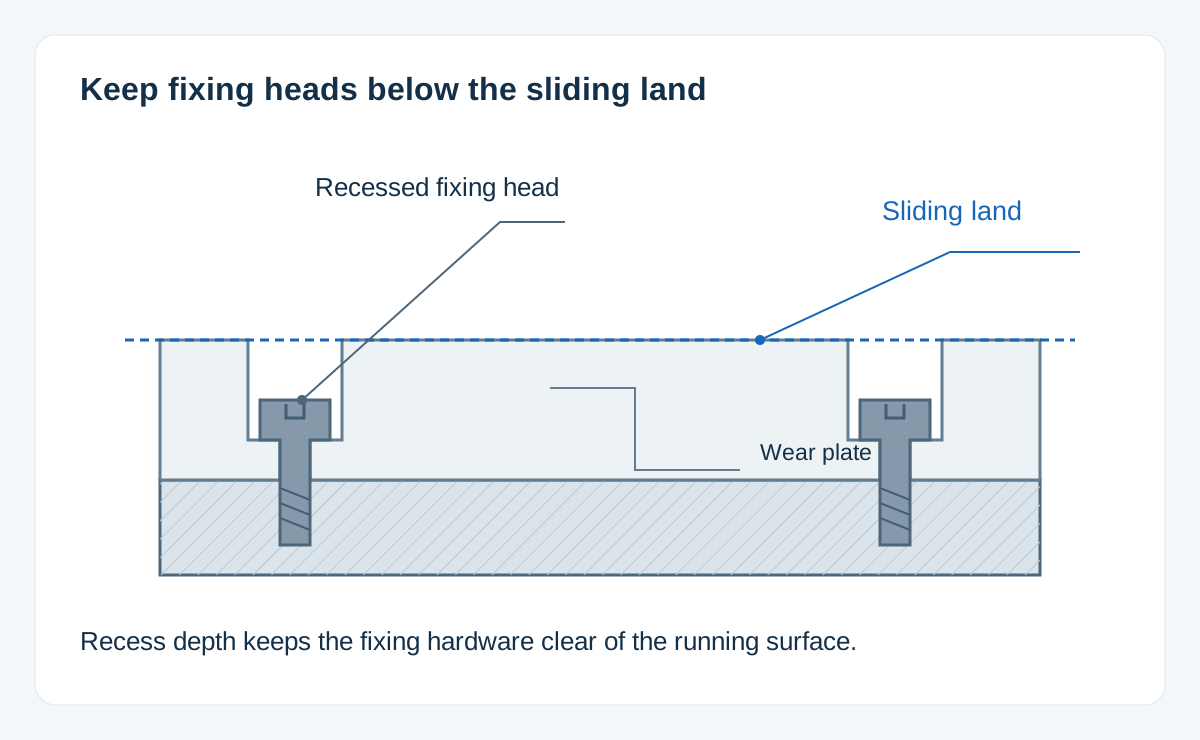
We mill the sliding face in relation to the back face and mounting features. Counterbores and countersinks are defined from the working surface so the selected fastener head remains below it.
The feed hole must reach the intended groove and align with the housing supply. We machine the released groove width, depth and extent while preserving the bearing lands that carry contact.
We apply the specified surface-texture requirement to the sliding face and identify it separately from the nonworking exterior. A whole-part cosmetic finish does not define the bearing surface.
Burrs at a lubricant opening can score the mating shaft. We remove raised edges while preserving the specified groove and the adjacent contact surface.
A fixing head below the new wear face can become exposed as the part wears. Recess depth and the permitted replacement point must leave that head clear of the moving member.
Plating or coating on a sliding face changes its size and surface behavior. We keep the specified contact lands separate from decorative or protective treatments applied elsewhere on the part.
We identify which bore limits apply before fitting and which require an agreed housing or test fixture. The inspection record states that condition, and an installed clearance is measured in the agreed housing or test fixture.
For washers and wear plates, we check thickness and the specified flatness over the working lands. Mounting recesses and lubricant grooves are excluded from the contact surface as the drawing defines.
The agreed inspection condition includes temperature and support for polymer parts. We use contact force appropriate to the feature: squeezing a flexible sleeve can change the diameter being measured.
A worn part helps identify the envelope and installation, but its wear surface is not the original size. We use the approved part drawing and mating dimensions to establish replacement geometry.
A first component can check assembly and movement in the intended housing. Any resulting change to the bearing geometry is recorded in the released drawing before a repeat batch.
We distinguish mating halves, handed plates and similar bore sizes through the agreed part identification. Marks belong on a defined area outside the sliding and locating surfaces.
We separate metal edges and polymer contact faces in packing. Protection for long strips prevents bending in transit, while sleeves are supported without forcing their bore out of shape.
A sleeve and a flat guide need different machining routes. Where the same order includes the mating shaft or support, we quote those components against their own drawings and shared interface requirements.
| Item | Include |
|---|---|
| Part geometry | Bore, outside profile, length and working faces |
| Mating interface | Shaft/housing limits and acceptance state |
| Service conditions | Motion, lubrication, temperature and moisture |
| Order scope | Grade, quantity, surface limits and records |
For a wear plate, include the mounting hardware and replacement limit where they determine the remaining working thickness.
It is not a like-for-like material change. An oil-impregnated sintered bushing stores lubricant within its porous structure; a bushing machined from solid bronze stock does not have that same lubrication mechanism. The replacement design must provide a suitable lubrication route and approved clearances before we machine it.
The cut removes material and changes the joint between the halves. Closing that joint in a housing can alter the bore. A split bearing therefore needs its own joint faces, closure condition and installed geometry defined; the dimensions of an unsplit sleeve are not a complete manufacturing drawing for the pair.
Dry running depends on the specific material compound, contact pressure, motion, speed and mating surface. A dry-running rating comes from the specific material compound together with the contact pressure, motion, speed and mating surface. We machine the approved component; the bearing design needs to qualify its intended lubrication and duty, including any special self-lubricating material.
No. The suitable shaft surface depends on the bearing material and sliding conditions. For some polymer bearing systems, an extremely smooth counterface can increase friction or stick-slip. Use the selected bearing material’s counterface guidance or a validated assembly specification, rather than adding a mirror-polish requirement by default.
A change to reversing or short-angle motion changes the loaded contact region and how lubricant reaches it. A geometry that fits both assemblies may still have a different wear pattern. Retain the defined motion and lubrication duty in the design review when reusing a bearing for a new mechanism.
A flat thrust washer carries contact on its end face; its center opening is not automatically a radial bearing. Radial guidance needs a suitably defined sleeve or other bearing surface. A flanged bushing can combine the two functions when both its bore and flange face are designed for them.
Send the bearing drawing, mating dimensions and quantity. We will review the material, machining features and required delivery condition.
Material and bearing-interface references.
We use Google Analytics to see how this site is used. Analytics cookies are set only if you accept. Privacy Policy
