On this page
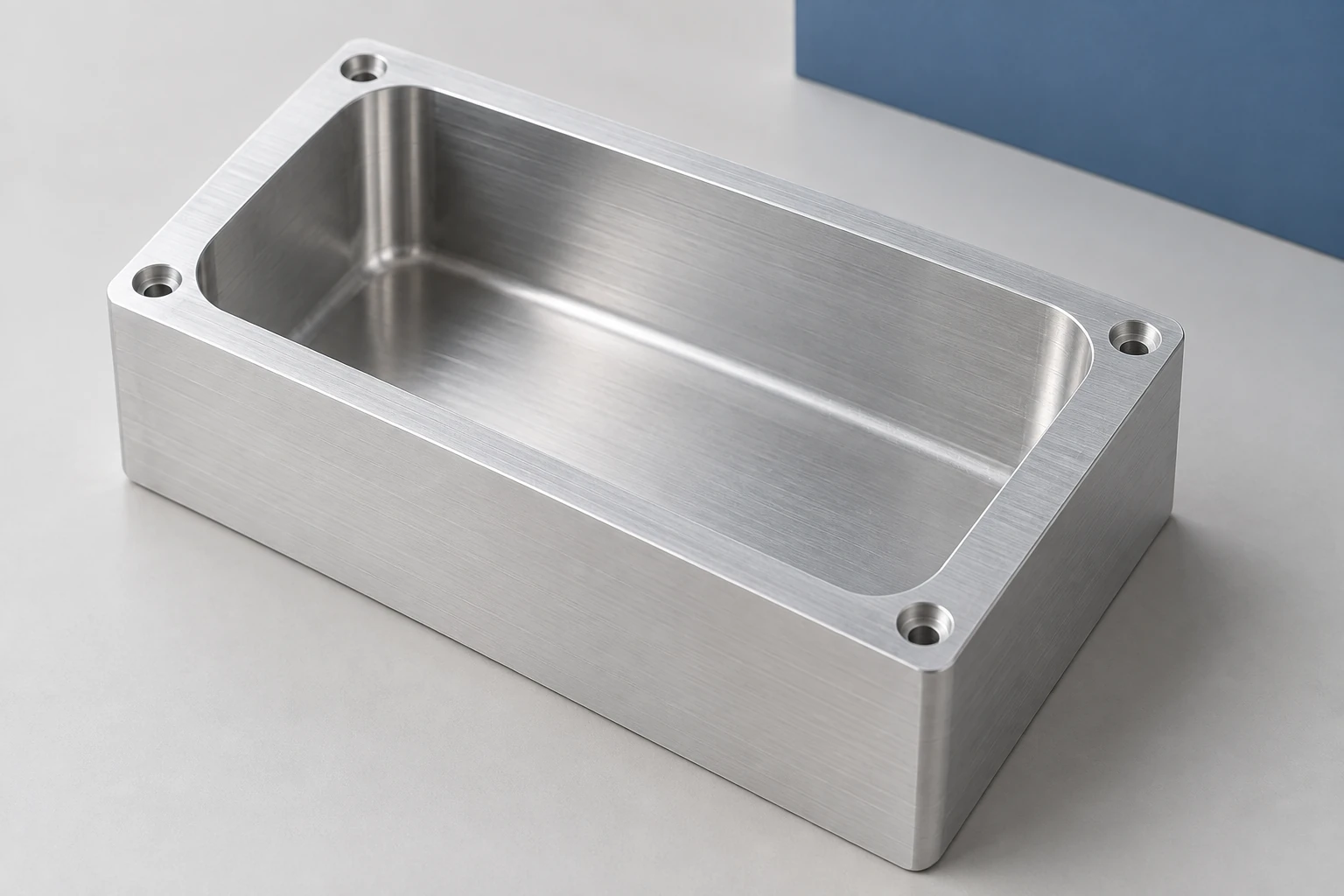
Deep pockets and oversized blanks increase CNC machining work in different ways. Extra stock adds material to remove. A deep pocket can also restrict the tool diameter, require more tool overhang and make chips harder to clear. The same volume of metal can therefore take different amounts of time to machine.
The useful design question is which work the part actually needs. Keep functional depth, wall thickness and interfaces fixed while identifying stock or geometry that can change.
Start with the volume that must become chips
For the same finished part, a larger solid blank generally means more material removal. That affects cutting time and material use, but it does not determine the complete price. Programming, fixtures, finishing and inspection remain part of the machining cost comparison.
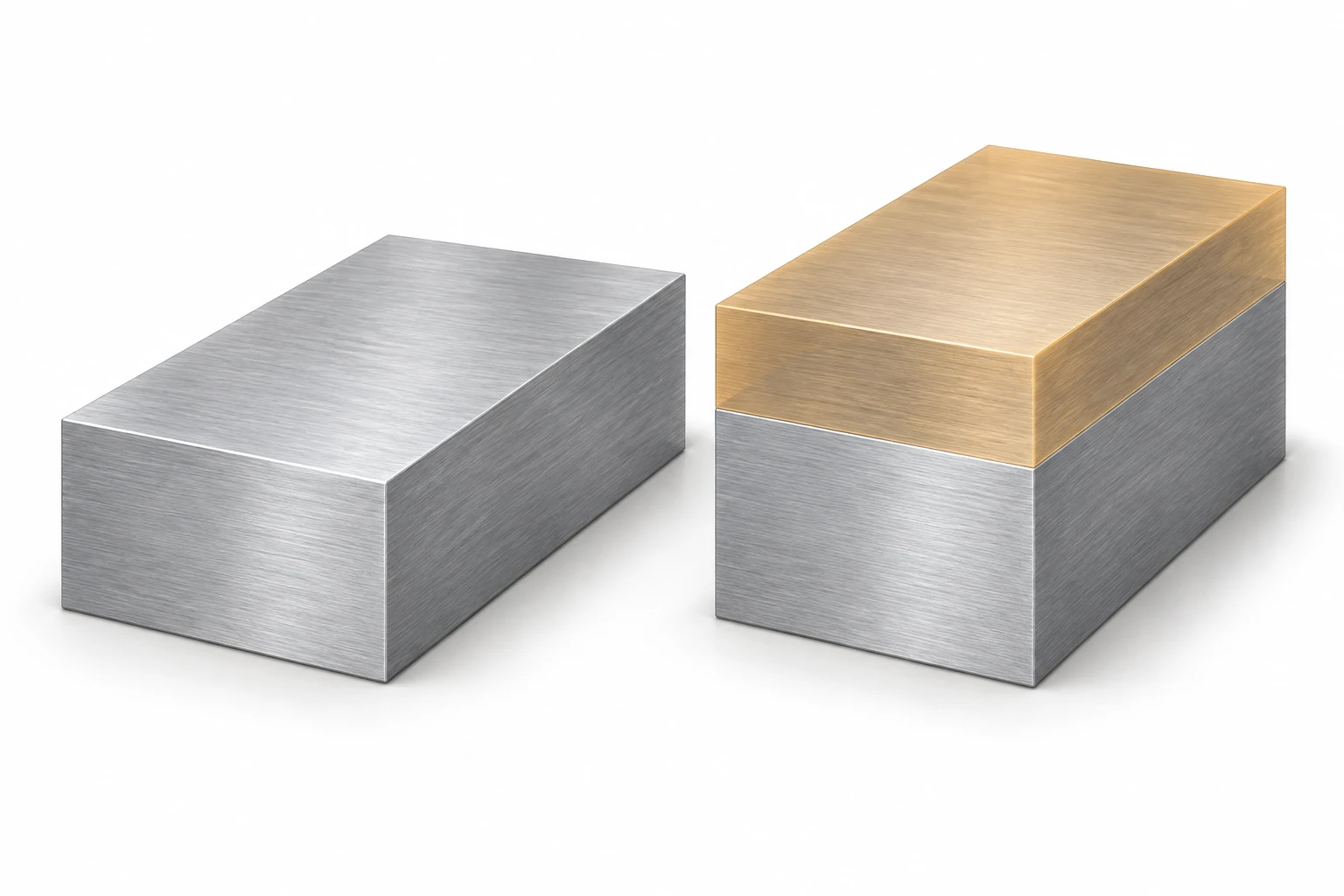
Consider a hypothetical comparison between 120 × 80 × 40 mm and 120 × 80 × 30 mm blanks. Assume the same alloy and condition, and that both blanks provide enough material for the same part and its workholding. The extra thickness contributes:
120 × 80 × 10 = 96,000 mm³ = 96 cm³ of additional stock.
At an assumed average in-cut removal rate of 20 cm³/min, removing that extra volume takes 96 ÷ 20 = 4.8 minutes. The rate is an arithmetic input, not a recommended cutting parameter or VETCNC production rate.
This estimates only additional time spent removing material. It excludes entries, retracts, tool changes, handling and any change to the finishing or inspection route. Sandvik Coromant’s milling formula expresses removal rate using cutting depth, working engagement and feed; an actual path does not necessarily maintain those conditions throughout the cut.
Depth changes the tool assembly, not just the volume
A wide, shallow recess can often be reached with a short tool. A narrow, deep recess may require a smaller cutter projecting farther from its holder. That longer projection reduces rigidity and can increase deflection and vibration sensitivity. The response may involve different engagement, tooling or toolpaths, rather than simply running the same program deeper.
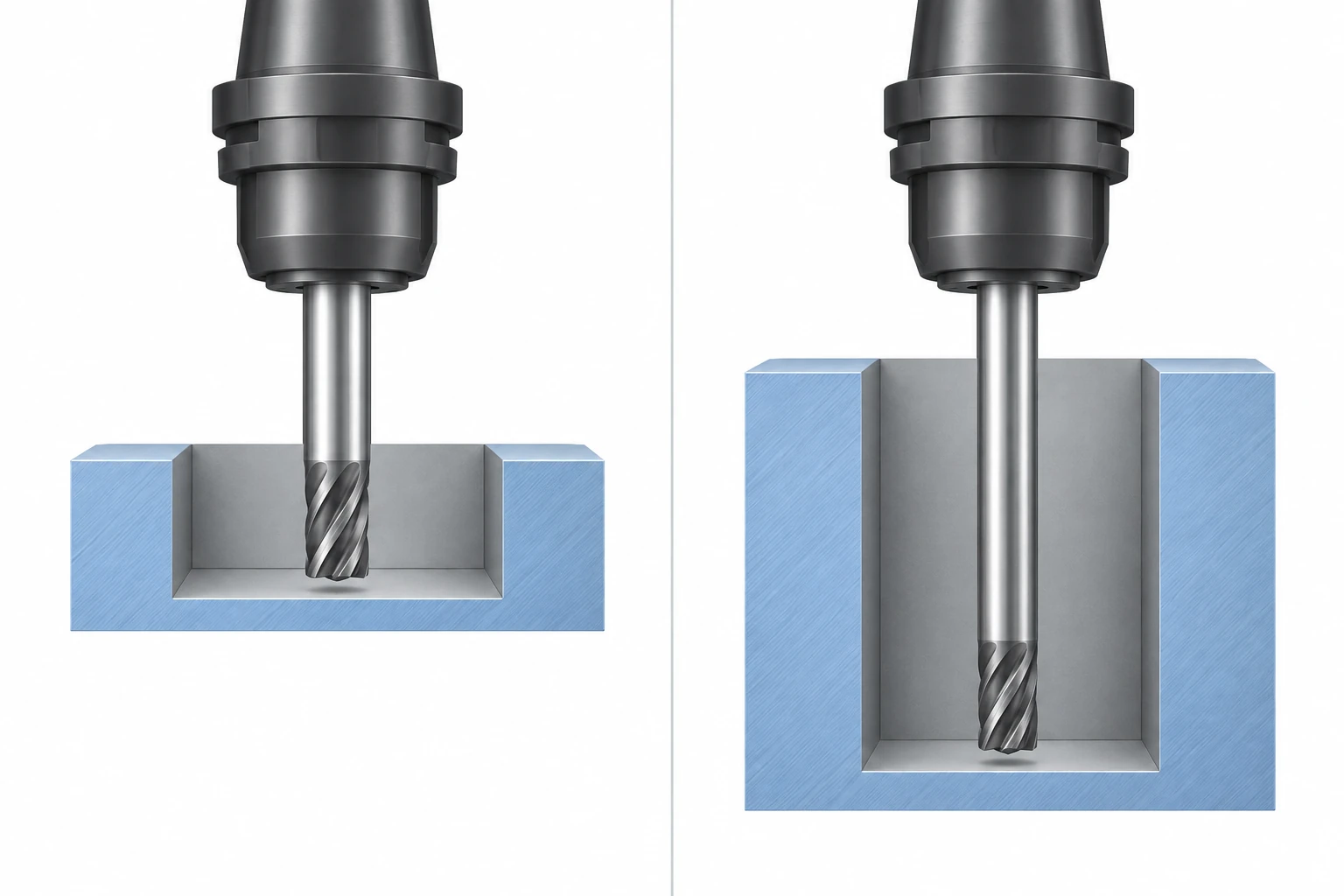
Cutting length and reach are different requirements. A relieved-neck tool can reach a low feature with a short cutting head; it does not need flutes over its entire exposed length. Clearance around the neck and holder still matters. Harvey Performance’s tool-selection guidance recommends minimizing unnecessary overhang, while its end-mill anatomy guide distinguishes reach from cutting length.
Small internal corners can make the problem more demanding by restricting cutter diameter. Roughing the open area with a larger tool and clearing the corners separately may be useful. It also adds another operation. The part-design guide explains how to connect corner and access changes with the mating component’s requirements.
A pocket needs a way to clear chips
Chips retained in a cavity can be cut again or jam around the tool. Getting them out may require a suitable fluid or air-delivery strategy, tool geometry, access direction and programmed clearing movements. The appropriate method depends on the material and setup; increasing spindle speed alone does not create chip clearance.
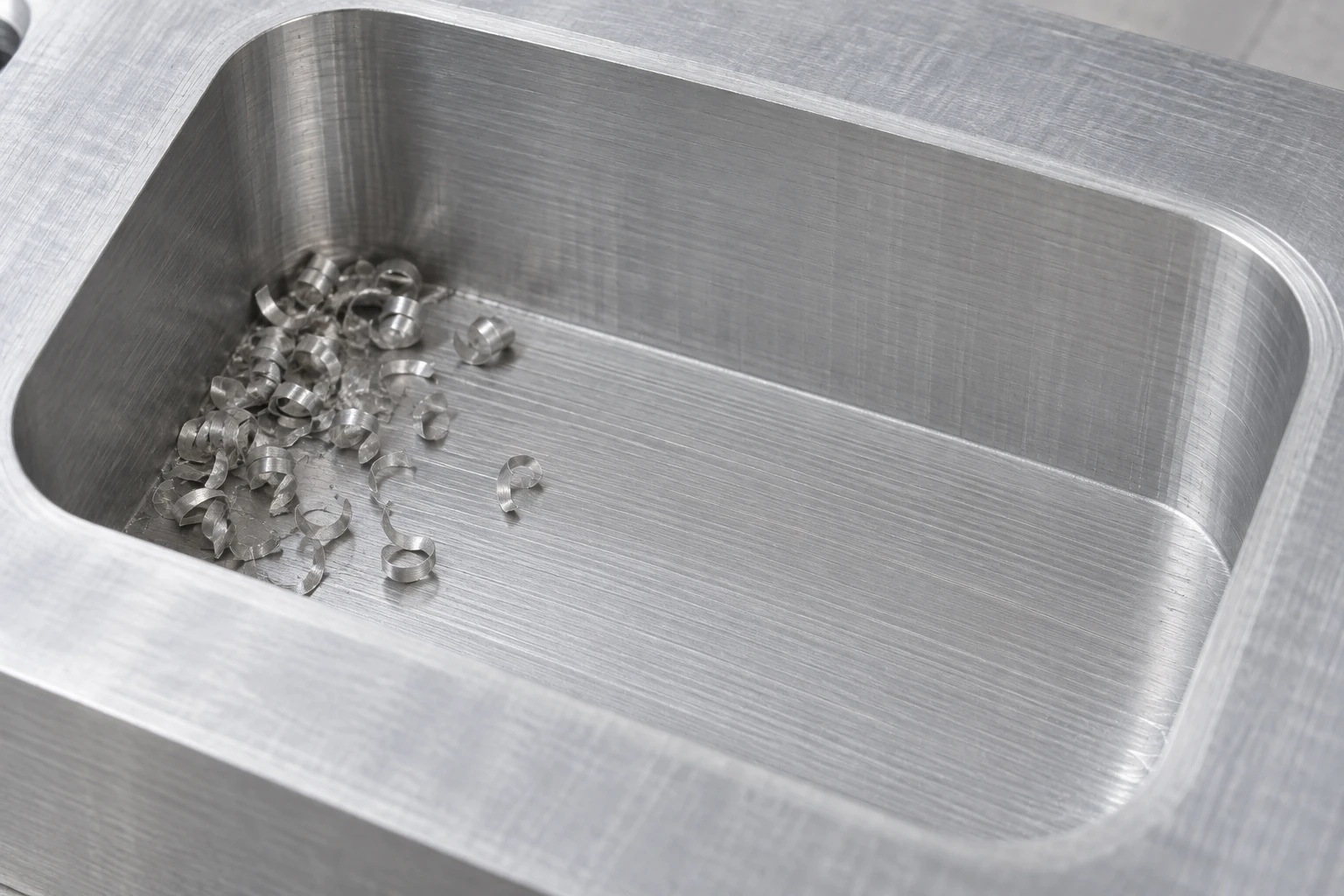
Sandvik Coromant’s pocket-milling guidance treats chip evacuation, long overhang and remaining corner stock as separate process considerations. This is why a large open recess and a deep narrow cavity cannot be priced reliably from removed volume alone. Each can need a different average cutting rate and different non-cutting movements.
Match the change to the source of extra work
| Possible change | Work it may reduce | What must remain workable |
|---|---|---|
| Use a closer-sized blank | Bulk stock removal | Grade, cleanup allowance and clamping stock |
| Reduce nonfunctional pocket depth | Removal volume and required reach | Internal clearance and required interfaces |
| Enlarge a permitted opening or corner | Small-tool and access restrictions | Mating-part fit and surrounding wall function |
| Provide access from another face | Long-tool access | Added setup, datum relationships and sealing needs |
A closer blank is not automatically cheaper. A readily available stock size may cost less overall than a specially prepared blank, and some extra material may be needed to locate or hold the part. Similarly, opening a pocket through another face can shorten tool reach while adding setup or closure work. Compare the complete routes.
For a housing, identify the cavity space occupied by components, the mounting and sealing surfaces, and any depth that is merely inherited from an early model. That makes a CNC milling review specific: evaluate the approved geometry first, then price useful alternatives separately. A geometry change needs design approval; a lower removed volume alone does not establish a better part.
Frequently asked questions
Is a deeper pocket always more expensive?
No. Depth is one influence among opening size, material, required surfaces, tooling and setup. It often adds work, but a wide deep cavity with good access can be easier than a shallower feature restricted to a very small cutter. Compare the actual geometry and route.
Will five-axis machining remove the deep-pocket problem?
It can improve access when tilting exposes the feature or permits a shorter tool. It cannot make a cutter or holder pass through a narrower opening than its required clearance, and it does not eliminate chip removal. The proposed orientation must work with the surrounding part.
Should all machining allowance be removed from the blank?
No. Allowance is material deliberately reserved for cleanup or a later operation. Reducing unnecessary bulk stock is different from eliminating the stock needed to finish a surface. Keep enough material for the selected blank condition, workholding and machining sequence.
Technical sources
Sandvik Coromant: Formulas and definitions for milling — Metric; Milling holes and cavities/pockets; and Tips film: Long overhang — optimizing machining conditions (published transcript). Harvey Performance: The Anatomy of an End Mill and 5 Questions to Ask Before Selecting an End Mill. The blank dimensions and removal rate in the calculation are hypothetical inputs.