On this page
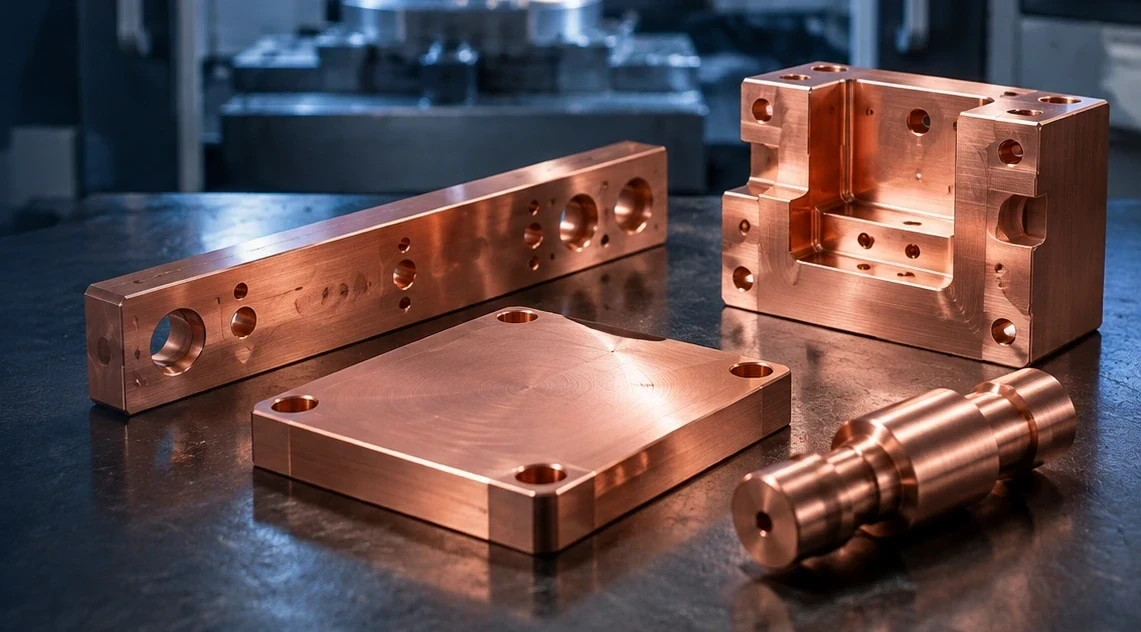
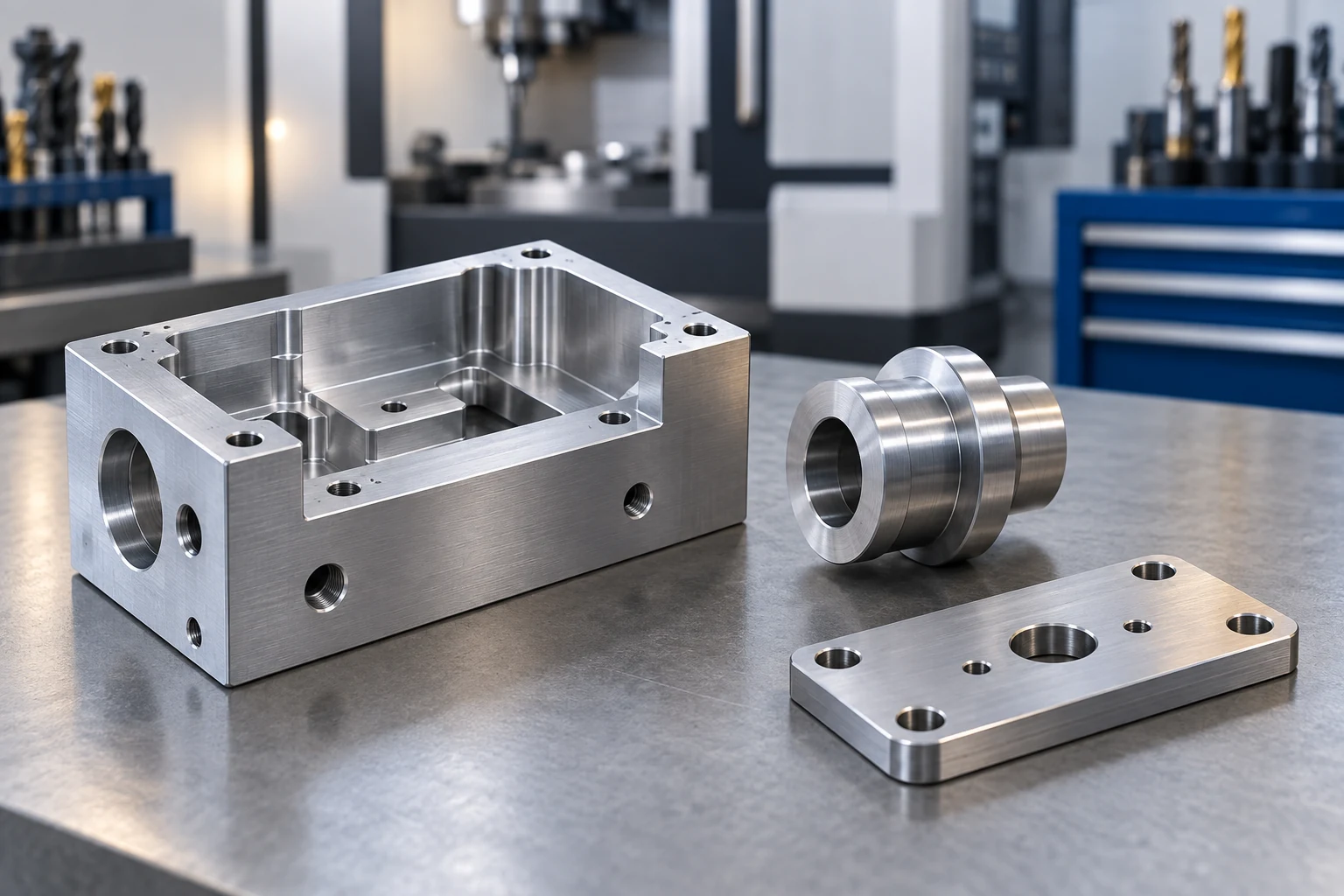
A machine shop makes or modifies parts by removing material with machine tools. Its work may include milling, turning, drilling and grinding, together with the planning, workholding and measurement needed to deliver the specified component. A shop can serve outside customers, support a factory internally or concentrate on a recurring family of parts. Its name alone does not tell you which jobs it can complete. [1]
The useful question is how a particular shop connects its capabilities. A turned spacer with a bolt pattern, for example, needs more than a lathe: someone must plan the holes, preserve the locating references between operations, check the relevant features and keep the finished parts identified through delivery.
Machine shops differ in the work they organize around
A job shop handles changing customer jobs. Its fixtures, programs and work sequence may change from order to order. A production-focused shop organizes more of its work around repeated parts or part families. An internal toolroom or maintenance shop supports the equipment, tooling and development needs of its own organization. These descriptions overlap; a business may combine them.
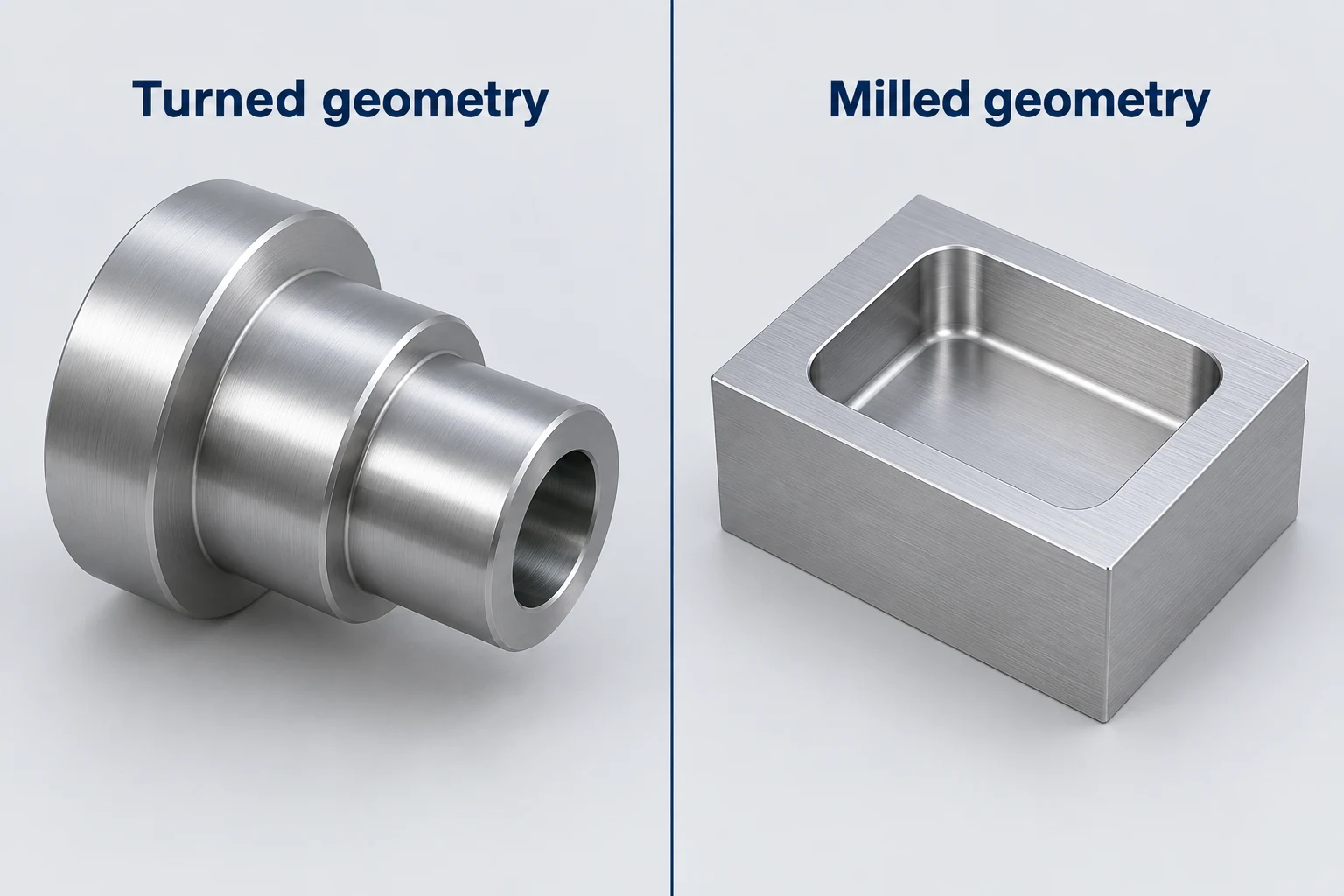
The machines indicate possible processes, while the part requirements determine the actual route. Turning naturally suits coaxial diameters and shoulders. Milling can produce pockets, flats and off-center features. A grinding operation may be selected for a particular finished surface or size requirement. One component can use more than one of these processes.
A fabrication shop may combine cutting, forming and joining to make an assembly; a machine shop may then finish its locating faces or holes. Some businesses do both. Likewise, a casting or printed blank can become a machine shop’s starting workpiece. The boundary is the work being performed, rather than a rule that every part must begin as solid bar.
The CNC machining process guide compares these operations by the features they produce. For shop selection, establish which operations are performed at the proposed site and which require another facility.
The work includes planning, setup and verification
Machinists do more than start a program. The US Bureau of Labor Statistics describes work that includes reading design information, setting up equipment, securing tools and workpieces, monitoring cutting and verifying the result. Manual and CNC equipment can both be part of that work. [2]
A practical way to understand a shop is to follow the responsibilities below. These are functions, not a required organization chart; one experienced person may cover several of them.
| Function | Decision or output | What the next person needs |
|---|---|---|
| Job review and planning | Agreed part definition and operation sequence | Current revision, stock condition and requirements |
| Programming | Machine instructions and setup information | Tooling, stock and work-coordinate references |
| Setup and machining | Located workpiece and controlled cutting | Known part condition and completed operations |
| Inspection | Results against specified characteristics | Part identity, requirement and measurement basis |
| Production coordination | Material, machine and outside-process availability | Current job status and next operation |
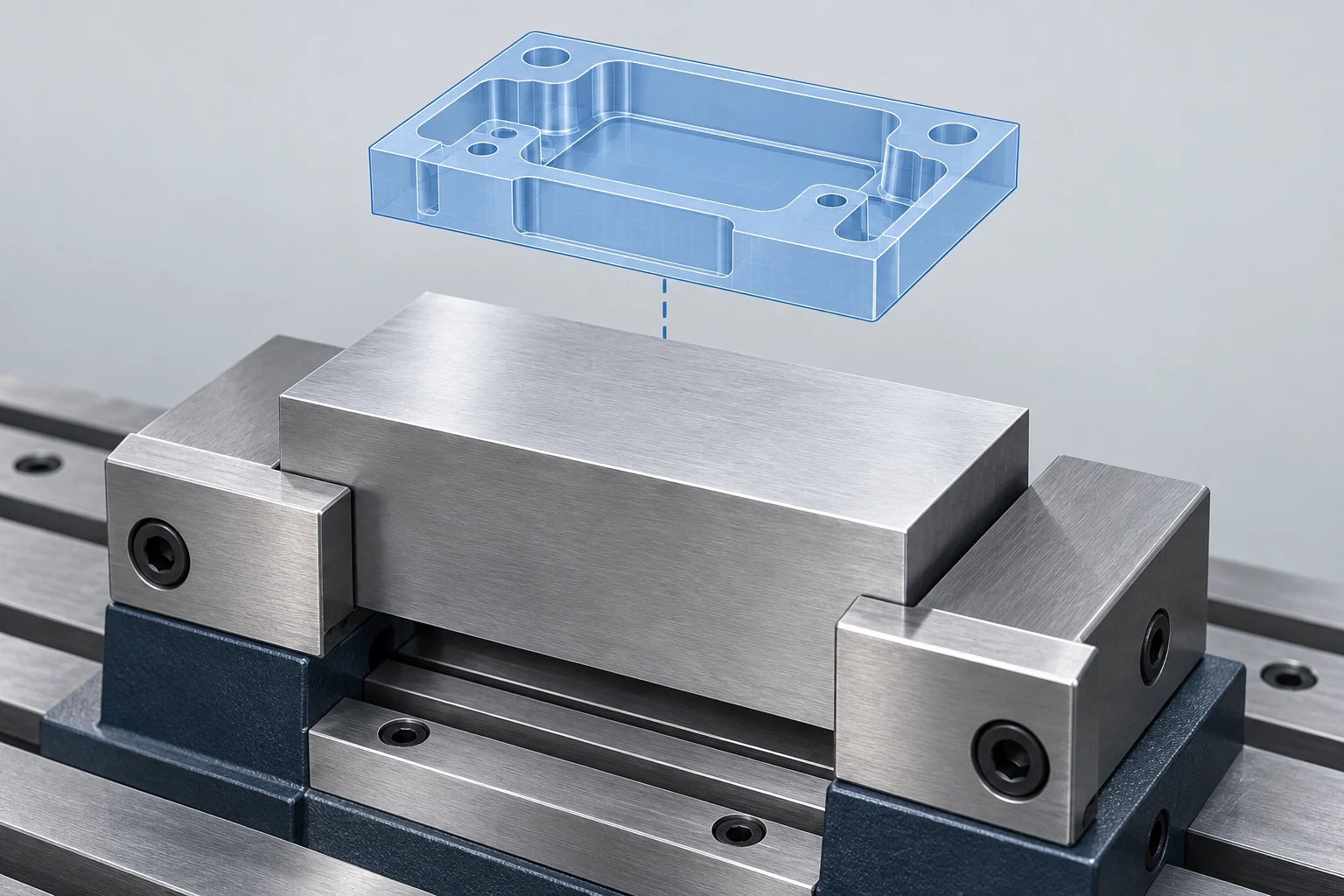
The digital plan must correspond to the physical arrangement. Autodesk’s Fusion setup documentation distinguishes the part model, starting stock, work coordinate system and fixture. A program prepared for one orientation or holding arrangement cannot simply be treated as correct for another. [3]
For the underlying CAD-to-CNC sequence, the machining basics guide provides the introduction. Inside the shop, the additional task is making sure that the person setting up the machine receives the same assumptions the programmer used.
Follow one part through its operations
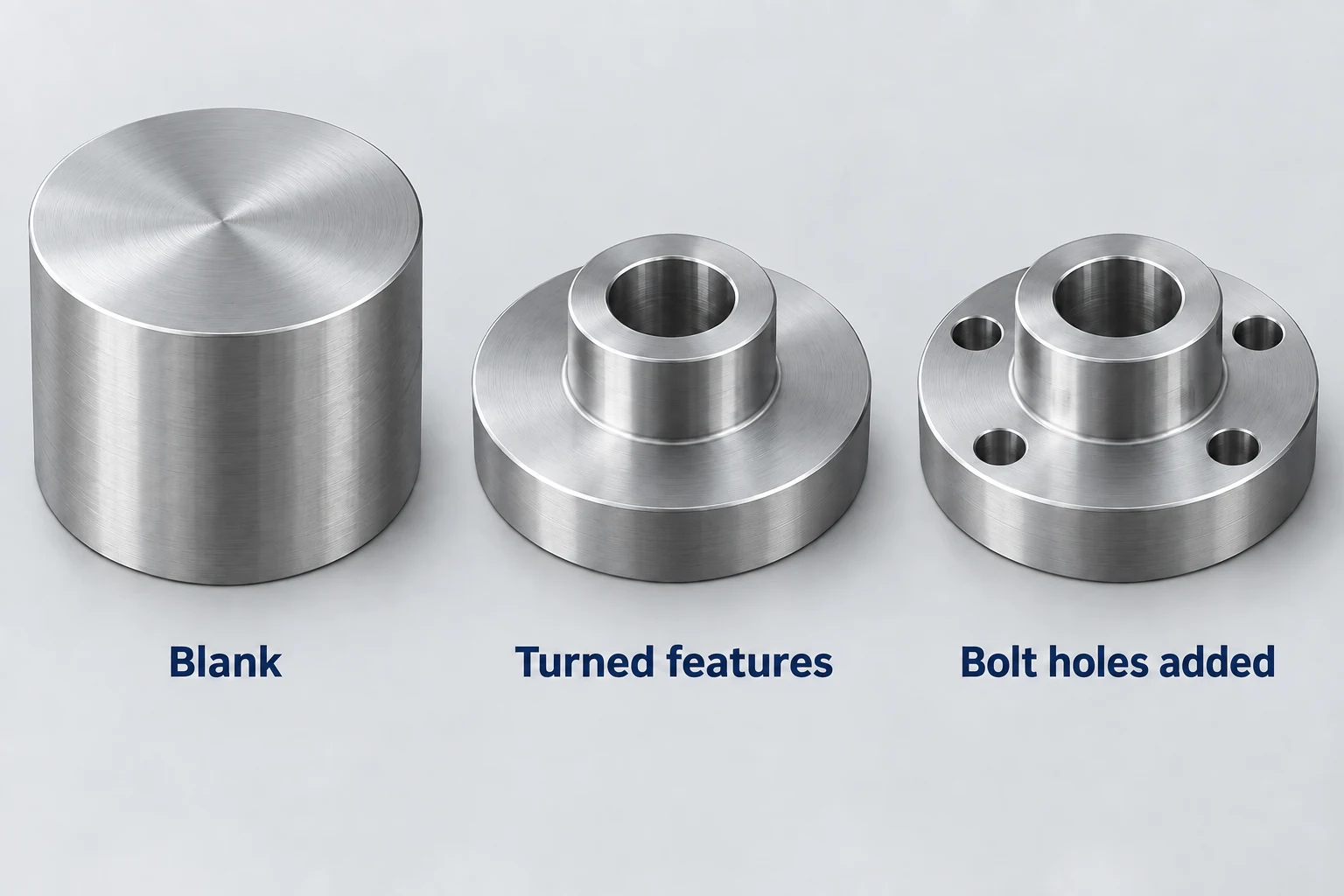
Consider an illustrative flanged spacer with a central bore and four bolt holes. Starting from round stock, a turning operation can establish the outside diameters, shoulder, faces and bore. Completing both ends may require a second holding arrangement. The bolt pattern can then be made on a mill or a suitably equipped turning center.
The important handoff is between these operations. When the turned component moves to the hole-making setup, the fixture must locate it from suitable features and provide support without damaging a required surface. The program’s coordinates must put the bolt pattern in the required relationship to the bore and face. Making each hole the right diameter does not settle that relationship.
Checks can occur between operations, not only at the end. If the part will receive a treatment that affects a mating dimension, the route must also account for the specified finished condition. Deburring, cleaning and inspection belong at appropriate points for the actual requirements; their order is not identical for every component.
NIST’s manufacturing activity model treats routing as the connection between processing, inspection and the workstations involved. That is a useful distinction: a list of available machines is not yet a plan for a part. [4] VETCNC’s precision CNC machining service provides the relevant context for discussing critical fits, datum relationships and inspection scope.
Setup time, cycle time and lead time answer different questions
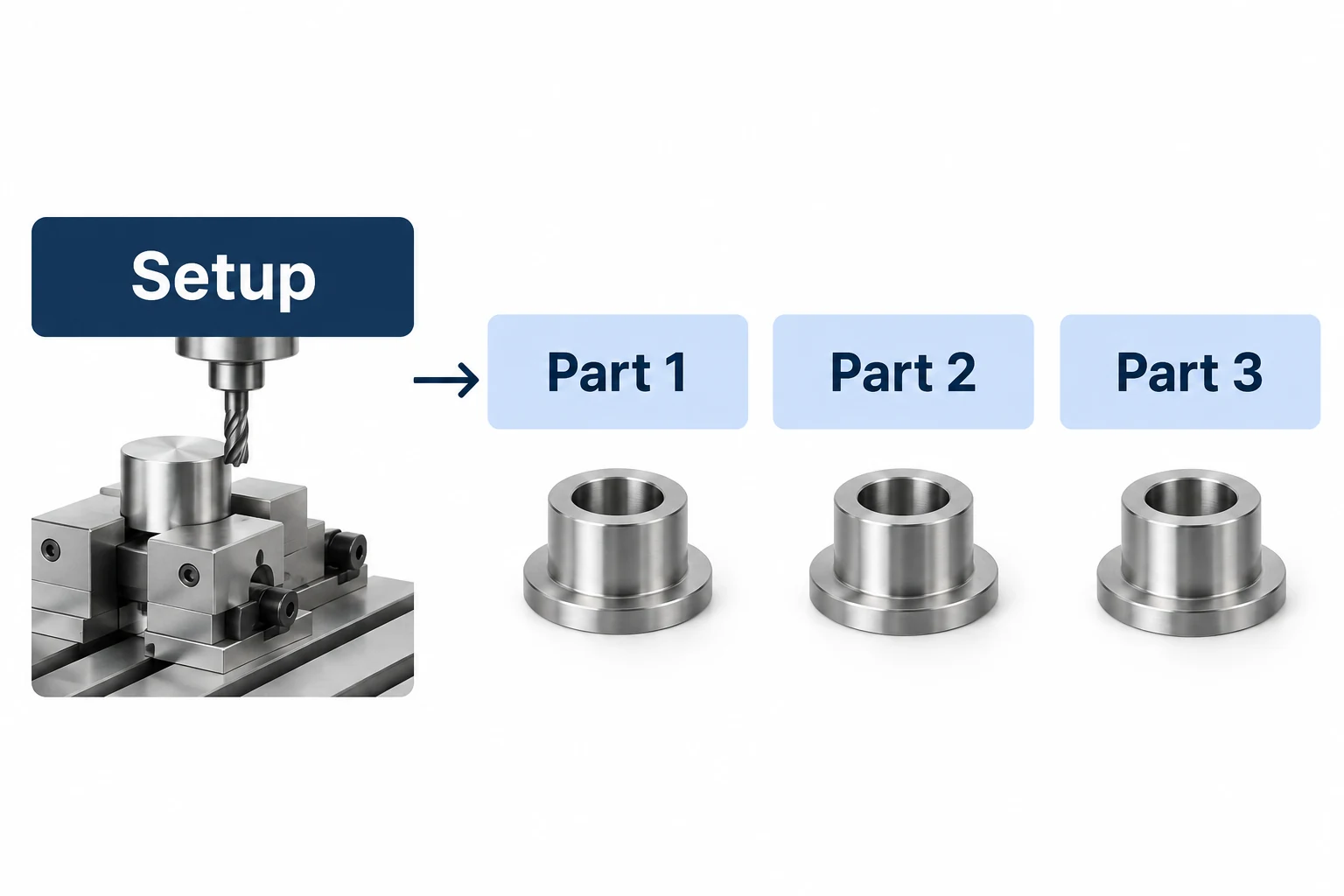
Setup time prepares the job for production. Cycle time describes a defined repeating sequence, such as the machining cycle for one part. Check what a quoted cycle includes: loading, unloading and separate inspection may be counted elsewhere.
For a simple calculation, assume one 90-minute setup and a 12-minute repeating cycle per part, with no rejected parts or additional setups:
| Quantity | Setup + repeated cycles | Combined time per part |
|---|---|---|
| 5 parts | 90 + (5 × 12) = 150 min | 150 ÷ 5 = 30 min |
| 50 parts | 90 + (50 × 12) = 690 min | 690 ÷ 50 = 13.8 min |
The repeating cycle remains 12 minutes in both cases. The setup contribution is spread across more pieces. The larger batch still takes more total time, and a separate production release may require another setup.
Neither row predicts a delivery date. Stock availability, the queue at each required machine, outside treatment, inspection and transport can add elapsed time. NIST’s scheduling model explicitly connects jobs to available resources and tracks their status between steps. [4] A part can be waiting for its next operation even when the actual cutting takes only minutes.
The machining cost and supplier selection guide explains how to compare the resulting order scope. Keep a cycle-time estimate, a planned dispatch date and an arrival date as separate pieces of information.
Keep the part definition connected through finishing and delivery
Outside processing is a normal possibility in a machining route. A shop may send parts to a specialist for heat treatment, coating or another operation. What matters is knowing the agreed scope and who coordinates the transfer, checks the returned condition and resolves discrepancies.
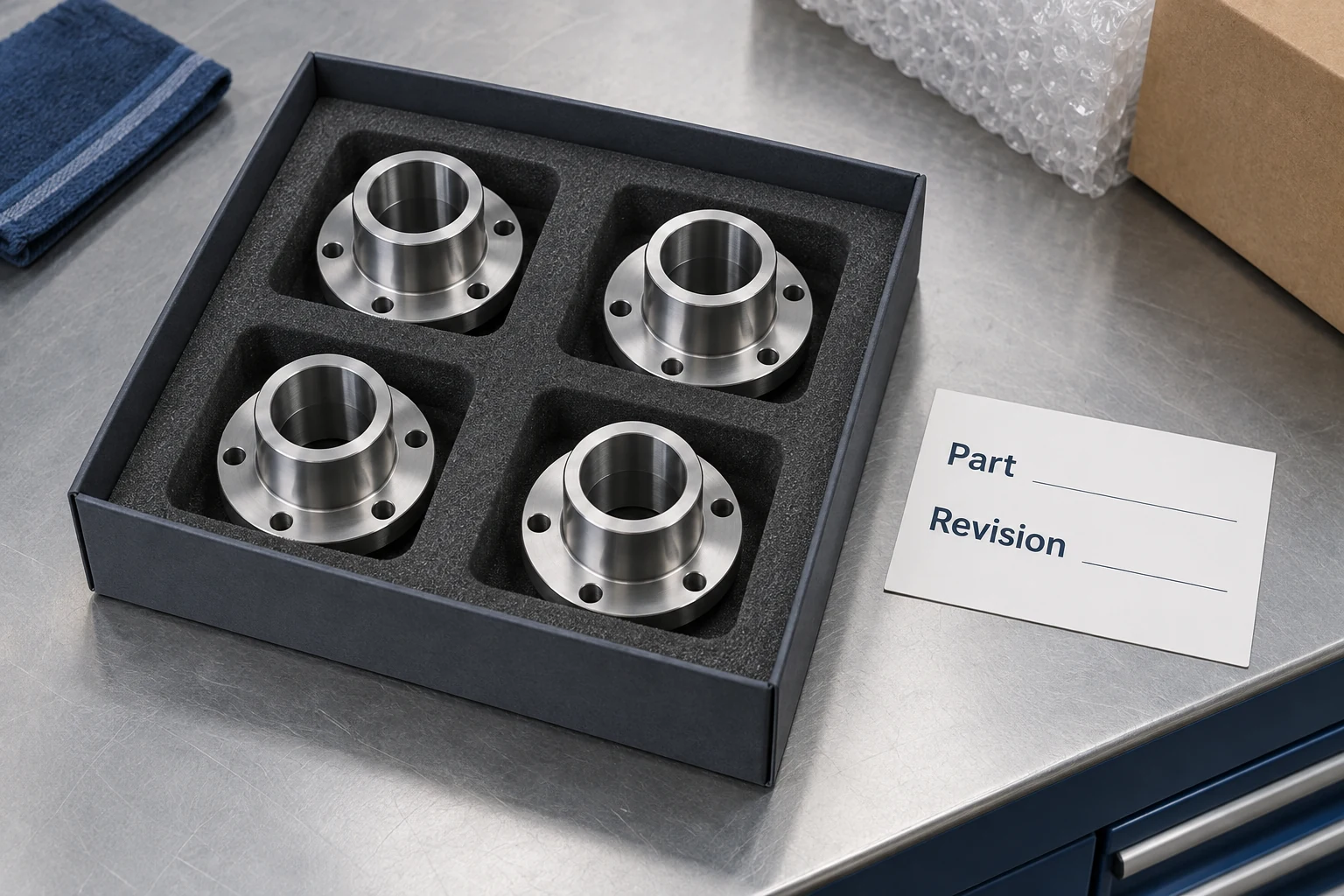
Useful handoff information includes the part number and revision, quantity, required treatment, protected or masked features, and the checks needed afterward. Keep those requirements connected to the physical batch. A machining inspection completed before a coating step may not answer a requirement that applies to the coated interface.
Packaging is another handoff. A component with an exposed sealing face may need separation or protection that a loose bulk pack does not provide. The protection should suit the material, vulnerable features and journey. Material records, inspection results and treatment documents should identify the parts or lot they cover when those records are required.
A concise CNC machining RFQ package helps establish this scope before the work starts. It lets the shop explain a complete route, including work performed elsewhere, rather than leaving important operations to be discovered after machining.
Machine shop FAQ
Is a machine shop the same as a CNC shop?
A CNC shop emphasizes computer-controlled machining. A machine shop is the broader term and can use manual equipment, CNC equipment or both. The relevant question is whether its actual route can produce and verify the required part.
Can a machine shop make just one part?
Some shops specialize in prototypes, repairs or other small jobs. Others focus on repeat production. A one-piece order still needs appropriate planning, setup and checking, so its time and price are not simply a production-cycle figure multiplied by one.
Does every machine shop provide welding, coating and heat treatment?
No. Those operations may be available internally, arranged with a specialist or outside the supplier’s scope. Confirm the proposed route and responsibility for any outside work.
Does a short machining cycle mean next-day delivery?
No. The cycle covers a defined operation. Delivery also depends on preparation, material availability, queued work, finishing, inspection and transport. Use a confirmed schedule for the complete order.
Technical sources
- IEEE Technology Navigator. Machine Shops. General shop scope and machining-process descriptions.
- US Bureau of Labor Statistics. Machinists and Tool and Die Makers, Occupational Outlook Handbook. Work functions and manual/CNC equipment.
- Autodesk Fusion Help. Setup tab (milling and cutting) reference. Model, stock, work coordinates and fixture definitions.
- NIST. SIMA Reference Architecture, Part 1: Activity Models, NISTIR 5939, sections A22 and A44 and the job-status definitions. Routing and scheduling concepts.